
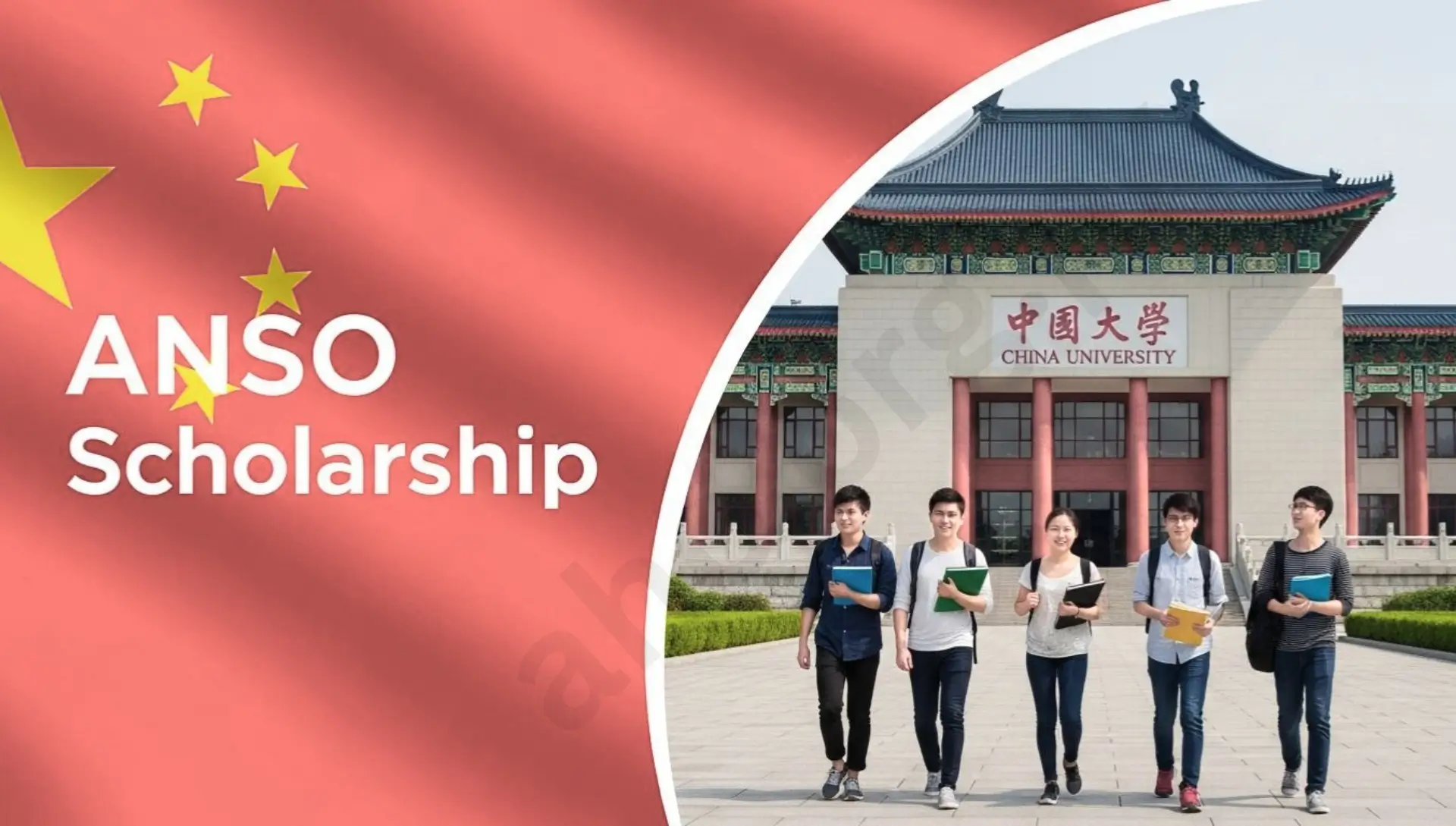
The ANSO Scholarship stands as one of the most comprehensive study pathways for international students seeking fully funded postgraduate education in China. The program offers structured academic training, research access, and long-term development opportunities across leading Chinese institutions. This article outlines the essential details upfront to help readers determine whether this program matches their academic direction.
ANSO Scholarship prioritizes scientific development fields and offers support for master’s and PhD candidates. The guidance shared throughout this content is based on first-hand interactions with applicants and ongoing advisory experience, which brings practical clarity to how the program works, what selection committees expect, and how academic fit influences outcomes. Readers will find a concise, direct understanding of the scholarship’s structure, requirements, responsibilities, institutional expectations, and strategic considerations before applying.
Understanding the Core Purpose of the ANSO Scholarship
The ANSO Scholarship was established to support global scientific cooperation. It aligns with China’s broader national framework for research-driven education and focuses on science, engineering, agriculture, medicine, and multidisciplinary innovation. According to the Alliance of International Science Organizations (ANSO), the scholarship supports over 200 Master’s students and 300 PhD students annually, sourced from more than 150 partner countries.
(Source: ANSO Official Program Outline, 2024)
Why This Program Matters for Prospective Students
The scholarship provides structured access to laboratories, Chinese research centers, and collaborative initiatives under the Chinese Academy of Sciences (CAS) and the University of Science and Technology of China (USTC). These institutions hold top positions in global research productivity rankings, with CAS consistently listed among the world’s leading research bodies for citation output.
(Source: Nature Index Annual Tables 2024)
Key Eligibility, Requirements, and Academic Fit Details
Eligibility and Academic Standards
Below is a technically structured overview of the eligibility matrix.
Eligibility and Documentation Requirements for ANSO Scholarship
| Technical Requirement Category | Specific Details | Additional Notes |
| Program Type | Master’s & PhD | Research-focused only |
| Eligible Institutions | USTC, UCAS, CAS Institutes | No other universities qualify |
| Academic Background | STEM, Agriculture, Medicine, Environment, IT | Alignment with faculty research is crucial |
| Degree Requirement | Bachelor’s for Master’s, Master’s for PhD | Degrees must be verified |
| Language Requirement | English or Chinese proficiency | TOEFL/IELTS optional if medium of instruction was English |
| Health Standards | Must meet study visa medical criteria | Standard foreigner physical exam accepted |
| Document Set | CV, research proposal, recommendation letters, academic transcripts | Research proposal evaluated heavily |
Comparing the Two Host Institutions Under ANSO
Institutional Pathways Under ANSO Scholarship
| Evaluation Criteria | USTC Pathway | UCAS/CAS Pathway |
| Program Structure | Structured academic curriculum | Research-institute-based model |
| Supervision Style | University faculty supervision | Direct supervision under research scientists |
| Campus Environment | Traditional campus setting | Distributed research campuses across China |
| Ideal Candidate Profile | Students seeking balanced coursework + research | Students aiming for fully immersive research |
| Access to Labs | Centralized university labs | CAS national labs and specialized institutes |
| Learning Method | Hybrid of classes and lab rotations | Primarily project-based research |
Application Workflow and Expected Timelines
The application cycle generally opens in autumn and closes in early spring. In practical experience, the strongest applicants begin preparing 2–3 months before the portal opens, focusing on aligning their research interest with available labs. Submissions undergo both institutional and scholarship committee reviews.
Key Stages in the Selection Process
- Pre-screening of academic background
- Faculty review of research proposal
- Interview (for selective programs)
- Final committee approval
- Admission + scholarship confirmation
Bonus Tip: Applicants who directly communicate with potential supervisors before submission often receive clearer guidance about project suitability.
Things to Review Before Submitting an Application
Conducting early self-evaluation helps applicants identify strengths and potential gaps.
Pre-Decision Considerations
- Academic background must directly align with the faculty or lab focus.
- Research proposal clarity influences supervisor acceptance decisions.
- Understanding China’s research culture is useful; projects are often milestone-driven.
- Candidates must manage expectations around intensive research schedules.
- Document accuracy is important as minor errors can delay screening.
Bonus Tip: Applicants benefit from evaluating lab publications from the past two years to identify methodological alignment and research themes.
Services Related to This Pathway
Support Study Sphere Advisors Provides
Study sphere advisors offers structured assistance for applicants who require support at different stages of the process:
- Study Visa Support
Guidance for obtaining the appropriate Chinese student visa, including documentation preparation and embassy requirements. - Student Visa Case Handling
Assistance for students transitioning from other countries or renewing an academic visa. - Work Visa Assistance
Support for graduates seeking post-study work opportunities through relevant Chinese work visa pathways. - Business Visa Processing
Guidance for applicants participating in academic-business collaboration projects that require temporary entry visas.
Immediate Questions Students Ask Before Applying
- How competitive is the ANSO program for Master’s vs PhD pathways?
- Does supervisor confirmation significantly influence acceptance?
- Are applicants with non-STEM backgrounds considered?
- Which academic areas receive priority in each host institution?
- How strict is the language requirement for programs taught in English?
Important Questions and Answers
How does the research supervision model function?
Supervision depends on the chosen institution. UCAS/CAS routes involve direct mentorship under research scientists while USTC follows a more academic structure.
What kind of academic workload can be expected?
Master’s students follow coursework plus research. PhD students work on multi-year research projects that include progress evaluations.
Are international students required to live on campus?
Accommodation expectations differ by institution, but most require residency for at least the first year to maintain academic oversight.
Can students switch supervisors or research directions?
Changes are possible but tightly regulated and require strong justification.
How are academic progress and performance monitored?
Progress is tracked through periodic evaluations, lab reports, and supervisor assessments.
Conclusion
The ANSO Scholarship offers a structured pathway into China’s scientific research environment. Understanding academic alignment, eligibility requirements, and institutional differences helps applicants make informed decisions. A strong application depends on clarity of research intent and early preparation of supporting documents. Applicants benefit from evaluating their academic direction, long-term research goals, and readiness for an intensive full-time commitment.
Leave a Reply