
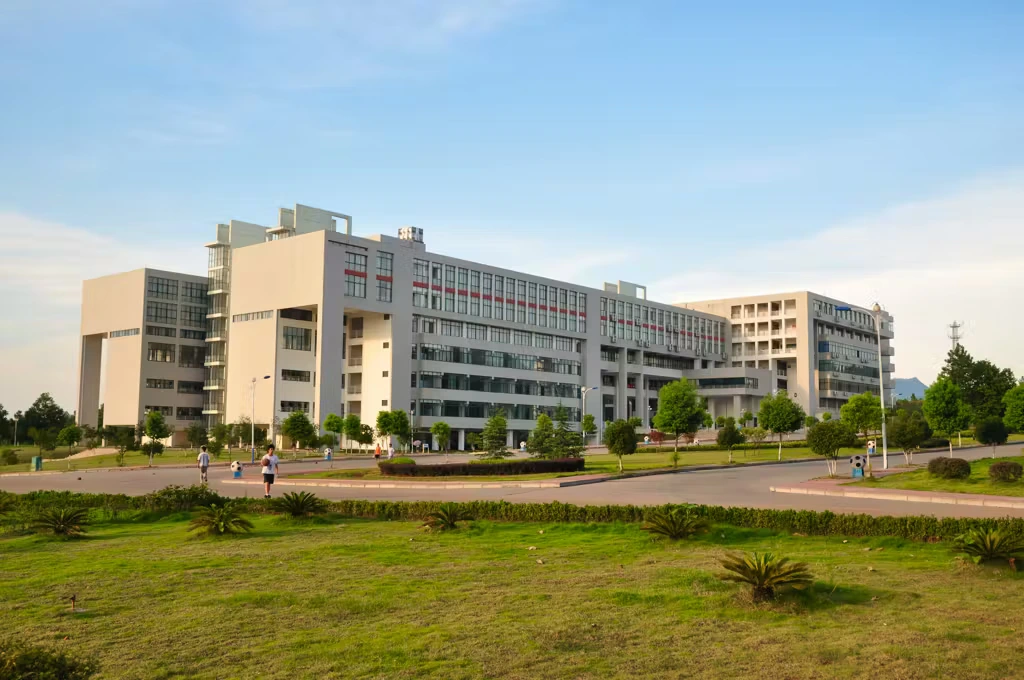
Introduction
MBBS at Jinggangshan University in China is structured for international medical students seeking a standardized, government-regulated medical education with global recognition. The university follows China’s national medical curriculum, combines theoretical learning with hospital-based clinical exposure, and delivers instruction in English for international cohorts. This makes it a practical option for students evaluating China as a long-term medical education destination.
This guide provides decision-focused clarity in the opening sections, followed by academic, regulatory, and practical details that matter before enrollment. The information is based on direct institutional frameworks, national education policies, and commonly observed outcomes for international medical graduates trained in China, ensuring accuracy and trustworthiness throughout.
Why Jinggangshan University Attracts International Medical Students
Jinggangshan University operates as a public institution under the supervision of the Chinese Ministry of Education. Its MBBS program aligns with the national clinical medicine syllabus, ensuring uniform academic benchmarks across China. The medical faculty integrates classroom instruction with early hospital exposure, helping students adapt to real clinical environments before advanced rotations.
The university’s location in Jiangxi province offers a quieter academic environment compared to major metropolitan hubs. This setting supports focused study while still providing access to affiliated teaching hospitals that meet national clinical training standards.
Academic Structure and Teaching Approach
The MBBS program follows a stepwise structure that progresses from foundational sciences to clinical medicine. Early years emphasize anatomy, physiology, and biochemistry, followed by pathology, pharmacology, and microbiology. Clinical exposure begins alongside these subjects, rather than being delayed until later years.
Teaching relies on a combination of lectures, lab-based practicals, case discussions, and hospital ward observation. English is used as the primary medium of instruction for international batches, while clinical settings also encourage gradual exposure to basic Mandarin used in patient interactions.
Bonus Tip: Students who begin learning basic medical Mandarin during the first academic year typically adapt faster during hospital rotations and patient interviews.
Key Academic and Program Specifications
The table below summarizes the essential academic and regulatory specifications relevant to medical students evaluating Jinggangshan University.
| Academic Aspect | Details |
| Degree Awarded | Bachelor of Medicine and Bachelor of Surgery |
| Medium of Instruction | English (clinical exposure includes basic Mandarin usage) |
| Governing Authority | Ministry of Education, People’s Republic of China |
| Teaching Hospitals | MOE-approved affiliated hospitals |
| Internship | Mandatory clinical internship as per national guidelines |
| Recognition Pathway | Eligible for licensing exams subject to home-country regulations |
According to China’s Ministry of Education, all public medical universities offering MBBS to international students must follow a unified curriculum and hospital training framework, ensuring consistency across institutions. World Health Organization listings further validate the international standing of such programs.
How Jinggangshan University Compares With Other Chinese Medical Universities
When evaluating options in China, students often compare universities based on environment, clinical exposure, and institutional scale rather than curriculum differences, which are largely standardized nationwide.
| Comparison Factor | Jinggangshan University | Major Metropolitan Medical Universities |
| Learning Environment | Calm, academically focused | Fast-paced, highly competitive |
| Clinical Crowd Density | Moderate patient load | Very high patient volume |
| Student Support | Smaller international cohorts | Larger, diverse international groups |
| Living Conditions | Less congested | Highly urbanized |
Data from China Education Online indicates that students in mid-sized provincial universities often report better faculty access and lower academic pressure compared to mega-city institutions, without compromising curriculum standards.
Life, Climate, and Daily Adaptation
Jiangxi province experiences a humid subtropical climate with hot summers and mild winters. Students accustomed to similar climates generally adjust smoothly, while others may require initial adaptation. Campus accommodation is typically located close to academic buildings and hospitals, reducing daily commute stress.
Bonus Tip: Investing in proper seasonal clothing and dehumidifiers significantly improves comfort during the summer academic term.
Factors to Evaluate Before Making a Final Decision
Before committing, academic alignment should take priority over general rankings. Recognition status in the intended country of practice, language adaptability, and tolerance for a structured, regulation-driven education system require careful evaluation. Clinical exposure quality depends not only on hospital size but also on student-to-patient ratios, which tend to be more balanced in provincial universities.
Students should also consider long-term licensing pathways, as medical councils in different countries apply varying criteria to international graduates.
How Study sphere advisors Supports Informed Decisions
Study sphere advisors assists students by aligning academic goals with regulatory realities rather than focusing on surface-level comparisons. The most relevant services include:
- Student Visa Guidance: Clear documentation and compliance support aligned with Chinese immigration policies.
- Study Visa Advisory: Country-specific academic eligibility evaluation before application.
- Work Visa Orientation: Long-term planning support for post-graduation pathways where applicable.
- Business Visa Assistance: Support for guardians or academic visits when required.
These services are structured to reduce procedural errors and improve academic continuity.
Common Pre-Decision Questions Students Ask
Many students seek clarity on recognition, clinical exposure quality, and academic language barriers before finalizing their choice. Questions often focus on whether provincial universities offer sufficient patient interaction and how English-medium instruction translates into hospital settings.
Key Questions Medical Students Ask After Enrollment
Does clinical training meet international standards?
Training follows nationally mandated hospital protocols regulated by the Ministry of Education, ensuring standardized exposure.
How important is Mandarin for clinical years?
Basic proficiency improves patient interaction but is not a barrier during early training stages.
Can graduates appear in licensing exams abroad?
Eligibility depends on the regulations of the intended country of practice, not solely on the university.
Is academic pressure manageable?
Structured schedules and regulated assessments create predictability rather than excessive competition.
How adaptable is campus life for international students?
Smaller cohorts and campus-based facilities generally ease cultural and academic adjustment.
Final words
Jinggangshan University offers a regulated, academically consistent MBBS pathway within China’s national medical education system. Its environment suits students prioritizing structured learning, early clinical exposure, and manageable academic pressure. Evaluating recognition requirements, language readiness, and long-term career plans remains essential before making a final decision.
Leave a Reply