
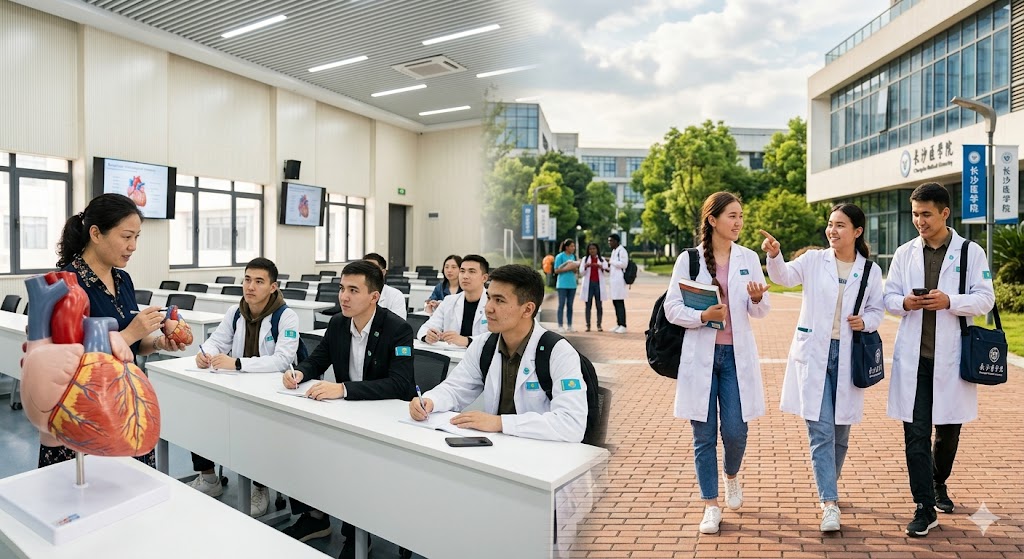
Changsha Medical University is increasingly selected by students from Kazakhstan due to a combination of recognized medical education standards, English-medium instruction, and structured clinical exposure aligned with global licensing pathways. The institution provides a stable academic framework that supports international students through predictable curricula, integrated hospital training, and a learning environment adapted to cross-border mobility requirements.
Study sphere advisors has observed a consistent pattern in student decision-making: priority is placed on accreditation status, practical training access, and post-graduation flexibility. This article delivers a structured breakdown of why Changsha Medical University aligns with these expectations, supported by data, comparisons, and operational insights drawn from real student placement scenarios.
Key factors driving student preference
Academic structure aligned with global standards
Changsha Medical University follows a curriculum that integrates foundational sciences with early-stage clinical exposure. This structure ensures students develop both theoretical understanding and applied medical skills before entering advanced rotations.
| Academic Component | Implementation at Changsha Medical University | Student Impact |
|---|---|---|
| Pre-clinical phase | Strong focus on anatomy, physiology, pathology | Builds diagnostic foundation |
| Clinical exposure | Begins earlier than many regional programs | Improves practical competence |
| Teaching language | English-medium for international students | Reduces language barriers |
| Assessment model | Continuous evaluation + final exams | Encourages consistent learning |
Global recognition frameworks such as WHO listings and alignment with licensing exams (e.g., USMLE-style formats) influence university selection. According to WHO’s World Directory of Medical Schools, internationally listed institutions improve graduate mobility across licensing jurisdictions.
Practical training and hospital integration
Changsha Medical University integrates hospital-based learning into its core curriculum rather than treating it as a final-stage activity. This approach allows students to observe real patient cases early in their education.
| Training Element | Changsha Medical University Approach | Typical Alternative |
|---|---|---|
| Clinical rotations | Conducted in affiliated hospitals | Limited or delayed exposure |
| Patient interaction | Supervised early-stage engagement | Mostly theoretical until later years |
| Case-based learning | Regular inclusion in coursework | Occasional implementation |
Bonus Tip: Early clinical exposure significantly improves performance in licensing exams, as students develop diagnostic reasoning rather than relying on memorization.
Data from the National Medical Commission (India) indicates that students with structured clinical exposure show higher pass rates in licensing exams compared to those trained in theory-heavy systems.
Why Kazakhstan students find better alignment
Climate and lifestyle adaptability
Students from Kazakhstan often evaluate environmental compatibility before selecting a destination. Changsha offers a moderate climate compared to extreme winter conditions, making year-round academic continuity more manageable.
| Factor | Changsha | Typical Kazakhstan Climate |
|---|---|---|
| Winter severity | Mild to moderate | Extremely cold |
| Academic disruptions | Minimal | Weather-related interruptions possible |
| Living adaptability | Easier transition | Requires adjustment when moving abroad |
This factor, while often underestimated, directly affects attendance, health, and overall academic performance.
Language and communication ecosystem
The availability of English-medium programs combined with growing international student communities reduces communication barriers. Universities that lack structured English delivery often create academic gaps for non-native speakers.
Bonus Tip: Students benefit from enrolling in basic Mandarin language modules alongside medical studies to improve hospital communication during clinical years.
Institutional comparison with alternative destinations
| Criteria | Changsha Medical University | Other Chinese Universities | Central Asian Medical Universities |
|---|---|---|---|
| Medium of instruction | English-supported | Mixed availability | Often local language dominant |
| Clinical exposure timing | Early integration | Varies significantly | Often delayed |
| Global recognition | Widely listed | Depends on institution | Limited international recognition |
| International student support | Structured systems | Inconsistent | Minimal in many cases |
According to UNESCO education mobility data, China remains among the top destinations for international medical students due to infrastructure, faculty strength, and hospital integration capacity.
Technical overview of the MBBS program structure
| Program Element | Specification |
|---|---|
| Degree duration | 5–6 years including internship |
| Internship model | Hospital-based supervised training |
| Curriculum type | Integrated modular system |
| Teaching format | Lectures, lab work, clinical rotations |
| Evaluation system | Semester-based with practical assessments |
| Licensing preparation | Aligned with international exam formats |
Practical decision factors before selecting a university
What to evaluate before finalizing admission
Students often overlook operational details that directly impact long-term outcomes. Focus on these elements before making a decision:
- Accreditation and global recognition status
- Clinical training infrastructure and hospital partnerships
- Language of instruction and communication support
- Graduate eligibility for licensing exams in target countries
- Availability of student support systems
Bonus Tip: Verify hospital affiliations independently rather than relying solely on brochures. Direct hospital integration is a strong indicator of practical training quality.
Support services available through Study sphere advisors
Study sphere advisors provides structured guidance across essential stages of the admission and relocation process:
- Student Visa Processing
Handles documentation, embassy requirements, and compliance checks to reduce rejection risks. - Study Visa Consultation
Provides country-specific academic pathway planning aligned with long-term goals. - Business Visa Assistance
Supports guardians or stakeholders requiring travel access during admission cycles. - Work Visa Guidance
Offers advisory for post-graduation mobility and employment transitions.
Common decision-stage questions students ask
How does early clinical exposure impact career outcomes
Early exposure improves diagnostic thinking and confidence, which directly affects licensing exam performance and internship readiness.
Is English-medium instruction sufficient for hospital training
It is sufficient academically, but basic local language skills enhance patient interaction during clinical rotations.
Does university recognition affect international mobility
Yes. Recognition determines eligibility for licensing exams and postgraduate opportunities abroad.
Answers to important long-term concerns
How adaptable is the curriculum for licensing exams
The curriculum aligns with international exam structures, making preparation more streamlined for global certifications.
What challenges do international students typically face
Language barriers during clinical years and cultural adaptation are the most common challenges.
How important is hospital affiliation quality
It directly determines the depth of clinical exposure and practical skill development.
Can students transfer to other countries after graduation
Yes, but eligibility depends on licensing exam requirements of the destination country.
Does climate affect academic performance
Yes. Stable and moderate climates reduce disruptions and improve consistency in attendance and study routines.
Final evaluation and takeaway
Changsha Medical University meets the primary criteria that Kazakhstan students prioritize: structured clinical training, recognized academic frameworks, and a manageable living environment. The decision ultimately depends on how well the institution aligns with long-term licensing goals, adaptability, and learning preferences.
Leave a Reply