
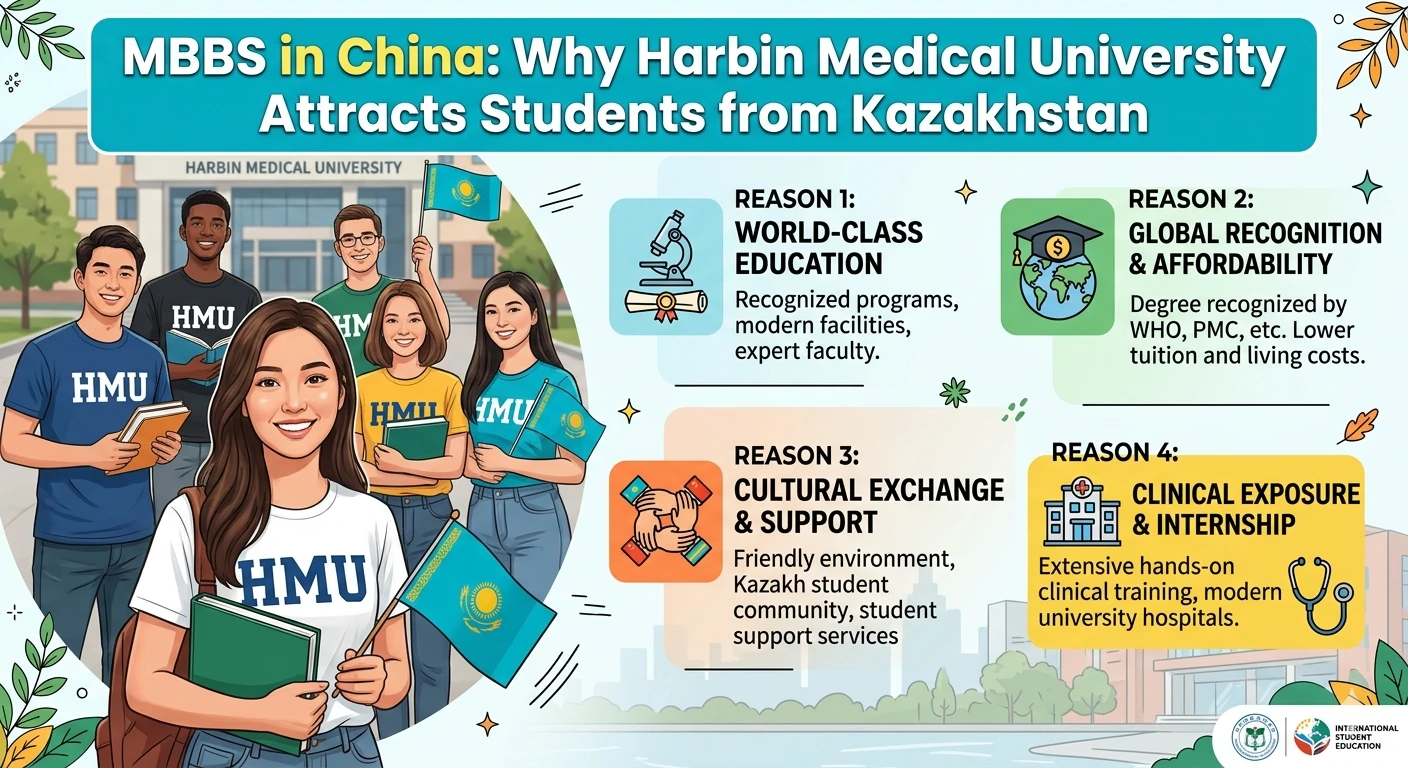
Students from Kazakhstan consistently choose Harbin Medical University for MBBS due to its recognized medical curriculum, geographic proximity, and structured clinical exposure aligned with international standards. The university combines English-medium instruction with early hospital training, which directly addresses the academic and practical expectations of Central Asian students.
Study sphere advisors has observed that decision-making in this segment is driven by accreditation status, climate adaptability, and post-graduation mobility. This article breaks down these factors with factual comparisons, technical insights, and practical considerations to support informed decisions.
Academic Structure and Recognition That Align with International Standards
Harbin Medical University offers a curriculum designed around global medical education frameworks, ensuring graduates meet eligibility for licensing exams in multiple countries.
Key Academic and Accreditation Data
| Parameter | Details |
|---|---|
| Medium of Instruction | English (with mandatory Chinese language training) |
| Degree Awarded | MBBS (Bachelor of Medicine & Bachelor of Surgery equivalent) |
| Recognition | WHO, NMC (India), PMDC (Pakistan), FAIMER |
| Clinical Training | Begins in later academic years with hospital rotations |
| Internship | Integrated or optional depending on licensing country |
| Teaching Hospitals | Affiliated multi-specialty hospitals |
According to the World Health Organization directory, universities listed in global medical directories improve graduate mobility across licensing systems. Additionally, FAIMER data indicates that internationally accredited institutions see higher success rates in licensing exams.
Bonus Tip: Always verify the latest recognition status from the medical council of the intended practice country before enrollment.
Geographic and Cultural Compatibility for Kazakh Students
Harbin’s location in Northeast China makes it geographically closer to Kazakhstan compared to other international destinations. Travel routes remain shorter and more predictable, especially during academic breaks.
Climate similarity also plays a significant role. Harbin experiences cold winters similar to northern Kazakhstan, reducing environmental adjustment challenges.
Why Location Matters in Student Retention
| Factor | Harbin | Other Chinese Cities |
|---|---|---|
| Climate Similarity with Kazakhstan | High | Moderate to Low |
| Travel Distance | Shorter routes via regional hubs | Longer multi-leg routes |
| Cultural Exposure | Moderate and manageable | Often more diverse and complex |
| Language Transition | Gradual with structured support | Varies by institution |
UNESCO mobility reports highlight that students are more likely to complete degrees successfully when studying in regions with familiar environmental conditions.
Clinical Exposure and Hospital Integration
Clinical training at Harbin Medical University is integrated with large affiliated hospitals that handle high patient volumes. This ensures exposure to diverse medical cases early in the training cycle.
Practical Learning Environment
- Access to multi-specialty hospitals
- Structured ward rotations
- Case-based learning integrated into curriculum
- Supervised patient interaction in later years
Bonus Tip: Prioritize universities with direct hospital affiliations instead of outsourced clinical placements to ensure consistent training quality.
How Harbin Medical University Compares with Other Chinese Medical Universities
| Criteria | Harbin Medical University | Other Tier-2 Universities | Tier-3 Universities |
|---|---|---|---|
| Accreditation Coverage | Broad international recognition | Moderate | Limited |
| Clinical Exposure | High (large hospitals) | Moderate | Low |
| English-Medium Consistency | Structured and monitored | Inconsistent in some cases | Often limited |
| Student Support Systems | Organized international offices | Basic | Minimal |
| Research Opportunities | Active participation encouraged | Limited | Rare |
China’s Ministry of Education reports that top-tier medical universities maintain stricter academic oversight and better hospital integration, which directly impacts graduate competency.
Decision Factors That Shape the Final Choice
Selecting a medical university involves more than rankings. Several practical variables influence long-term outcomes.
What to Evaluate Before Finalizing Admission
- Recognition in the intended country of practice
- Language transition requirements (Chinese proficiency for clinical years)
- Quality and size of affiliated hospitals
- Climate adaptability and living conditions
- Availability of student support services
Bonus Tip: Connect with current students or alumni to validate real-world experiences beyond official brochures.
Relevant Visa and Education Support Services
Study sphere advisors provides structured assistance aligned with student mobility requirements:
- Student Visa Processing
Handles documentation, embassy coordination, and compliance requirements for China. - Study Visa Consultation
Offers guidance on university selection based on recognition and career goals. - Business Visa Services
Supports guardians or representatives visiting educational institutions. - Work Visa Guidance
Assists graduates exploring post-study work pathways where applicable.
Common Questions Students Ask Before Applying
How important is Chinese language learning during MBBS
Chinese language skills become essential during clinical years for patient interaction. Early preparation improves clinical confidence.
Can students practice in Kazakhstan after graduation
Graduates must meet Kazakhstan’s licensing requirements, which may include equivalency exams and internships.
Is clinical exposure guaranteed for international students
Clinical exposure depends on university policy. Institutions like Harbin Medical University integrate hospital training into the curriculum.
What affects long-term career mobility after MBBS
Recognition status, licensing exam eligibility, and clinical training quality are the primary factors.
Practical Answers for Long-Term Planning
How to prepare for licensing exams after MBBS in China
Focus on standardized exam patterns such as USMLE, PLAB, or local licensing tests during final years.
What challenges do international students face during clinical years
Language barriers and patient communication remain the most common challenges.
How to maintain academic performance in a foreign system
Consistent study routines and early adaptation to teaching styles improve outcomes.
How to build clinical confidence during MBBS
Active participation in hospital rotations and case discussions accelerates practical learning.
How to evaluate university credibility independently
Check global directories such as WHO listings and verify recognition with national medical councils.
Final Takeaways
Harbin Medical University attracts students from Kazakhstan due to its recognized curriculum, climate compatibility, and strong hospital integration. These factors collectively reduce adaptation challenges while improving clinical readiness.
Careful evaluation of accreditation, training quality, and long-term licensing pathways remains essential before making a final decision.
Leave a Reply