Complete Guide for International Students

Chinese Language Courses in China

Studying Mandarin in China is the fastest route to fluency. Immersive classroom instruction, daily practice outside the campus gates, and constant cultural exposure achieve in months what years of part-time study at home rarely deliver.
Whether you need language proficiency to enter a Chinese-taught degree, to advance your career, or to pass HSK certification, Chinese universities offer structured programmes at every level. At Study Sphere Advisors, we assist students in securing admissions, visa documents, and full or partial scholarships for both long-term and short-term language study.

Types of Chinese Language Programs

Four programme lengths, each targeting a different HSK outcome
Programme Type Duration HSK Target Level Primary Focus
One-Semester Immersion
4 – 5 months (Sept–Jan or Mar–July)
HSK 2 – HSK 4
Foundation Mandarin, listening, speaking, basic reading
One-Academic-Year Program
10 – 11 months (Sept–July)
HSK 4 – HSK 5
Working fluency, HSK preparation, academic writing
University Foundation Year
1 year
HSK 4 – HSK 5
Intensive language training combined with maths and science for degree entry
Short-Term Summer / Winter Camp
2 – 8 weeks
HSK 1 – HSK 3
Conversational Chinese, cultural workshops, sightseeing

Why Learn Chinese in China

Immersion does what classrooms at home cannot

Admission Requirements

Entry is more accessible than degree programmes

Required Documents

Prepare your file correctly the first time

Top Universities for Chinese Language Learning

Where you study shapes both your progress and the version of Mandarin you learn

Beijing Language and Culture University (BLCU)

Known as the "Mini United Nations," BLCU is China's premier institution dedicated specifically to teaching Chinese as a foreign language.

Peking University / Tsinghua University, Beijing

Ideal for intensive academic Mandarin in China's cultural and political heartland.

Fudan University / East China Normal University, Shanghai

Strong choices for business Chinese and professional language skills.

Zhejiang University (Hangzhou) & Xiamen University

High-quality language training in notably attractive campus environments, popular with students who want a slower-paced city.

Northern cities generally offer clearer standard Mandarin pronunciation, which matters if HSK performance is your priority. Southern cities offer stronger business exposure and a milder climate. Your counsellor will help you weigh this against budget and city preference.

Scholarships

Fully Funded Scholarship Schemes for Language Students

You do not always have to pay out of pocket to learn Chinese in China.

International Chinese Language Teachers Scholarship (CLEC)

Formerly the Confucius Institute Scholarship. Open to non-Chinese citizens aged 16 to 35 holding basic HSK scores, for one-year study, typically HSK 3 at 210 points or above. Available for one semester or one academic year, and covers 100% of tuition, free university housing, comprehensive medical insurance, and a monthly stipend of ¥2,500 RMB.

University & Provincial Language Scholarships

Many provincial governments, including Jiangsu, Zhejiang and Guangdong, and host universities grant partial or full tuition waivers to international language trainees as part of exchange promotion.

Scholarship decisions rest entirely with the awarding body. We prepare and nominate your application where you are genuinely competitive, but we do not promise outcomes we cannot control. HSK requirements and stipend amounts are revised periodically, so confirm current criteria with your counsellor.

Tuition & Cost Overview

Self-funded language study in China remains highly affordable compared with Western language schools.

Tuition Fees

One semester: ¥3,000 – ¥4,000 RMB. One academic year: ¥6,000 – ¥7,000 RMB.

On-Campus Dormitory

¥200 – ¥400 RMB per month, depending on the city and room type.

Living Expenses

¥700 – ¥1,000 RMB per month, covering food, transport and personal expenses.

Your counsellor will provide an exact written breakdown for each university on your shortlist, including insurance, registration and visa charges.

Student Visa

Student Visa for Language Students

Which visa you need depends entirely on the length of your programme

X1 Study Visa

For programmes exceeding 180 days, including one-academic-year courses and foundation years. X1 holders must convert to a residence permit within 30 days of arrival in China.

X2 Study Visa

For programmes of 180 days or less, including single-semester courses and short-term camps. No residence permit conversion is required.

Both require the JW202 form, issued by your university once admission is confirmed. We obtain this on your behalf and guide you through embassy submission.

Application Timeline

Language programme windows close earlier than most applicants expect

September Intake (Autumn)

The application window opens in March and closes between May and June.

March Intake (Spring)

The application window opens in October and closes in December.

CLEC scholarship deadlines fall inside these windows and fill on a rolling basis. If you intend to apply for funding, begin preparing your HSK score and documents at least three months before the window opens, the scholarship calendar, not the admission calendar, should set your start date.

How Long Does the Process Take?

The student visa is typically issued within 7–15 working days of submission. The full process, application, admission letter, JW202 issuance, document attestation and medical examination, generally takes six to ten weeks. Language programme applications move faster than degree admissions, but scholarship applications do not: if you are applying for CLEC funding, work backwards from the deadline rather than from the intake date.

How Study Sphere Advisors Helps You Succeed

The right language programme depends on what you plan to do with the Mandarin afterwards.

Course & University Selection

We match your budget, timeline and city preference with institutions that have strong HSK pass rates, rather than simply placing you wherever admission is easiest.

Scholarship Nomination & Processing

Eligible candidates are prepared and nominated for CLEC and university tuition scholarship allocations, including HSK planning where your current score falls short.

Document Preparation & Verification

Transcripts, attestation, health checks and study plan assembled to meet official university standards

Fast-Track JW202 & Visa Guidance

We ensure your JW202 and student visa documents are issued accurately and without avoidable delay.

Pre-Departure & Arrival Support

Accommodation arrangements, orientation briefings and local support through your first weeks on campus.

Student Success Stories

Hear From Students We’ve Guided

Discover how our guidance has helped students navigate university applications, make confident study-abroad decisions, and move closer to their academic goals.

Study Sphere Advisors place picture
4.9
Based on 14 reviews
Zain Aslam profile picture
Zain Aslam
2 weeks ago
I have great experience
Nazim Ali profile picture
Nazim Ali
2 weeks ago
Nice good luck
ayesha Ilyas profile picture
ayesha Ilyas
2 weeks ago
Saqib Azam profile picture
Saqib Azam
2 weeks ago
Good service and professional team
Ranjha M profile picture
Ranjha M
2 weeks ago
areeha chopra profile picture
areeha chopra
2 weeks ago
⭐⭐⭐⭐⭐

I had a really great experience with this consultant. They were professional, supportive, and very helpful throughout the process. They explained everything clearly, answered my questions patiently, and guided me in the right direction. I really appreciate their dedication and communication. Highly recommended for anyone looking for reliable and professional consultancy services!
Awais Ali profile picture
Awais Ali
2 weeks ago
Nice stuff nice experience
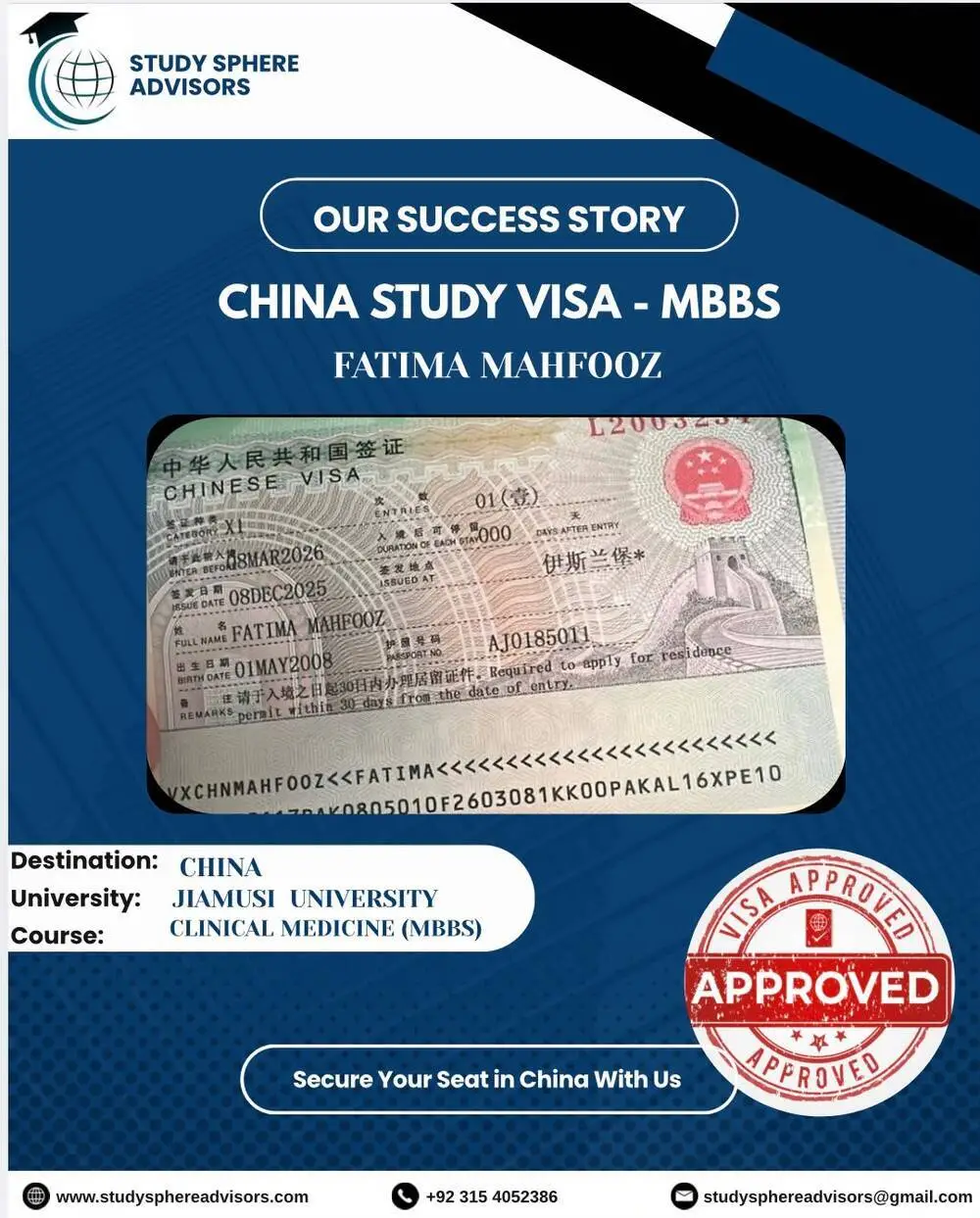
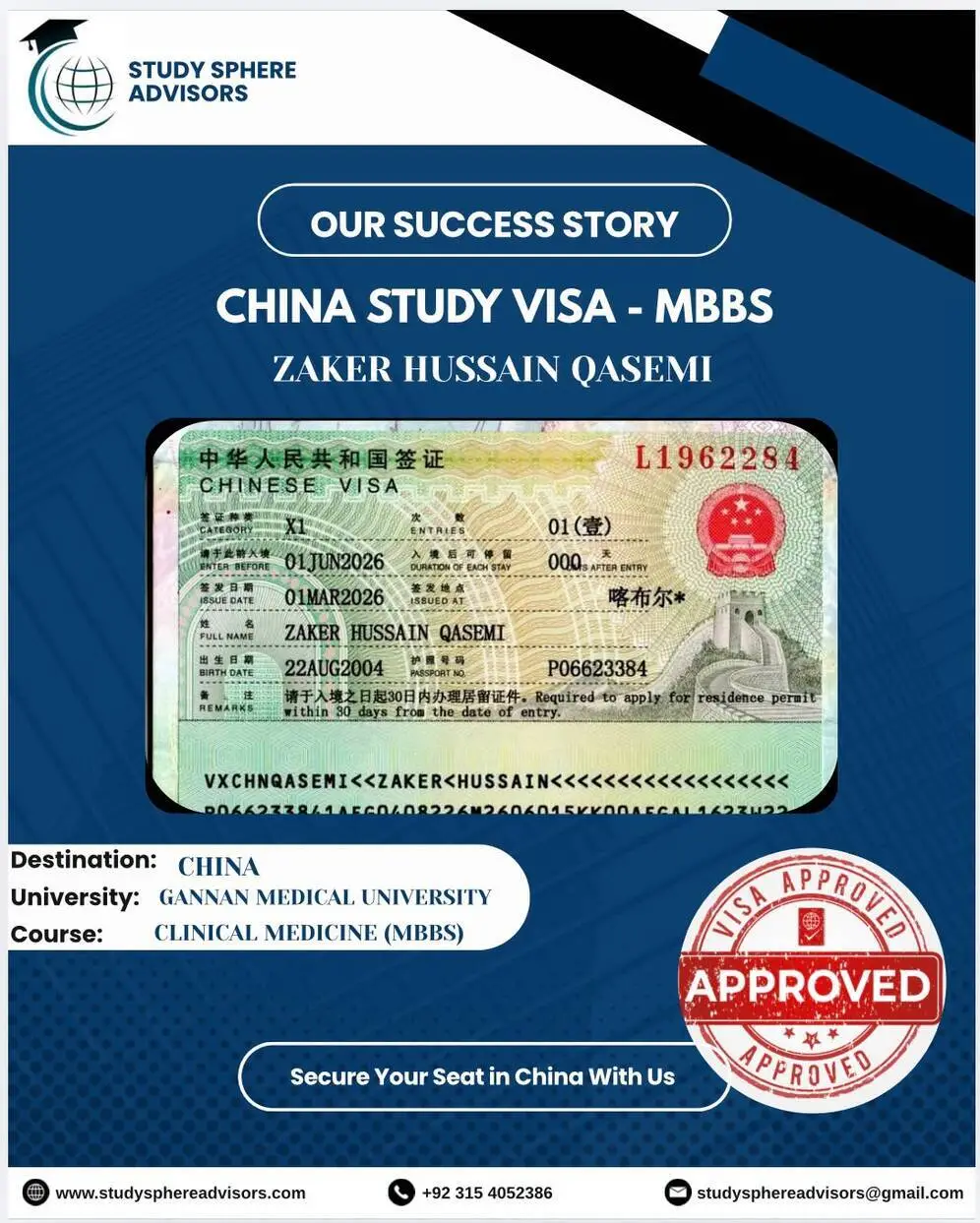
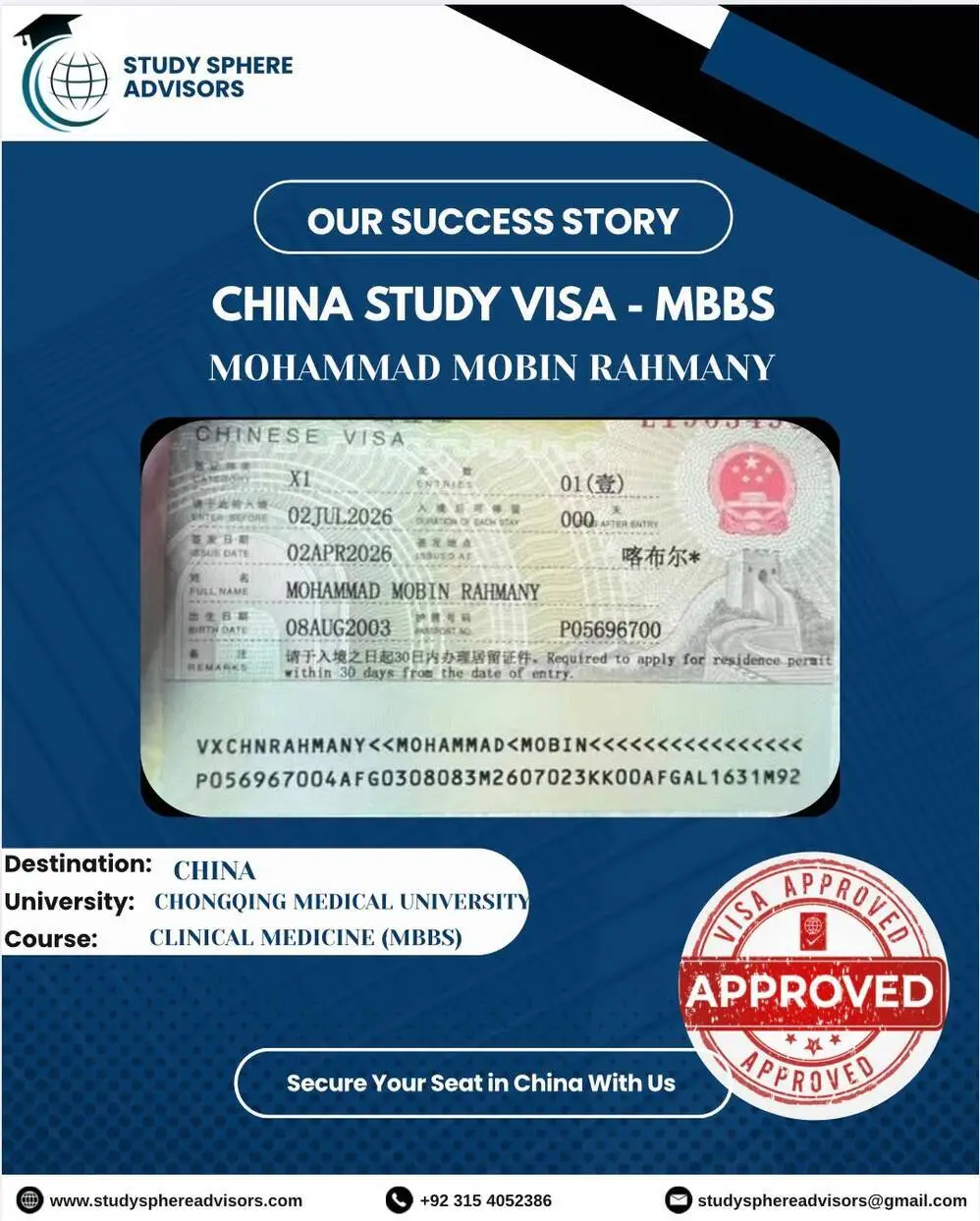
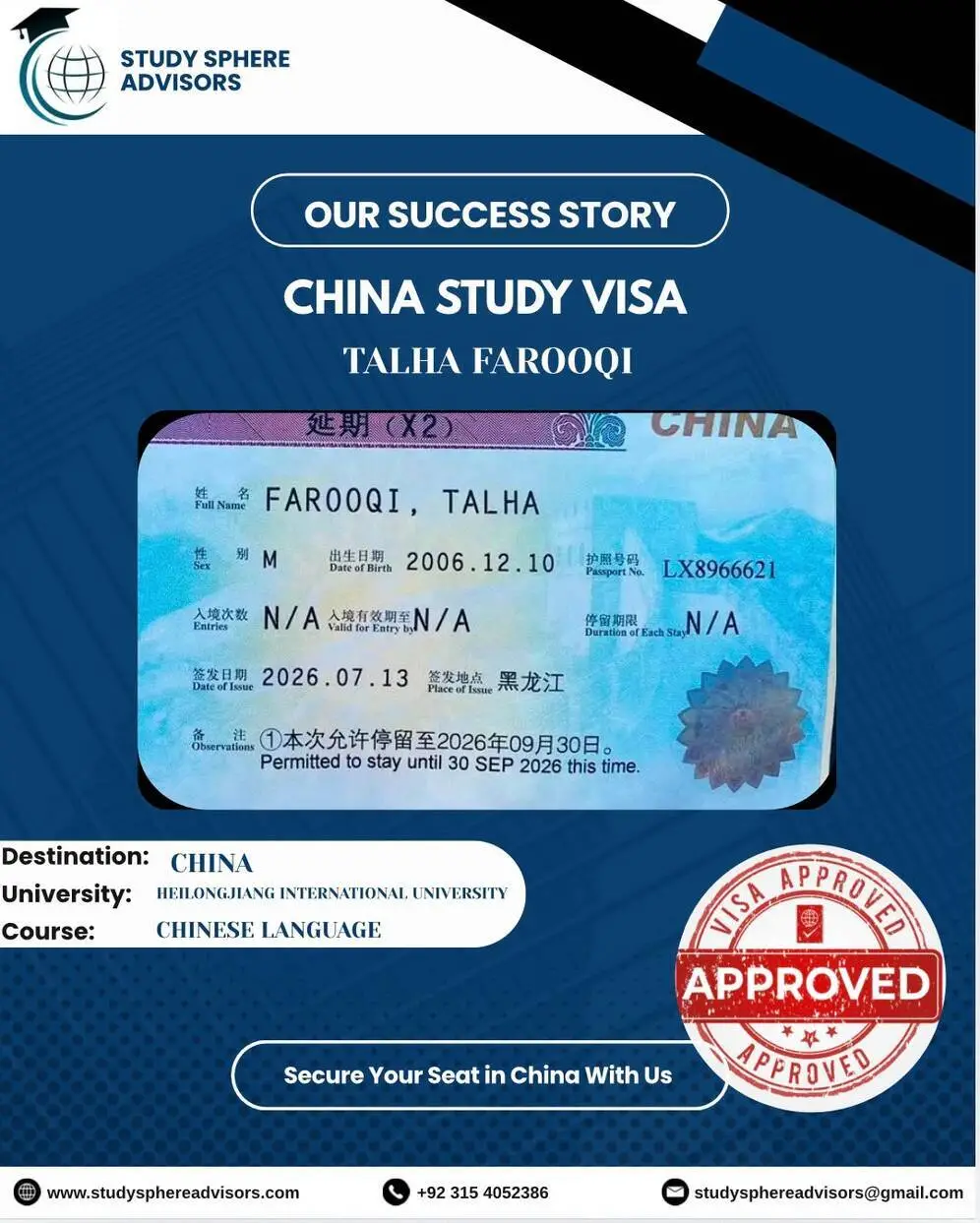
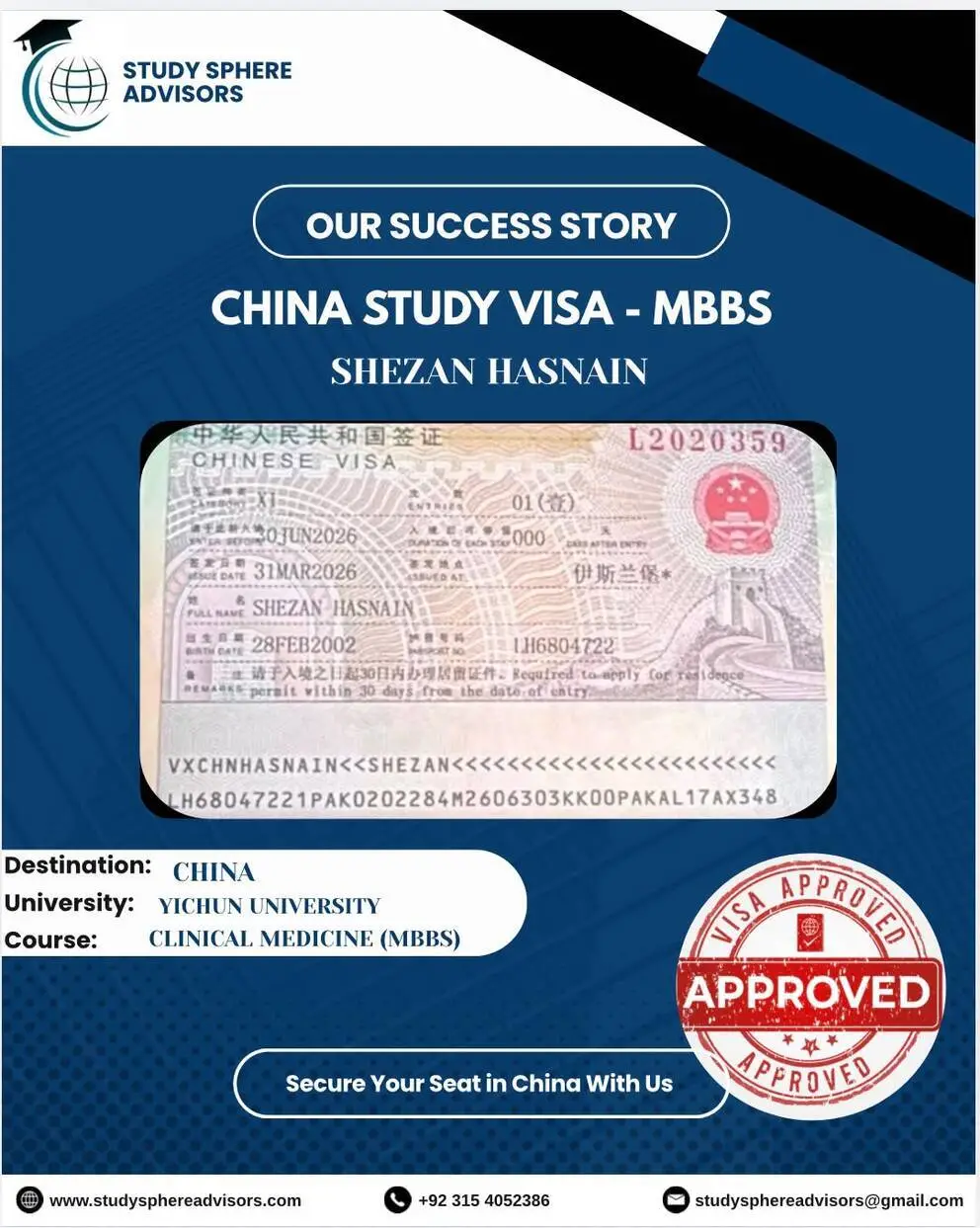
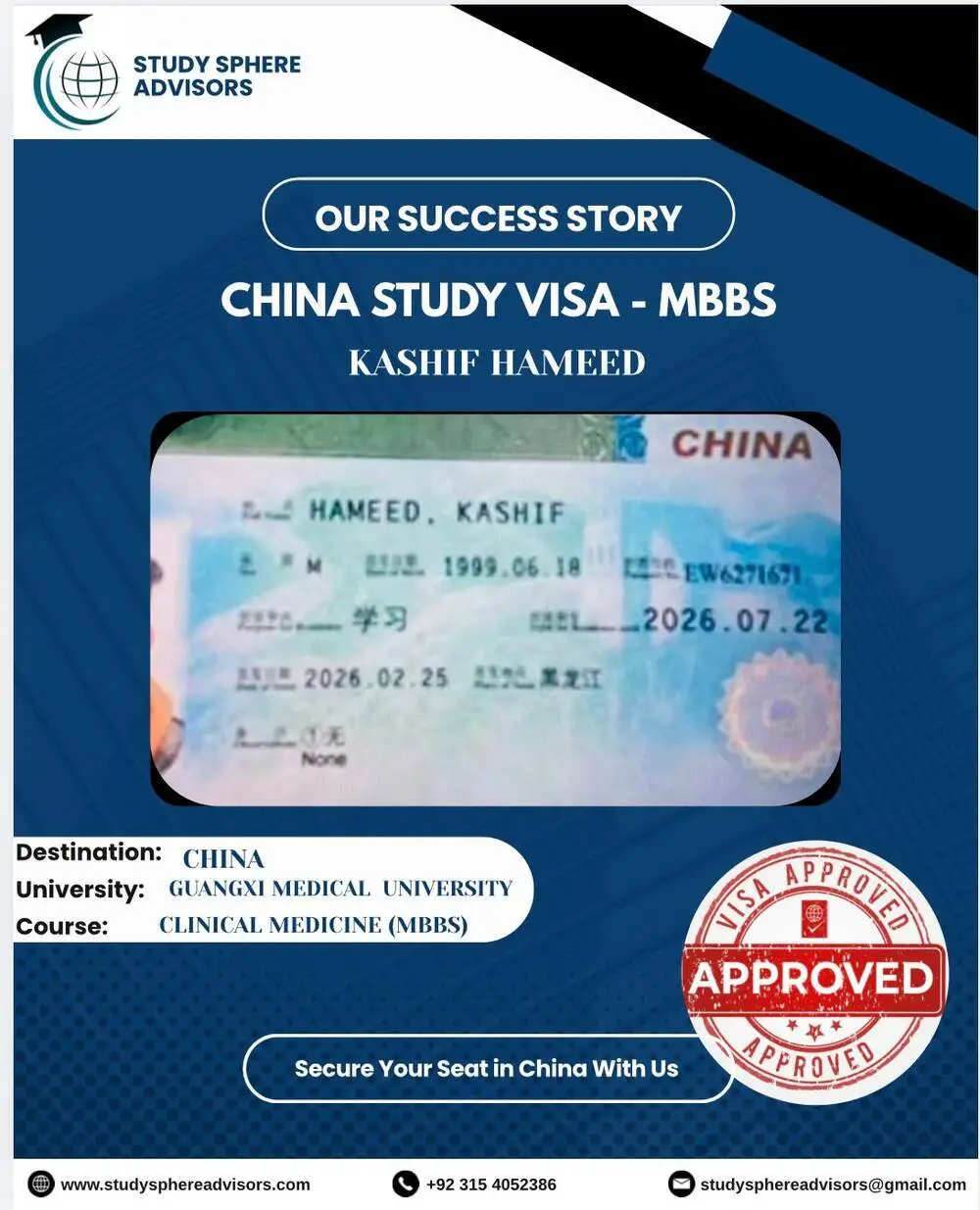
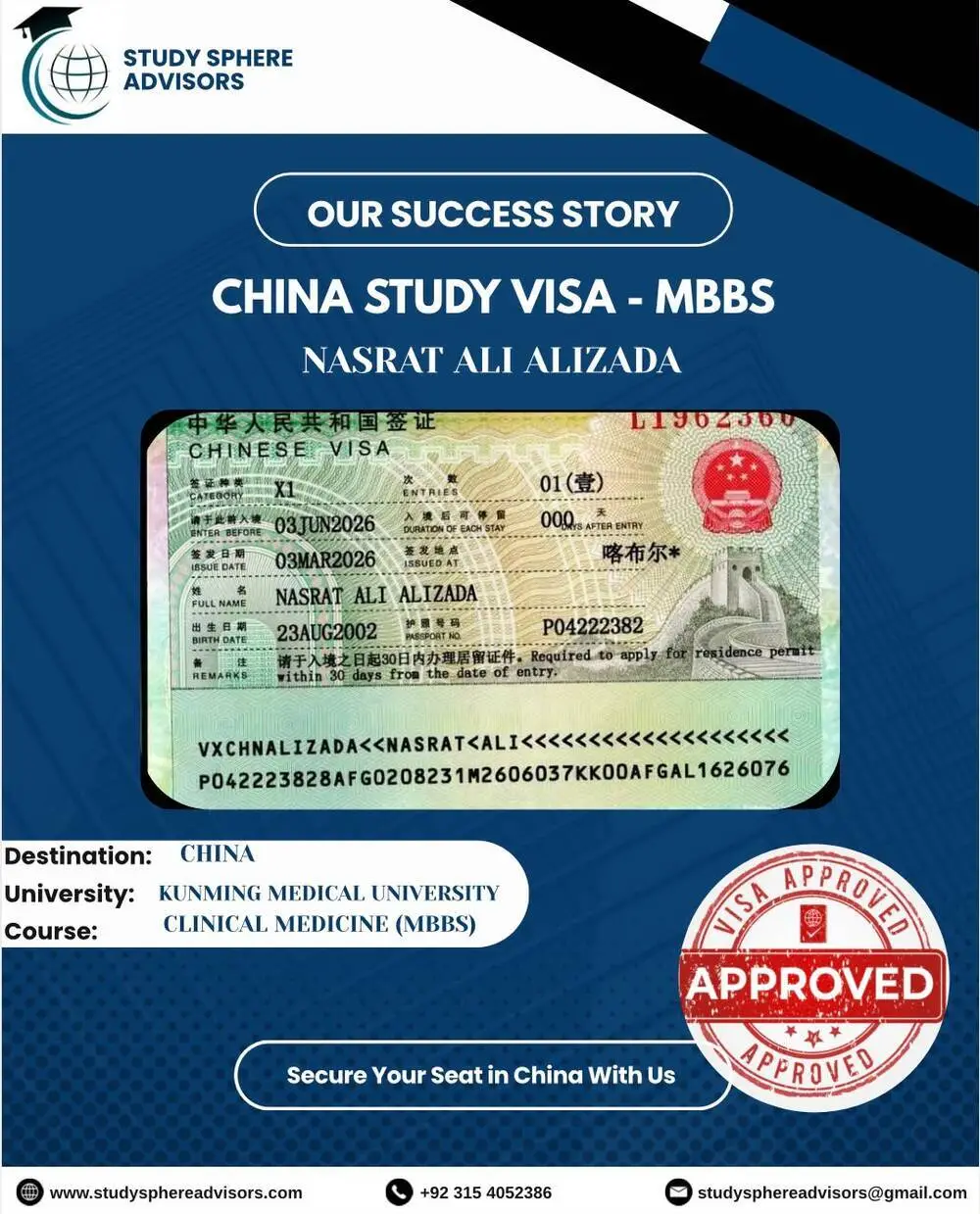
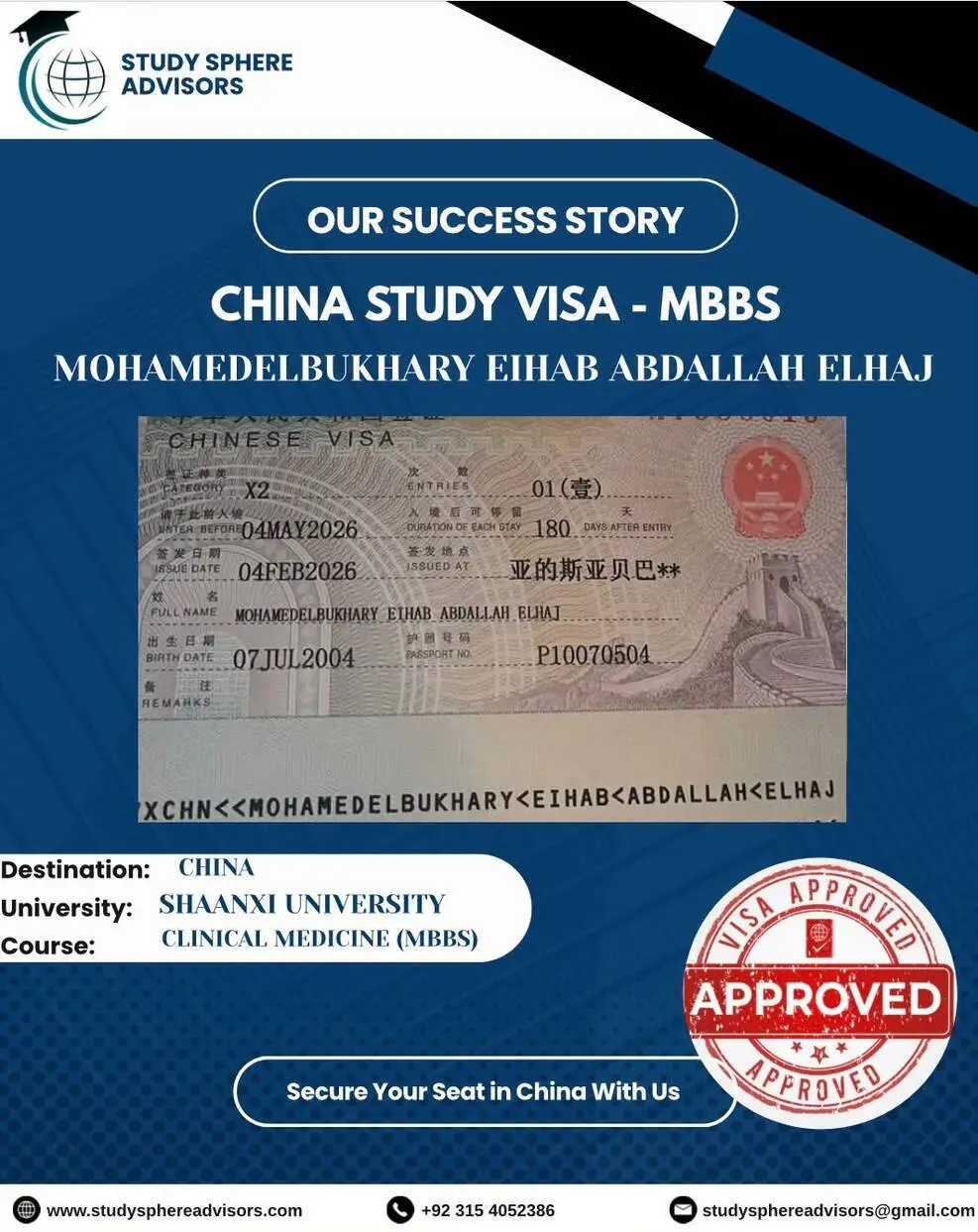
VISA SUCCESS STORIES

Recent Visa Approvals

Frequently Asked Questions

Answers to the questions language applicants ask us most often.
Do I need to know any Chinese before applying?
No. Beginner-level programmes assume no prior knowledge and start from pronunciation and characters. Existing HSK scores are needed only for scholarship applications and for placement into higher levels.
Most full-time students on a one-academic-year programme reach HSK 4, and motivated students reach HSK 5. Progress depends heavily on how much Mandarin you use outside class, students who socialise mainly with other international students in English advance noticeably slower.
Yes, and this is a common route. Reaching HSK 4 or above opens access to Chinese-taught degree programmes, which are generally cheaper and more widely available than English-taught ones. A foundation year is designed specifically for this pathway.
It depends on your HSK score, age and study plan. It is competitive but genuinely accessible, considerably more so than degree-level CSC funding. Bring your details to a consultation and we will tell you honestly where you stand.
Northern cities such as Beijing offer clearer standard Mandarin, which helps HSK performance. Southern cities offer stronger business exposure and milder winters. Smaller cities have fewer English speakers, which is frustrating at first and excellent for your progress.
Part-time work requires prior authorisation from both your university and the local exit-entry administration. Short-term X2 holders generally cannot work at all.
Programme length. Courses over 180 days require an X1 and a residence permit after arrival; courses of 180 days or less use an X2 with no conversion required. A single-semester course usually falls under X2.

Start Learning Mandarin in China

Start Learning Mandarin in China

Book a free consultation with our counsellors. Tell us your current level, your target HSK score, and what you plan to do with the language, we will identify the programmes and scholarships that fit, before you commit to anything.

Dr Hadia Saleem

+923264585253

Dr Talha Ilyas

+923154052386