
Postgraduate and doctoral study in China opens access to world-class research infrastructure, fully funded scholarship schemes, and international academic collaboration. Chinese universities consistently rank among the global leaders in engineering, artificial intelligence, physical sciences, business and medicine.
At Study Sphere Advisors, we assist postgraduate applicants in securing university acceptances, supervisor acceptance letters, and full funding packages. Postgraduate applications are won or lost on the strength of your research proposal and your supervisor connection, and that is exactly where our support is focused.
| Feature | Master's Degree | Ph.D. / Doctoral Degree |
|---|---|---|
|
Duration |
2 – 3 years |
3 – 4 years |
|
Language of Instruction |
English or Chinese (Mandarin) |
English or Chinese (Mandarin) |
|
Primary Focus |
Coursework and Master’s thesis |
Advanced independent research and defence |
|
Age Requirement |
Usually under 35 years |
Usually under 40 years |
|
Intake Period |
September (primary) / March (limited) |
September (primary) / March (limited) |
Research funding without the Western price tag
What your application must demonstrate
Prepare your file correctly the first time
Mechanical, Civil, Chemical, Electrical, Renewable Energy and Materials Science.
Artificial Intelligence, Big Data Analytics, Software Engineering, Cybersecurity and Robotics.
Medical Master's and Ph.D., Public Health, Biotechnology and Pharmacology.
MBA, Executive MBA, Finance, International Trade and Supply Chain Management.
Environmental Engineering, Climate Change Studies and Agronomy.
Full coverage including a 100% tuition waiver, free university accommodation, medical insurance and a monthly living stipend.
For Master's and Ph.D. candidates in STEM disciplines. Covers full tuition, health insurance, a travel allowance and a competitive monthly research stipend.
Including the Shanghai Government Scholarship, Jiangsu Provincial Scholarship and Zhejiang Provincial Scholarship. Typically a full tuition waiver plus a monthly stipend of ¥2,500 – ¥3,500 RMB.
Direct funding from host professors and individual university departments, covering research fees and living expenses.
Scholarship decisions rest entirely with the awarding body. We strengthen your application and nominate you where you are genuinely competitive, we do not promise outcomes we cannot control.
Classes begin in September. Scholarship applications generally run from December to April.
Classes begin in March. Only a small number of programmes accept spring postgraduate applicants.
Begin contacting potential supervisors 6 to 9 months before your intended intake. By the time CSC applications open, competitive candidates already have a supervisor's acceptance in hand.
Master's and Ph.D. students apply for the X1 Study Visa, which covers academic programmes exceeding 180 days. X1 holders must convert to a residence permit within 30 days of arriving in China.
Your application requires the JW201 or JW202 form, issued by your university once admission and funding are confirmed. Scholarship students are generally issued the JW201. We obtain the correct form on your behalf and guide you through embassy submission.
Direct assistance in identifying and contacting potential Master's and Ph.D. supervisors across top Chinese universities, including how to approach them and what your first email should contain.
We refine your study plan so it aligns with Chinese academic standards and the specific research interests of your target lab.
Matching your academic track to CSC Type A, Type B, or university-specific scholarship quotas, and applying where your chances are strongest.
Applications processed through official university channels for priority review and error-free filing.
JW form processing, X1 visa guidance, accommodation arrangements and local orientation.
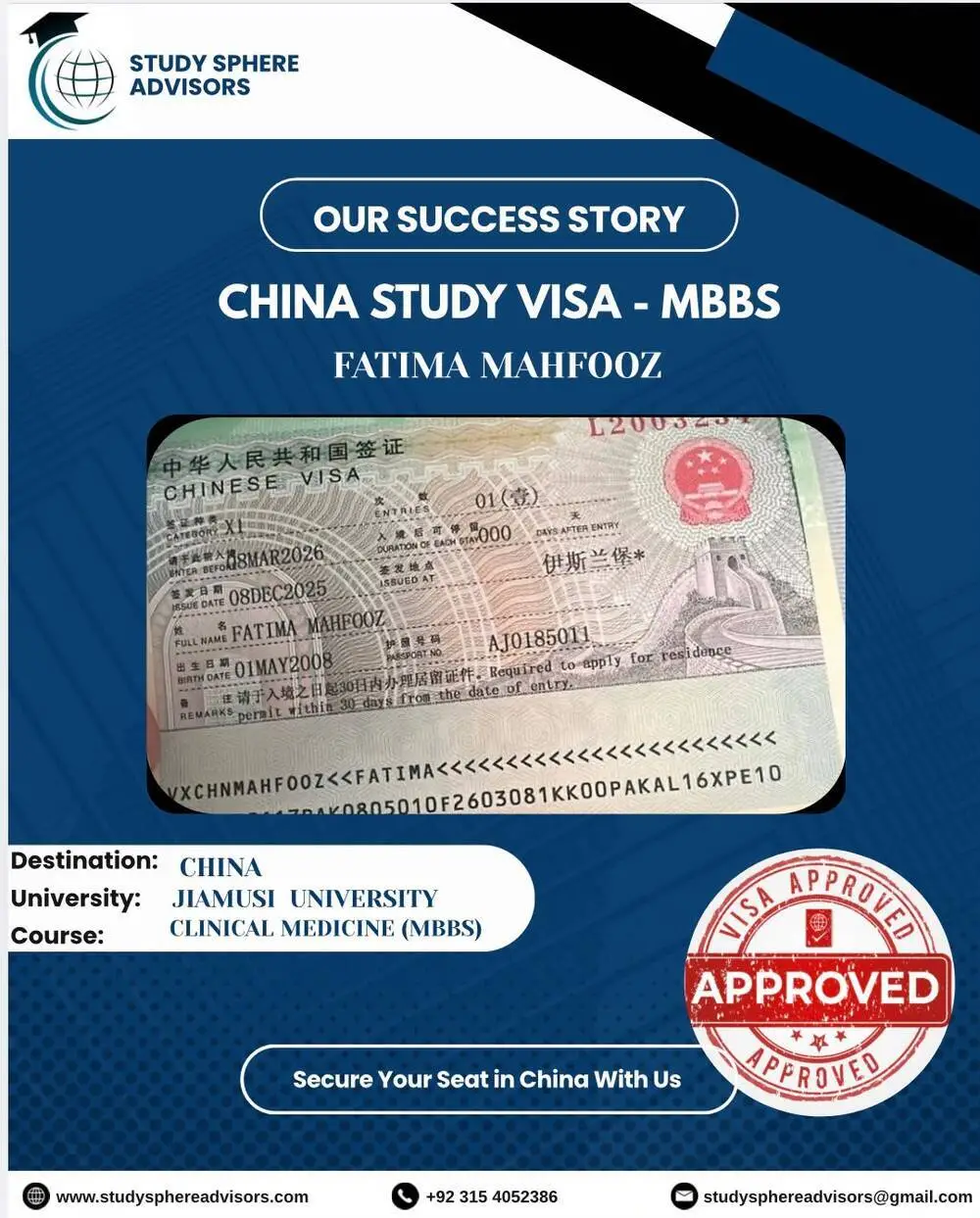
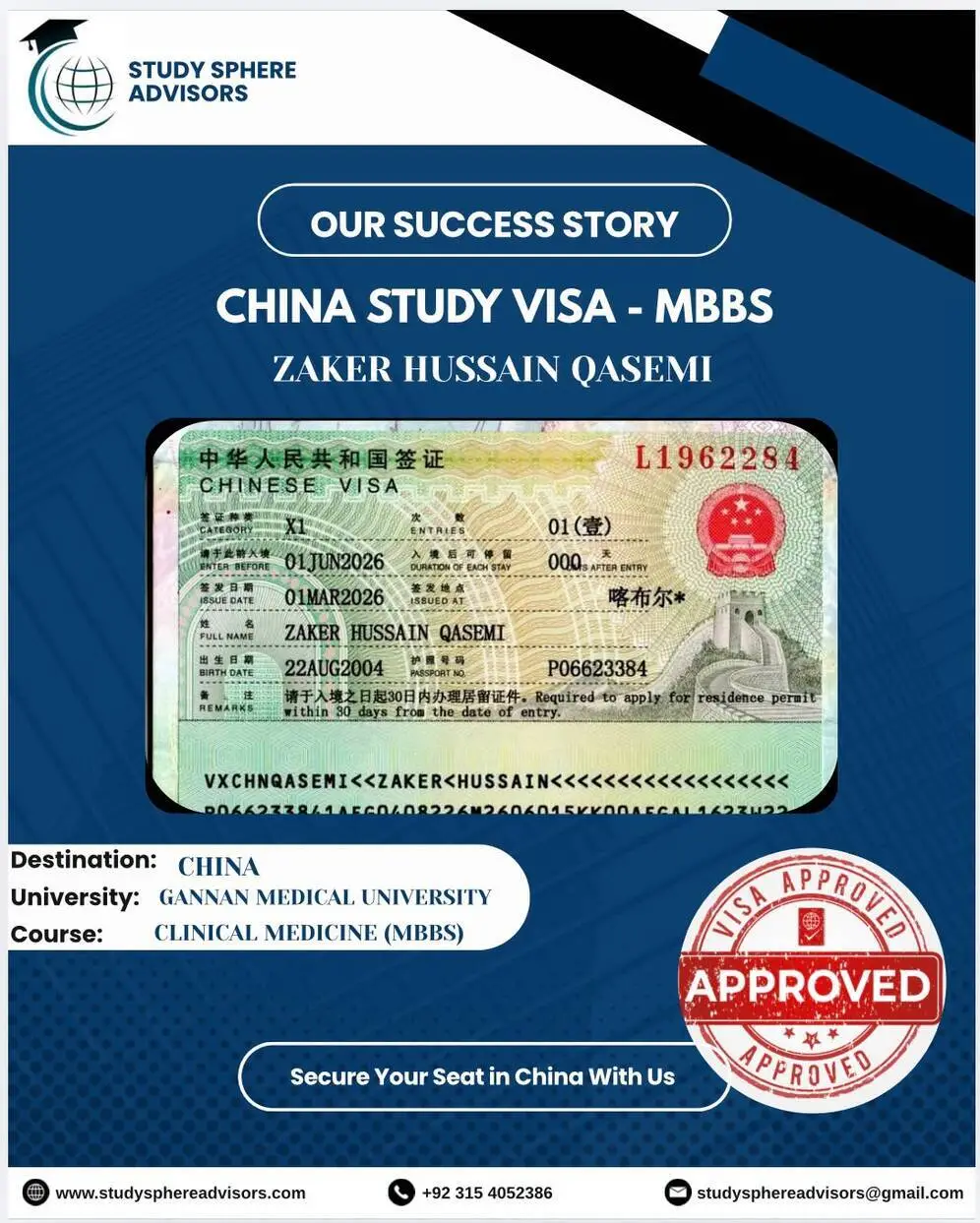
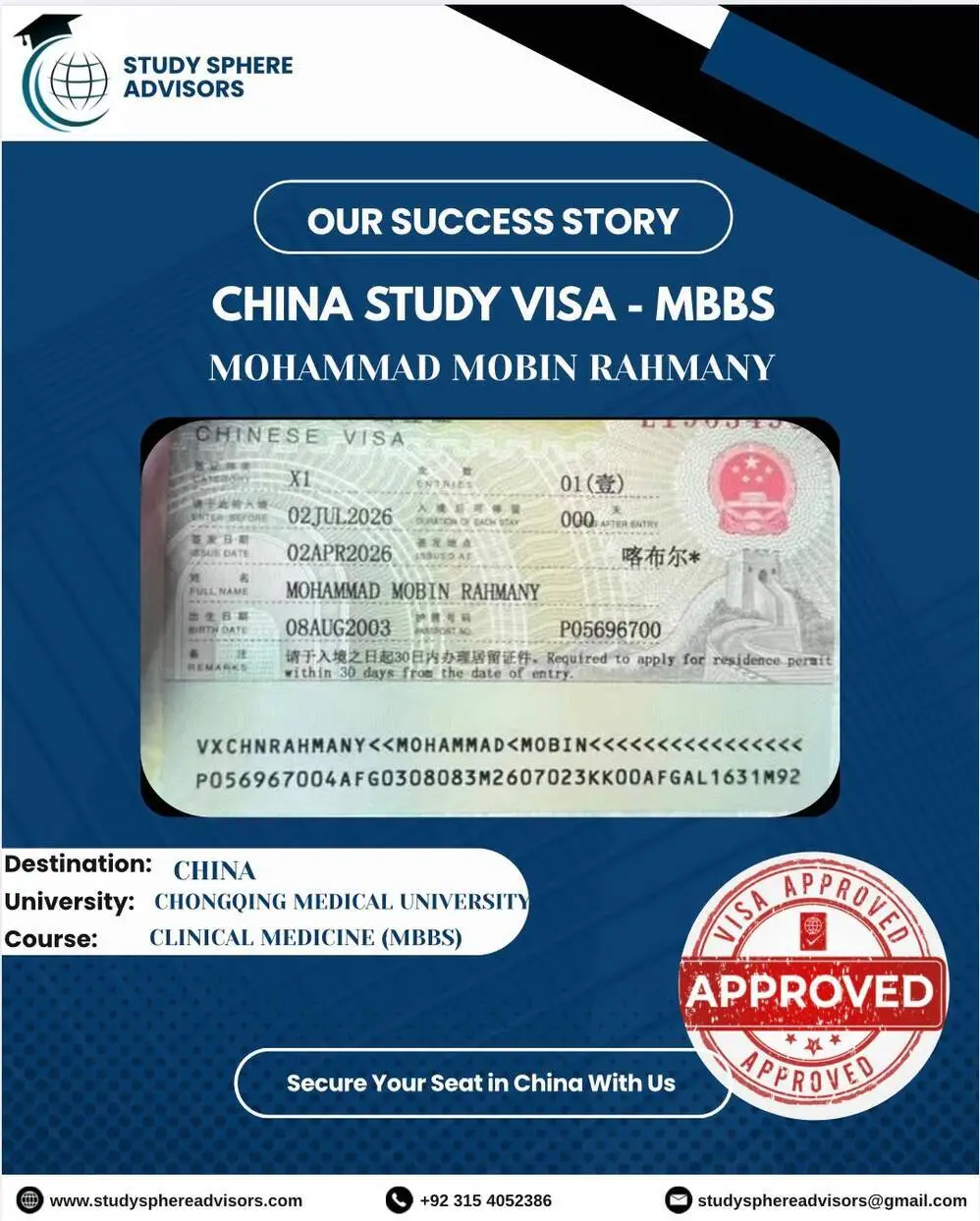
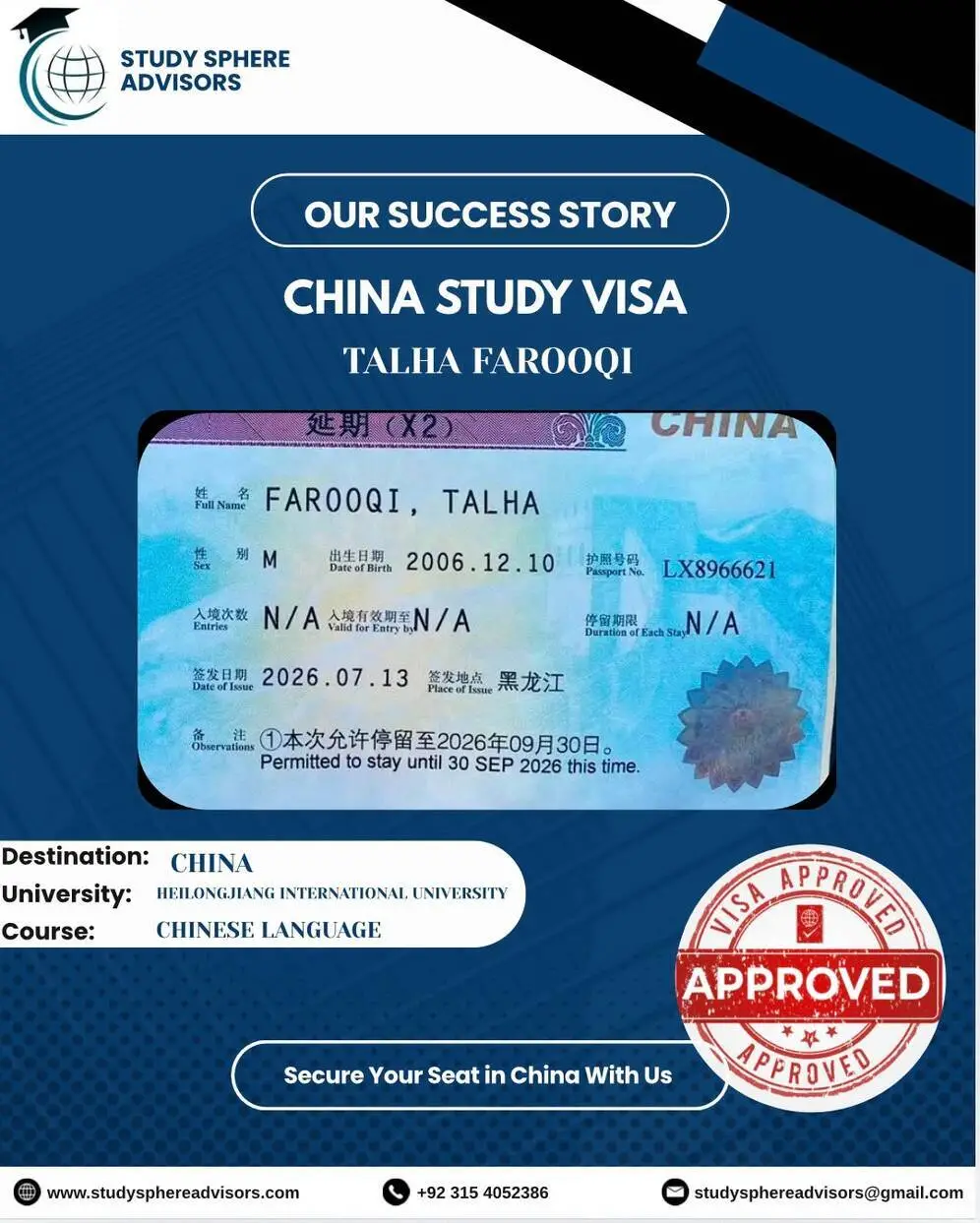
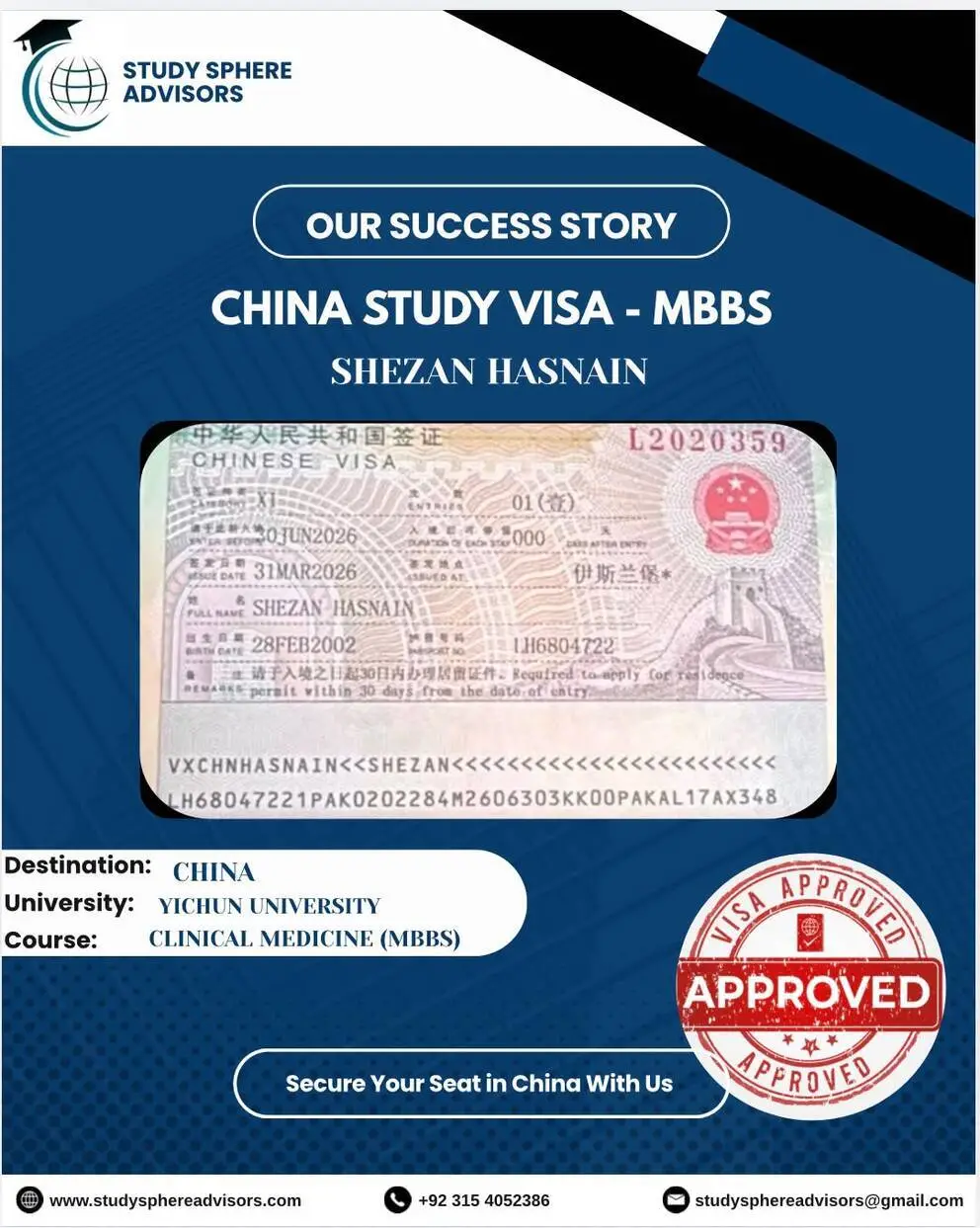
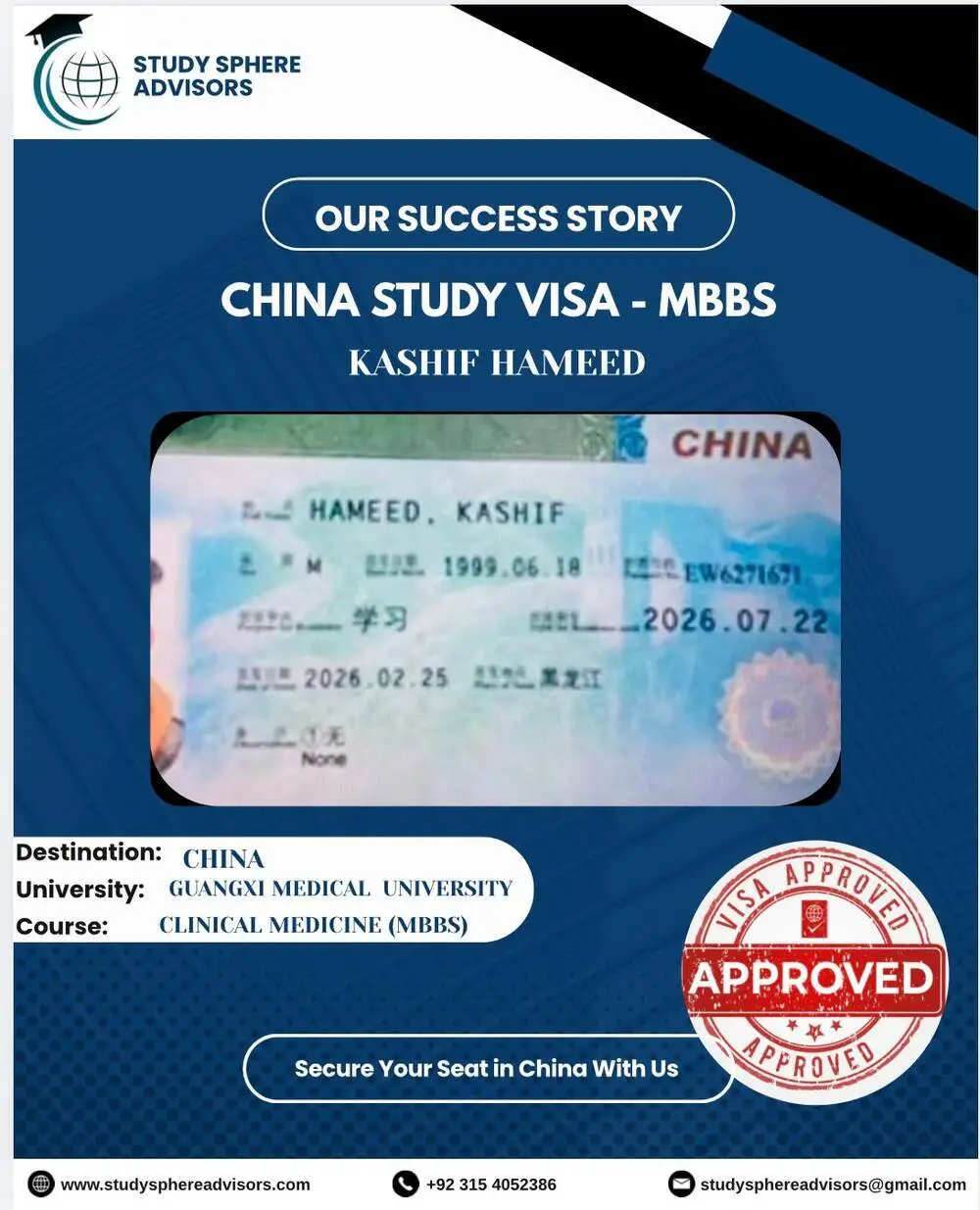
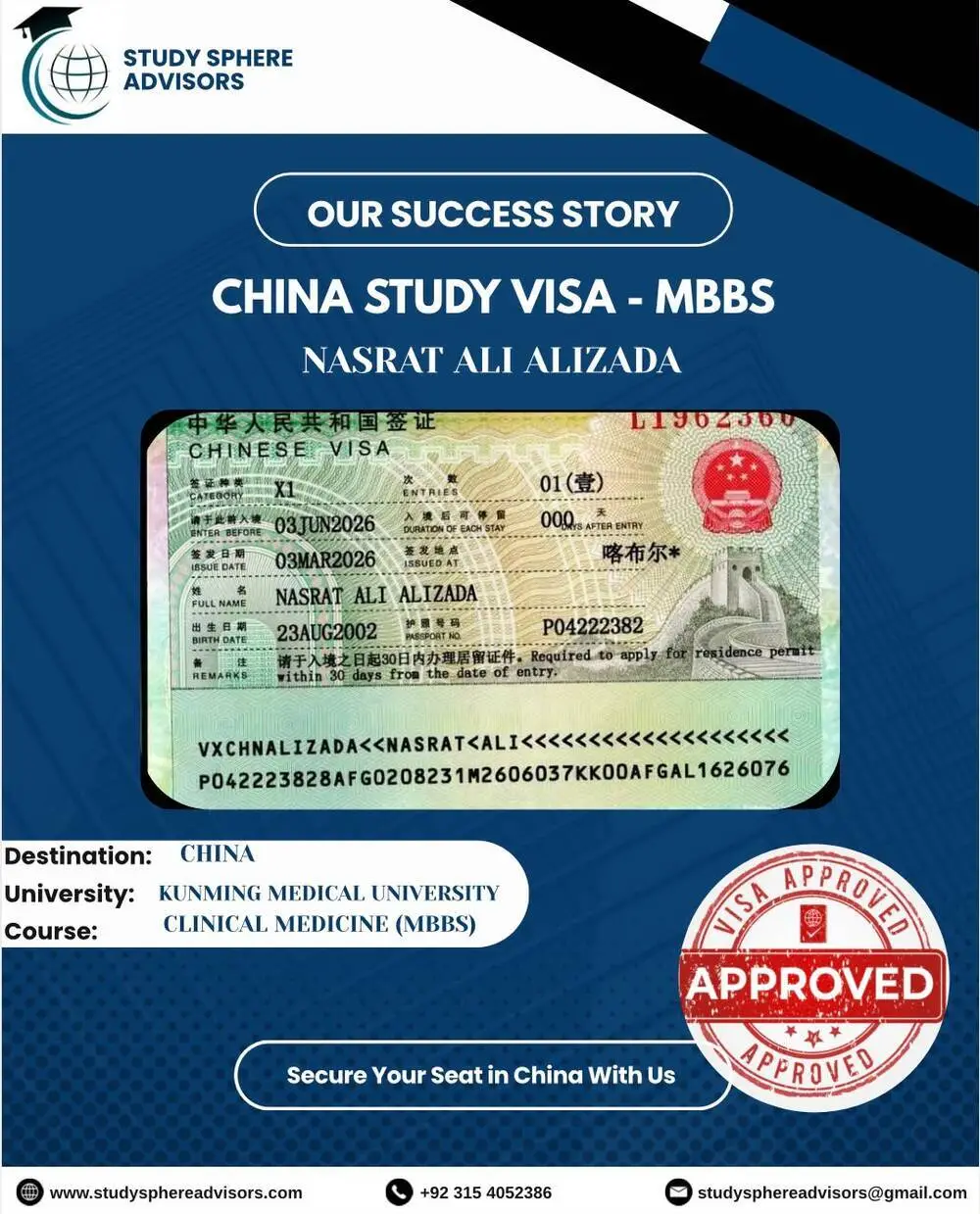
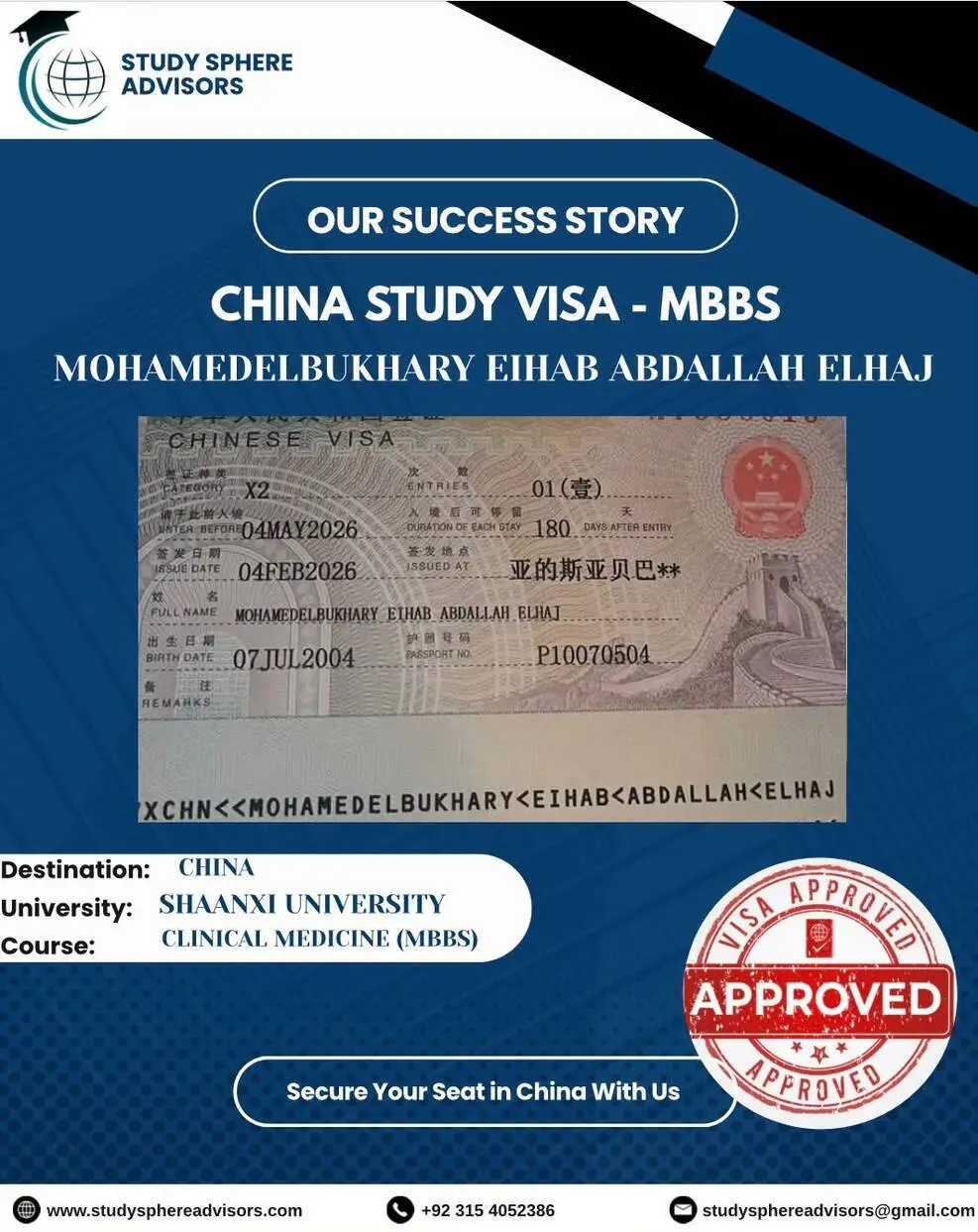
Discover how our guidance has helped students navigate university applications, make confident study-abroad decisions, and move closer to their academic goals.







+923264585253
+923154052386