
A diploma or non-degree programme in China is a flexible route for students who want practical skills, language proficiency, or a foundation qualification without committing to a full four-year degree. These programmes range from short-term language certificates to two- and three-year vocational higher education diplomas.
At Study Sphere Advisors, we help students identify direct-entry diploma routes, language immersion pathways, and university foundation courses across Chinese institutions. For many students, a diploma is not a smaller version of a degree, it is a faster route into work, or a more affordable route into one.
| Programme Type | Duration | Primary Focus | Best Suited For |
|---|---|---|---|
|
Higher Vocational Diploma (Associate Degree) |
2 – 3 years |
Practical skills in engineering, IT, hospitality and business |
Career-focused students and technical entry |
|
Chinese Language & Culture Diploma |
6 months –2 years |
HSK exam preparation, business Mandarin, cultural immersion |
Students preparing for university or corporate roles |
|
University Foundation
/ Preparatory Program |
1 year |
Academic subjects plus Chinese or English preparation |
High school graduates aiming for competitive Bachelor’s entry |
|
Joint / Bridge Programs (3+2 Pathway) |
2 – 3 years |
Credit transfer from higher diploma into a Bachelor’s degree |
Students seeking cost-effective degree progression |
Lower cost, faster entry, real progression routes
What you need to qualify
Prepare your file correctly the first time
Computer Network Technology, Software Engineering Technician, E-Commerce and Automotive Technology.
International Business, Digital Marketing, Accounting and Supply Chain Management.
Hotel Operations Management, International Tourism and Culinary Arts.
Intensive Chinese Language covering HSK 1 to 6 preparation, and Business Chinese.
For programmes exceeding 180 days, including vocational diplomas, foundation years and longer language courses. X1 holders convert to a residence permit within 30 days of arrival.
For short-term courses of 180 days or less, such as a one-semester language programme.
Your application requires the JW202 form, issued by your college once admission is confirmed. We obtain this on your behalf and guide you through the full embassy submission.
Typically ¥4,000 – ¥7,000 RMB per year, depending on the college and specialisation.
On-campus dormitory accommodation is available at most vocational colleges, usually at rates comparable to university housing.
Food, transport and personal expenses vary by city, with smaller cities considerably cheaper than Beijing or Shanghai.
Your counsellor will provide an exact written breakdown for each college on your shortlist, including insurance, registration and visa charges
Partial or full tuition waivers offered by regional governments to international vocational students.
Direct tuition discounts awarded on academic performance, usually assessed after your first semester.
Available for six-month and one-year language diploma programmes.
Be realistic about funding at this level. Diploma scholarships are usually partial rather than full, and most are performance-based awards you earn after arriving rather than before. Plan your budget on the assumption that you are self-funding the first year. we cannot control.
Many vocational colleges maintain formal credit-transfer partnerships with major Chinese universities. Under this model, students complete a three-year higher vocational diploma and then transfer into the final two years of a Bachelor's degree, graduating with a full undergraduate qualification at substantially lower total cost.
A one-year foundation programme prepares high school graduates academically and linguistically for direct entry into competitive Bachelor's programmes, including at universities that would not accept them straight from school
Students completing an intensive Chinese language diploma and reaching HSK 4 or above gain access to Chinese-taught degree programmes, which are typically cheaper and more widely available than English-taught ones
Not every college has transfer agreements, and the ones that do specify which universities and which majors. Confirm the exact pathway before you enrol, this is one of the most important questions to ask us during your consultation.
We establish whether a short-term language diploma, a one-year foundation course, or a three-year higher diploma actually fits your long-term goals, rather than pushing you toward whichever is easiest to place.
Recognised colleges with genuine industry links and, where relevant, confirmed credit-transfer agreements with universities.
Transcripts, attestation and health checks assembled to meet official college standards.
Applications processed through official college admissions channels for priority review.
JW202 processing, student visa support, accommodation arrangements and local orientation.
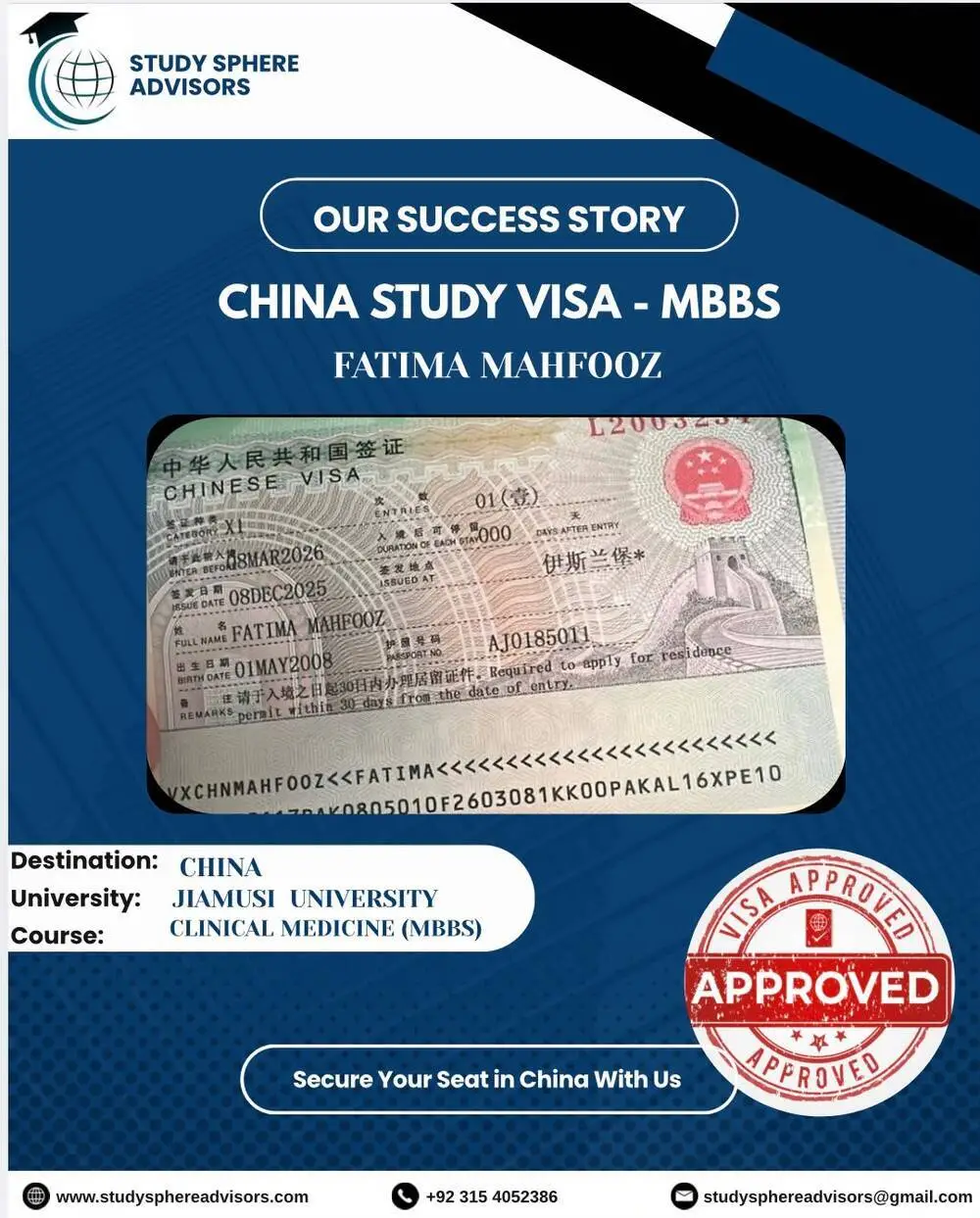
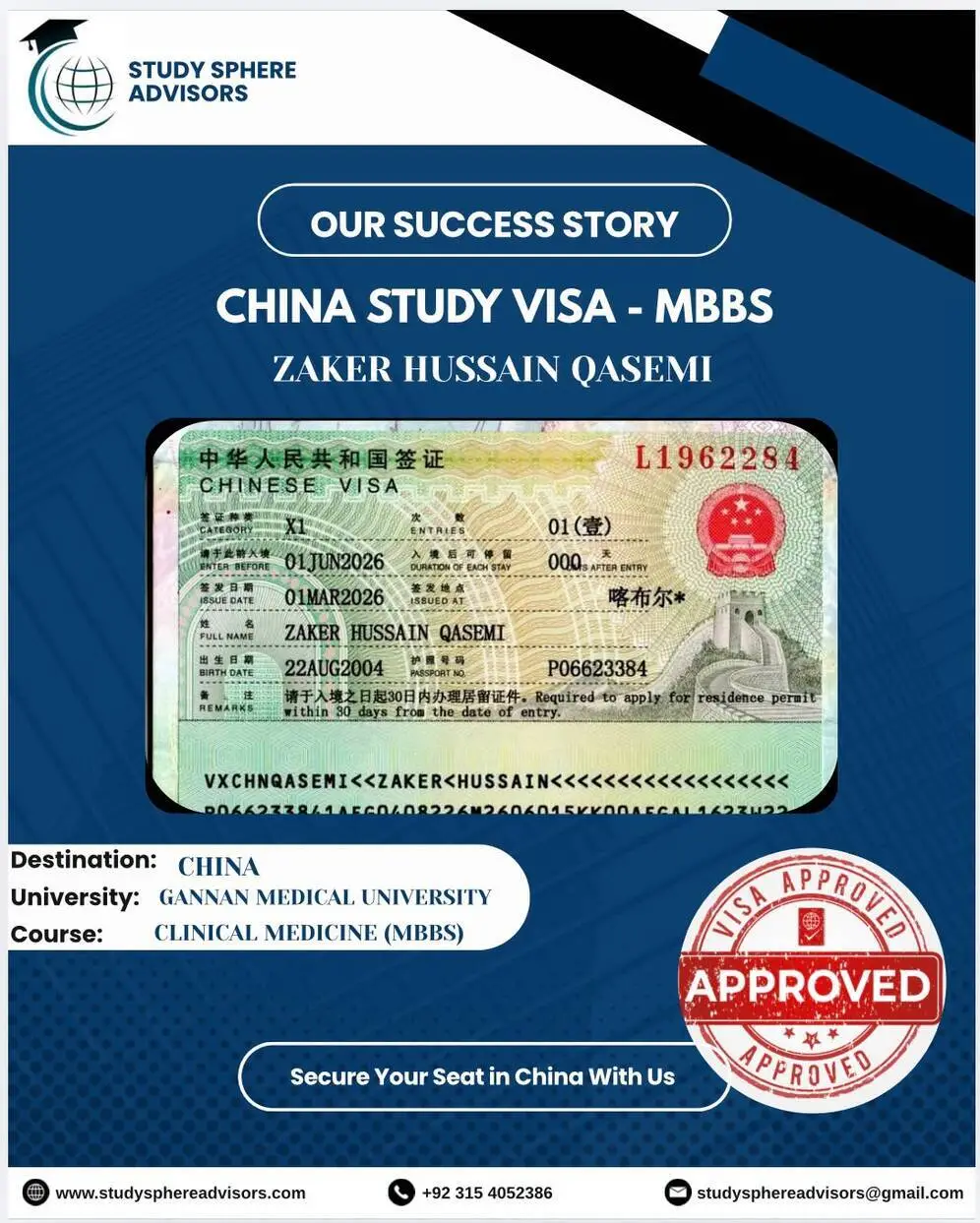
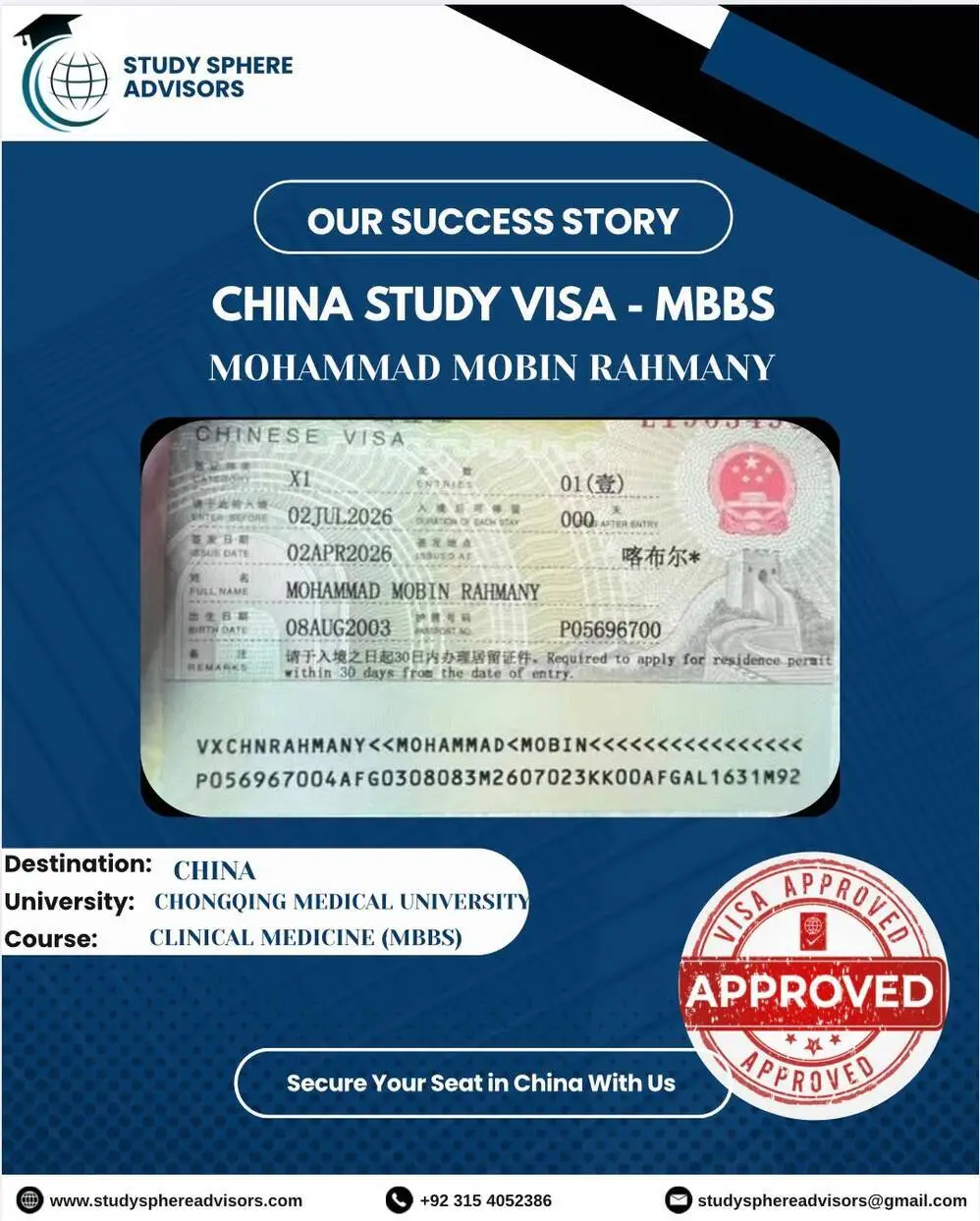
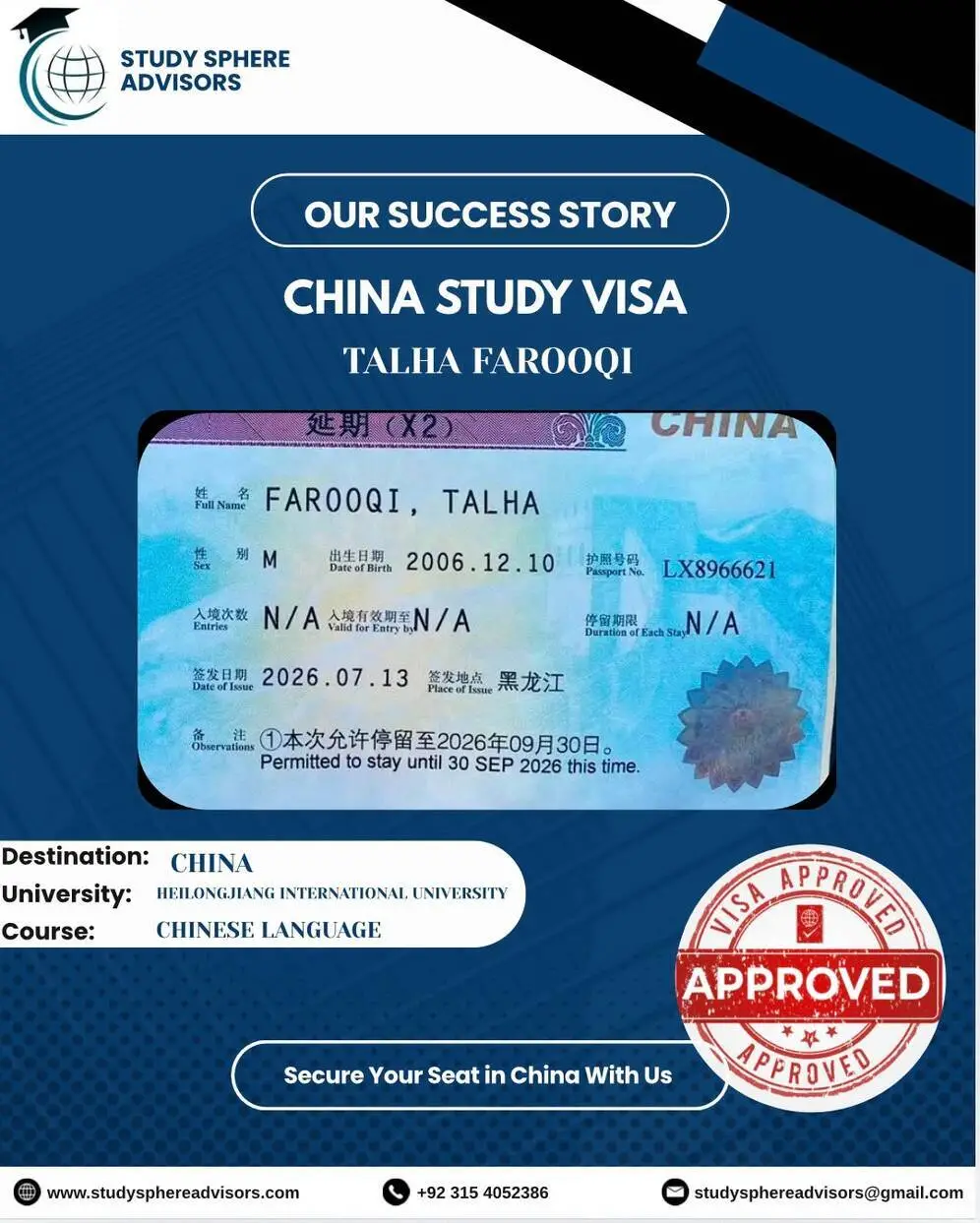
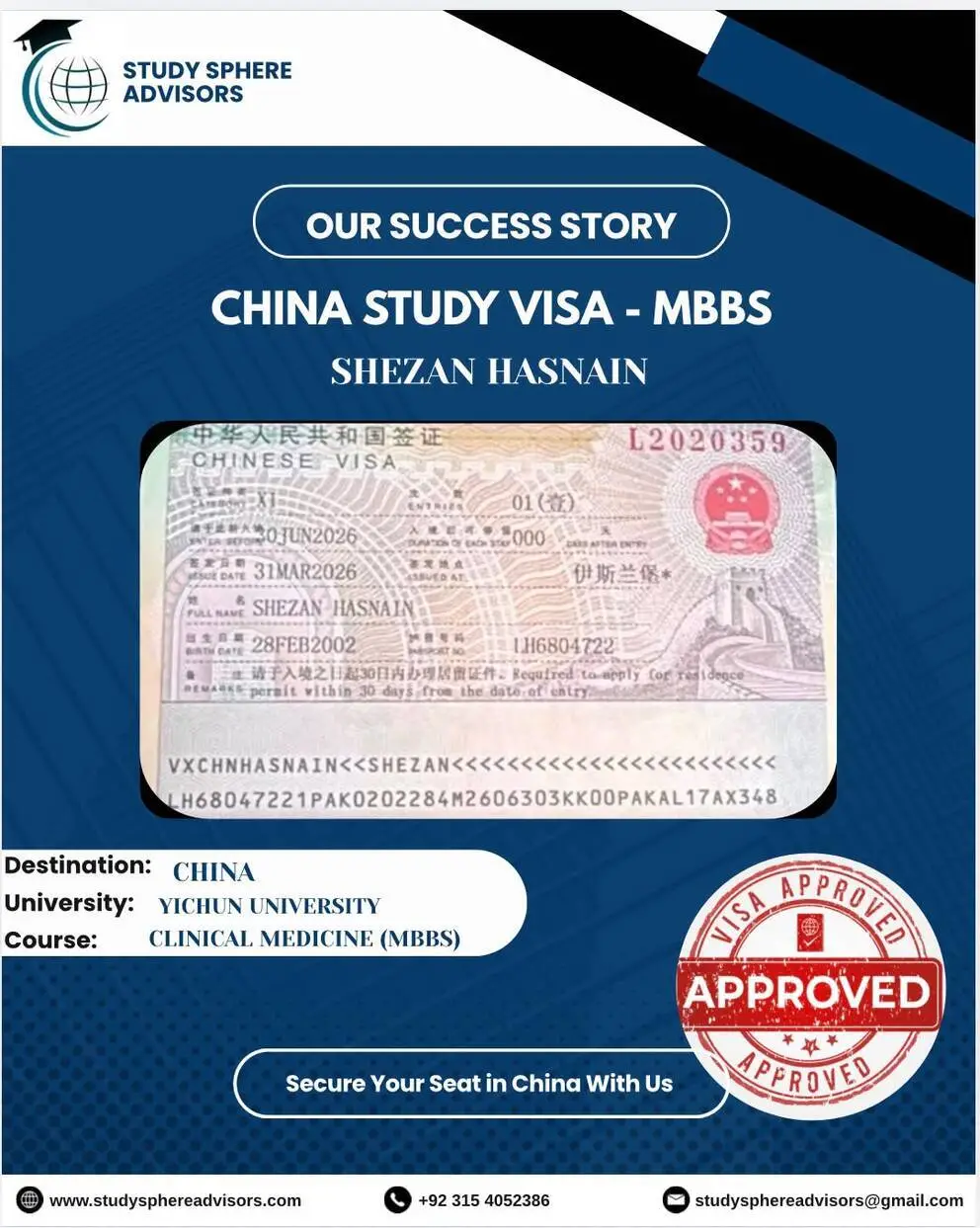
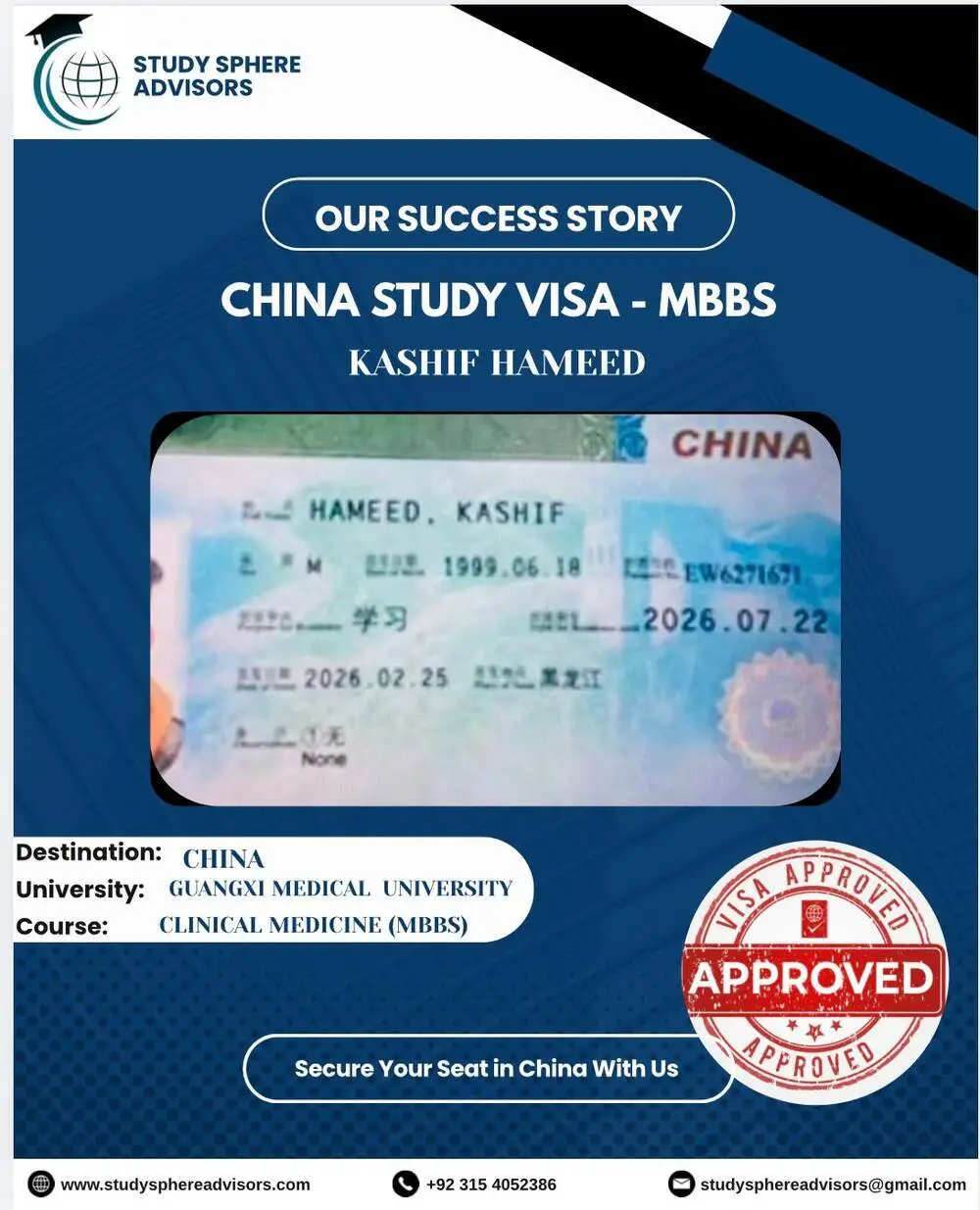
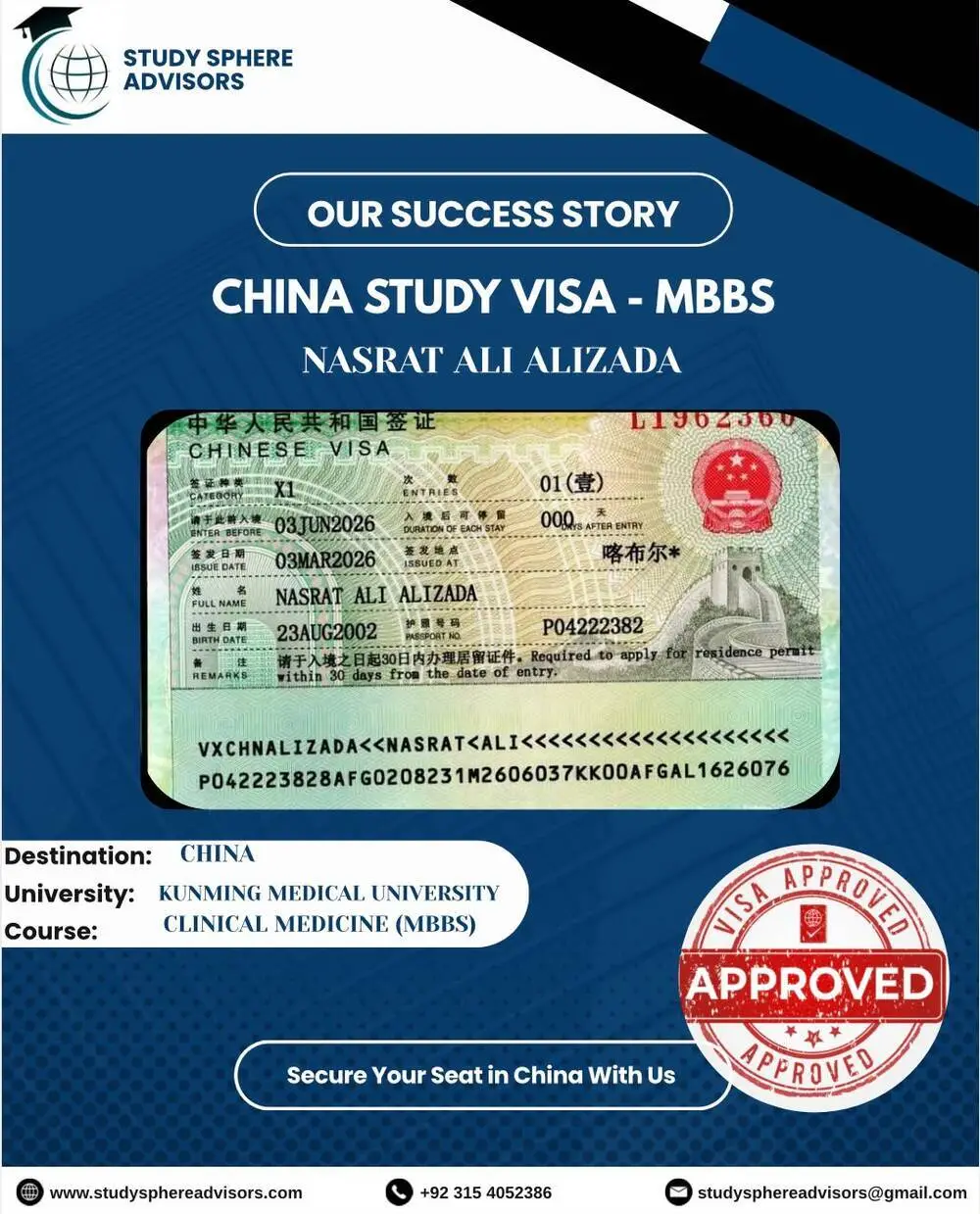
Discover how our guidance has helped students navigate university applications, make confident study-abroad decisions, and move closer to their academic goals.







+923264585253
+923154052386