
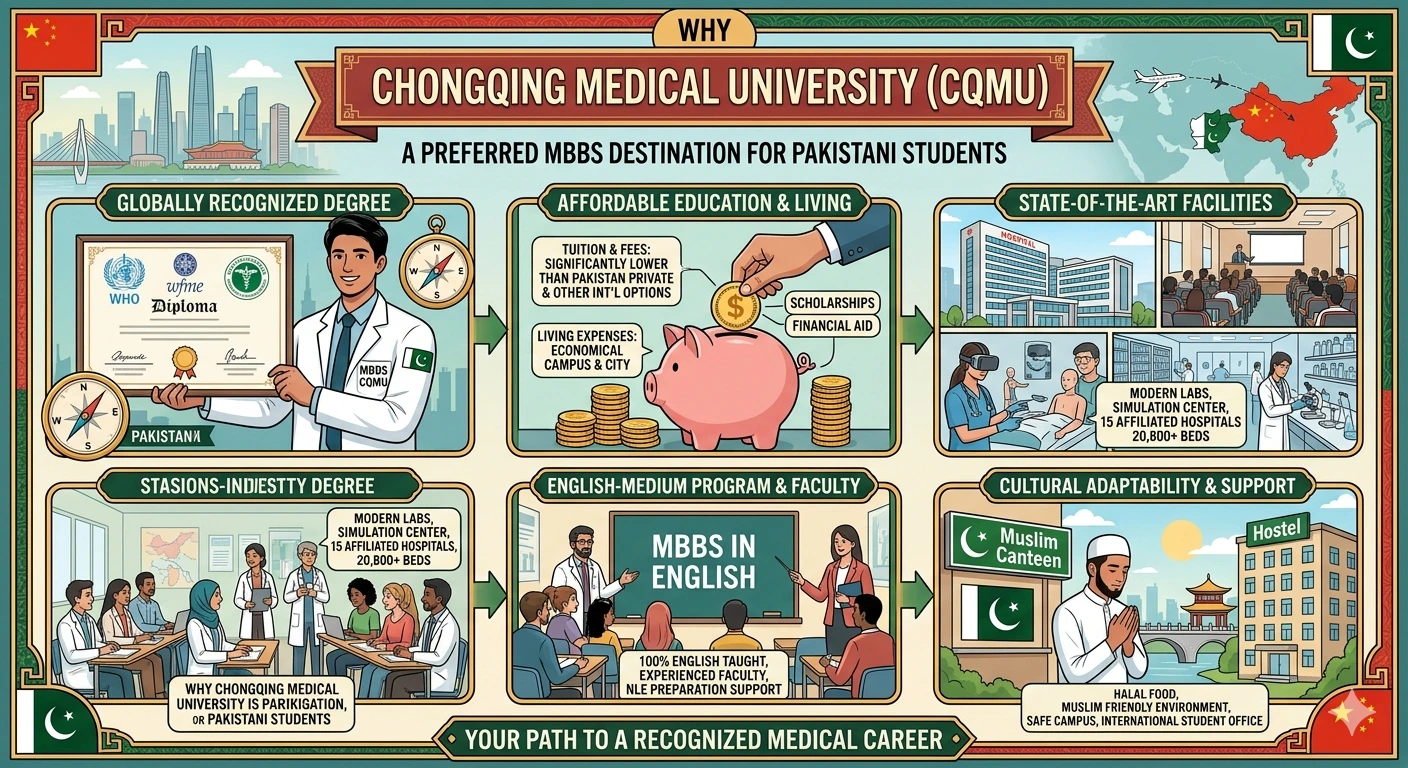
Pakistani students are increasingly considering Chongqing Medical University (CQMU) for MBBS studies because it combines recognized medical education, English-medium instruction, strong clinical training opportunities, and a long-standing commitment to international medical education. The university’s academic infrastructure, government support, and growing international reputation position it among the institutions attracting students seeking quality medical education in China.
Based on educational guidance experience and analysis of international medical study pathways, several factors explain this growing preference. Academic recognition, practical clinical exposure, research achievements, and a structured learning environment contribute significantly to student decision-making. This article examines the key reasons behind CQMU’s increasing popularity among Pakistani medical aspirants and highlights the factors students should evaluate before making an enrollment decision.
Understanding Chongqing Medical University’s Academic Position
Chongqing Medical University was established in 1956 and has evolved into a state-supported medical institution jointly supported by China’s Ministry of Education, National Health Commission, and the Chongqing Municipal Government. The university has built a reputation for medical education, clinical research, and international student training.
According to information provided by the university, CQMU has been involved in international medical education since 2001 and serves as a designated institution for Chinese Government Scholarship students. The university also gained international attention in 2020 through the development of one of China’s early COVID-19 antibody diagnostic kits.
Key Academic Characteristics of Chongqing Medical University
| Academic Feature | Details |
|---|---|
| Establishment Year | 1956 |
| Study Medium | English |
| Program Duration | 5 Years + 1 Year Internship |
| International Education Experience | Since 2001 |
| Government Support | Ministry of Education, National Health Commission, Chongqing Municipal Government |
| Medical Focus | Clinical Medicine, Research, Medical Sciences |
| International Student Programs | Available |
Why Pakistani Students Are Showing Greater Interest in CQMU
Several educational and practical factors influence student preferences when selecting an overseas medical university.
English Medium Medical Education
Language remains one of the primary concerns for international students. English-medium instruction allows Pakistani students to focus on medical concepts without facing significant language barriers during foundational medical studies.
Strong Clinical Exposure
Medical education quality depends heavily on practical training. Universities with affiliated teaching hospitals often provide students with direct exposure to patient care, clinical observation, and medical procedures during later years of study.
Research-Oriented Learning Environment
CQMU has demonstrated involvement in medical research and innovation. Exposure to research activities helps students develop critical thinking skills, evidence-based medical reasoning, and familiarity with modern healthcare developments.
Government-Supported Medical Education
Government-supported universities often benefit from established infrastructure, academic oversight, and consistent educational standards, factors frequently evaluated by students and families when comparing institutions.
Factors Pakistani Students Commonly Compare Before Selecting a Medical University
Students rarely choose a university based on a single factor. A combination of academic, professional, and practical considerations typically shapes the final decision.
| Selection Factor | Why It Matters |
|---|---|
| Recognition Status | Supports future licensing and career pathways |
| Teaching Language | Influences academic performance and adaptation |
| Clinical Training Opportunities | Develops practical medical skills |
| Research Environment | Encourages scientific and analytical thinking |
| International Student Support | Helps with adaptation and academic transition |
| Hospital Affiliations | Enhances clinical learning opportunities |
| Student Diversity | Improves cultural exposure and communication skills |
Bonus Tip: Before evaluating rankings alone, review the university’s teaching hospitals and clinical training opportunities. Clinical exposure often has a greater long-term impact on medical competency than ranking positions.
Global Trends Driving Interest in Medical Education in China
China has become a major destination for international medical students over the past decade. According to UNESCO and China’s Ministry of Education data, thousands of international students enroll in Chinese universities annually due to expanding educational infrastructure and international programs.
Several factors contribute to this trend:
- Increased availability of English-medium medical programs
- Expansion of modern teaching hospitals
- Greater emphasis on medical research
- International collaborations and exchange opportunities
The World Health Organization has also emphasized the importance of strengthening healthcare workforce training globally, increasing interest in internationally recognized medical education pathways.
Important Considerations Before Choosing Any MBBS Program Abroad
Selecting a medical university requires careful evaluation beyond admission eligibility.
Verify Recognition Requirements
Students should confirm current recognition requirements applicable to their intended country of future practice, as licensing regulations can change over time.
Evaluate Clinical Training Infrastructure
Hospital affiliations, patient exposure, and practical training opportunities should be reviewed carefully because these factors directly influence clinical competency development.
Understand Academic Expectations
Medical education involves intensive study, regular assessments, laboratory work, and clinical rotations. Students should realistically assess their readiness for this commitment.
Assess Cultural and Geographic Adaptation
Climate, food habits, living arrangements, and communication environments can affect student adjustment during the first academic year.
Bonus Tip: Speak with current students or recent graduates whenever possible. First-hand experiences often reveal practical realities that brochures and advertisements do not cover.
Educational Support Services Available Through Study Sphere Advisors
Study Sphere Advisors provides guidance related to international education pathways and visa processes. The most relevant services include:
- Study Visa Assistance
Support with documentation requirements, application preparation, and procedural guidance for international education. - Student Visa Guidance
Assistance in understanding student visa requirements and compliance obligations. - Business Visa Services
Support for individuals requiring business-related international travel documentation. - Work Visa Consultation
Guidance regarding work visa processes and documentation requirements where applicable.
Questions Students Often Ask Before Applying
How important are university-affiliated hospitals?
They play a significant role because clinical exposure directly influences practical medical training and patient interaction experience.
Should students focus more on rankings or training quality?
Both matter, but clinical training quality often has a greater impact on future medical competence.
Does English-medium instruction eliminate language challenges?
Not entirely. Students may still need basic local language skills for daily life and certain clinical interactions.
Is research exposure important for MBBS students?
Yes. Research develops analytical thinking and strengthens understanding of evidence-based medicine.
Additional Questions Students Frequently Explore
How can students prepare academically before starting MBBS abroad?
Building strong foundations in biology, chemistry, and medical terminology can ease the transition into university-level medical studies.
What skills help students succeed during clinical rotations?
Communication, observation, professionalism, teamwork, and patient interaction skills are especially valuable.
How important is cultural adaptability during international studies?
Adaptability supports academic success, social integration, and overall student well-being throughout the program.
Can medical students participate in research during undergraduate studies?
Many universities encourage student involvement in research projects, academic conferences, and scientific publications.
What should students evaluate when comparing multiple universities?
Recognition status, clinical facilities, faculty resources, research opportunities, teaching language, and student support systems should all be reviewed together.
Final Thoughts
Chongqing Medical University is attracting increasing attention from Pakistani students because of its English-medium medical education, government-supported academic structure, research engagement, and focus on clinical training. These factors align closely with the priorities most students consider when evaluating international MBBS opportunities.
Students should carefully assess recognition requirements, clinical training quality, academic expectations, and long-term career goals before selecting any medical university. An informed decision based on educational quality and professional objectives typically produces the strongest outcomes.
Leave a Reply