
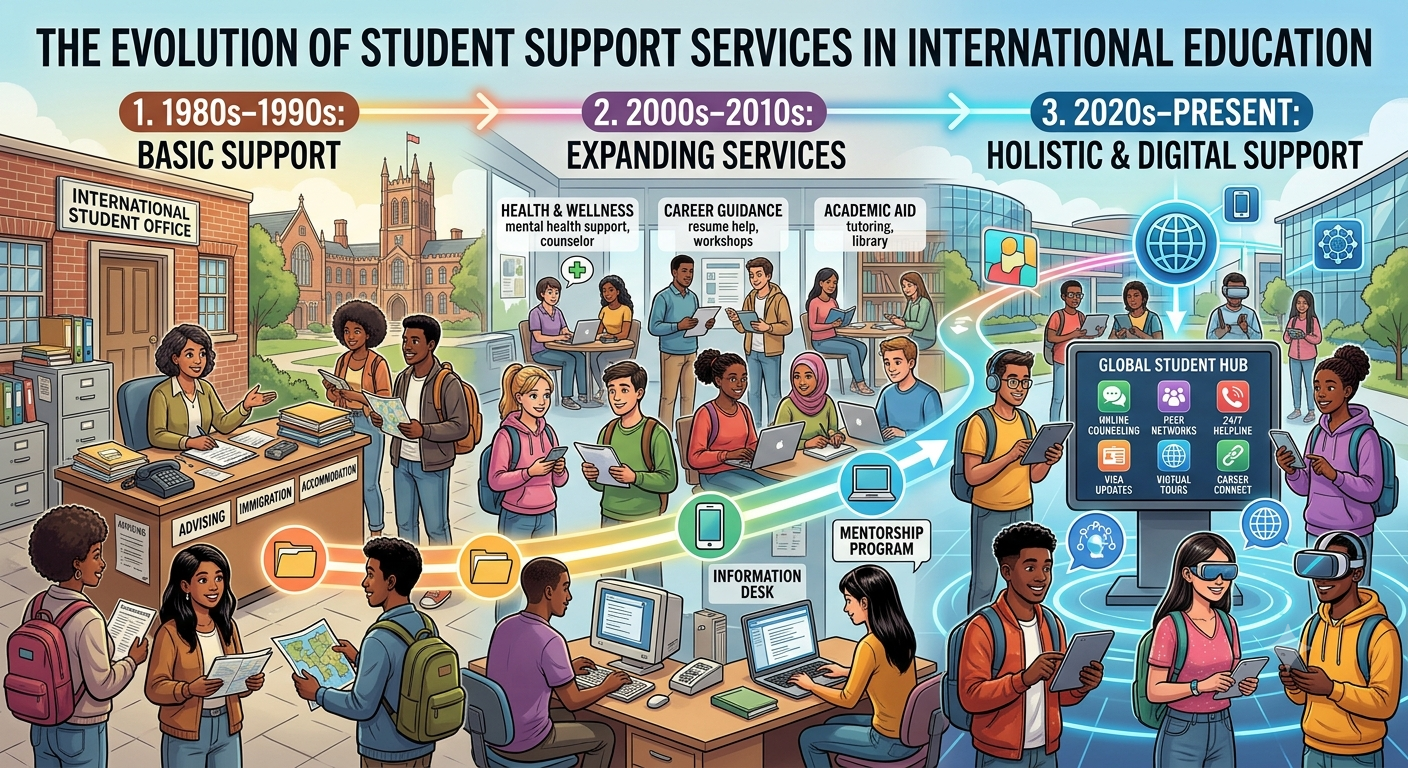
International student support services have evolved from basic administrative assistance into comprehensive systems that address academic success, mental well-being, career development, cultural integration, and digital accessibility. Modern international education institutions recognize that student success depends on far more than classroom learning. Effective support now extends across the entire student journey, from pre-departure guidance to post-graduation career planning.
Drawing from trends identified in international higher education research, institutional practices, and student advisory experience, the evolution of student support services reflects changing student expectations, increased global mobility, and the growing complexity of studying abroad. Understanding this evolution helps students make informed decisions when evaluating educational pathways and support structures.
How Student Support Services Have Changed Over Time
Early international student support primarily focused on admissions, visa processing, and enrollment assistance. Institutions viewed support services as administrative functions rather than strategic components of student success.
Today, support systems operate as integrated ecosystems that address academic, social, psychological, technological, and professional needs. Research published in higher education studies consistently shows that students value services that directly contribute to their personal growth, academic achievement, and employability outcomes.
Key Stages in the Development of Student Support Services
| Period | Primary Focus | Typical Services |
|---|---|---|
| 1980s–1990s | Administrative Support | Admissions, registration, visa documentation |
| 2000s | Student Integration | Orientation programs, accommodation assistance, cultural activities |
| 2010s | Holistic Student Experience | Mental health support, academic coaching, career guidance |
| 2020s and Beyond | Personalized Digital Support | AI-driven advising, virtual services, wellness programs, career ecosystems |
A major shift occurred when institutions recognized that international students face unique challenges beyond academics, including cultural adaptation, language barriers, social isolation, and unfamiliar employment systems.
The Core Components Students Value Most
Research examining international student experiences indicates that students place the highest value on services that directly improve academic performance, well-being, and future career opportunities.
Student-Prioritized Support Components
| Support Area | Student Value | Impact on Success |
|---|---|---|
| Academic Advising | High | Improves retention and performance |
| Career Development | High | Enhances employability outcomes |
| Mental Health Services | High | Supports emotional resilience |
| Orientation Programs | Moderate to High | Accelerates adaptation |
| Peer Mentoring | Moderate | Strengthens belonging |
| Digital Support Platforms | High | Improves accessibility |
| Language Support | Moderate to High | Enhances academic confidence |
Institutions increasingly allocate resources toward these areas because evidence shows they influence student satisfaction and graduation outcomes more significantly than traditional administrative services alone.
Bonus Tip: Students evaluating study destinations should review support services before selecting an institution. Academic rankings provide only part of the picture; support infrastructure often has a direct effect on student outcomes.
The Rise of Personalized Student Support
Modern international education emphasizes personalization. Institutions now recognize that student needs vary based on academic background, language proficiency, cultural familiarity, and career goals.
Instead of providing identical support to every student, universities increasingly use individualized advising models. These approaches identify challenges early and connect students with relevant resources before problems escalate.
A notable trend involves predictive support systems that analyze engagement patterns and proactively offer assistance when students show signs of academic or social difficulties.
According to UNESCO global mobility data, international student mobility continues to grow across regions, increasing demand for scalable yet personalized support systems (Source: UNESCO Institute for Statistics).
How Technology Has Reshaped Student Services
Technology has transformed how support services are delivered. Digital platforms now allow students to access assistance regardless of location or time zone.
Technology-Driven Support Functions
| Function | Traditional Delivery | Modern Delivery |
|---|---|---|
| Advising | In-person meetings | Virtual and hybrid consultations |
| Orientation | Campus sessions | Interactive online modules |
| Career Services | Workshops | AI-assisted career platforms |
| Counseling | Office appointments | Telehealth and virtual counseling |
| Academic Support | Scheduled tutoring | On-demand digital learning support |
This shift became especially important following global disruptions that accelerated remote learning and digital engagement.
Bonus Tip: Students should verify whether support services remain accessible outside standard business hours, especially when studying across different time zones.
Supporting Student Well-Being Beyond Academics
One of the most significant developments in international education is the growing emphasis on student well-being.
Institutions increasingly understand that academic achievement and personal well-being are interconnected. International students often experience culture shock, homesickness, academic pressure, and social adjustment challenges.
The most effective support systems now include:
- Mental health counseling
- Wellness workshops
- Peer support networks
- Crisis intervention resources
- Social integration programs
- Community engagement initiatives
According to the World Health Organization, student mental health concerns have become a growing area of focus globally, leading educational institutions to expand wellness-related services (Source: WHO Higher Education Mental Health Resources).
Career Readiness Has Become a Central Priority
Career support has evolved from resume reviews to comprehensive employability development.
Students increasingly evaluate institutions based on career outcomes rather than academic reputation alone. As a result, universities have expanded services that connect education with employment opportunities.
Career Support Features Students Seek
| Career Service | Purpose |
|---|---|
| Internship Placement Support | Builds professional experience |
| Industry Networking Events | Expands professional connections |
| Employability Workshops | Develops workplace skills |
| Alumni Mentorship Programs | Provides career insights |
| Job Search Guidance | Improves employment readiness |
Research from OECD education reports highlights growing student interest in career-focused educational experiences and employer engagement opportunities (Source: OECD Education and Skills Reports).
Factors Worth Evaluating Before Choosing an Institution
Before selecting a study destination or institution, students should evaluate the quality and accessibility of support services rather than focusing exclusively on rankings.
Key considerations include:
- Availability of dedicated international student advisors
- Academic support accessibility
- Mental health resources
- Career development programs
- Digital service availability
- Cultural integration initiatives
- Language assistance programs
- Emergency support procedures
Bonus Tip: Request information about actual support utilization rates. Strong services are valuable only when students actively use and benefit from them.
How Study Sphere Advisors Supports International Education Goals
Study Sphere Advisors assists students by helping them understand educational pathways and support systems available across different destinations.
Relevant services include:
- Student Visa Services
Guidance on documentation, application preparation, and compliance requirements. - Study Visa Assistance
Support in evaluating study destinations, institutions, and eligibility criteria. - Work Visa Guidance
Information regarding post-study employment pathways where applicable. - Business Visa Assistance
Support for educational visits, institutional partnerships, and professional travel requirements.
Questions Students Often Ask Before Choosing a Destination
Which support service has the greatest impact on student success?
Academic advising, career support, and mental health services consistently rank among the most influential factors affecting student outcomes.
Are digital support services as effective as in-person services?
When properly implemented, digital services improve accessibility and can complement traditional face-to-face support.
Why are career services becoming more important?
Students increasingly seek education that leads to practical employment opportunities, making career development a major decision factor.
How can students evaluate support quality before enrolling?
Review institutional reports, student feedback, service availability, advisor accessibility, and career outcome data.
Answers to Long-Term Questions About Student Support
How do support services affect graduation rates?
Strong support systems help students overcome challenges earlier, improving retention and completion outcomes.
Do support needs change throughout the student journey?
Yes. Pre-arrival guidance is important initially, while career development becomes more significant closer to graduation.
Can support services improve cultural adaptation?
Structured orientation, mentoring, and community engagement programs significantly improve cultural adjustment.
How is artificial intelligence influencing student support?
AI tools assist with advising, resource recommendations, appointment scheduling, and personalized communication.
Will student support continue becoming more personalized?
Current trends suggest increasing personalization through data-driven insights, digital platforms, and targeted intervention strategies.
Key Takeaways
The evolution of student support services in international education reflects a broader understanding of what drives student success. Modern support systems extend far beyond administration, addressing academic achievement, mental well-being, career readiness, and cultural integration. Institutions that invest in comprehensive support frameworks are better positioned to meet the expectations of today’s globally mobile students.
Students should evaluate support services with the same level of attention given to academic programs, ensuring that their chosen institution can support both educational and long-term professional goals.
Leave a Reply