
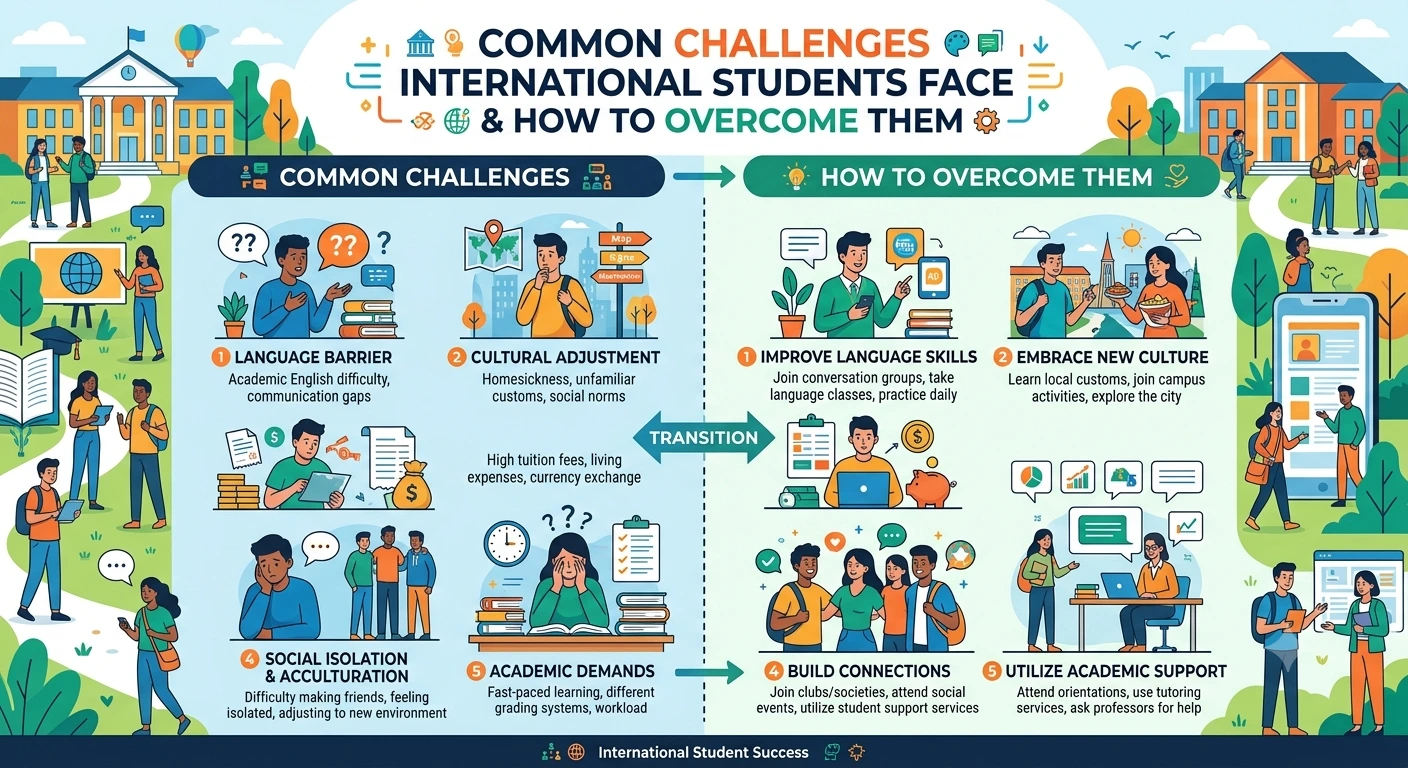
International students commonly face challenges related to language barriers, cultural adjustment, academic expectations, financial management, homesickness, and immigration compliance. Most of these difficulties can be managed through early preparation, active participation in campus resources, strong time-management habits, and a willingness to build local support networks.
Based on extensive experience supporting students through international education pathways, Study sphere advisors has observed that students who understand potential challenges before departure adapt faster and achieve better academic and personal outcomes. This guide explains the most common obstacles, practical solutions, and important factors students should evaluate before making study-abroad decisions.
The Most Common Challenges and Effective Solutions
International students often encounter multiple challenges simultaneously. Understanding how these issues connect can make adaptation significantly easier.
| Common Challenge | How It Affects Students | Practical Solution |
|---|---|---|
| Language barriers | Difficulty understanding lectures and participating in discussions | Practice academic English daily and attend language support programs |
| Cultural differences | Miscommunication and social discomfort | Learn local customs and engage in multicultural activities |
| Homesickness | Emotional stress and reduced concentration | Maintain regular contact with family while building local friendships |
| Academic adjustment | Different teaching and assessment methods | Attend orientation sessions and seek academic guidance early |
| Time management | Missed deadlines and increased stress | Use planners, calendars, and structured study schedules |
| Visa compliance | Risk of immigration issues | Understand visa conditions and monitor academic enrollment requirements |
| Social isolation | Limited support network | Join clubs, student groups, and campus activities |
Managing Academic Expectations Successfully
Many international students discover that educational systems differ significantly from those in their home countries.
Understanding Different Learning Styles
Some institutions emphasize independent research, critical thinking, and class participation rather than memorization. Students who adapt to these expectations often experience smoother academic transitions.
Developing Effective Study Habits
Successful international students typically:
- Review course materials before lectures.
- Participate actively in discussions.
- Use academic support centers.
- Seek clarification from instructors when needed.
- Create consistent study schedules.
Bonus Tip: During the first month, focus on understanding grading criteria and assessment methods. Early familiarity with expectations reduces academic stress throughout the semester.
Overcoming Language and Communication Barriers
Language challenges extend beyond grammar and vocabulary. Understanding accents, academic terminology, and cultural communication styles can take time.
According to UNESCO Institute for Statistics, internationally mobile students exceeded 6 million globally in recent years, highlighting the growing importance of effective cross-cultural communication in higher education environments.
Practical Communication Strategies
| Situation | Recommended Approach |
|---|---|
| Classroom discussions | Prepare notes before class |
| Group projects | Confirm responsibilities in writing |
| Academic presentations | Practice with peers beforehand |
| Everyday conversations | Engage regularly with local students |
| Professional networking | Attend workshops and networking events |
Bonus Tip: Keep a personal glossary of unfamiliar academic terms encountered during lectures. This simple habit improves comprehension over time.
Adapting to Cultural Differences
Cultural adjustment is one of the most underestimated aspects of studying abroad.
Students may encounter differences in:
- Classroom etiquette
- Communication styles
- Social expectations
- Workplace culture
- Personal independence
Research from the OECD consistently shows that students with strong social integration often report better educational outcomes and overall satisfaction with their international experience.
Building Cultural Confidence
Instead of comparing every experience to home-country norms, focus on understanding local perspectives. This mindset helps reduce frustration and promotes meaningful cultural learning.
Handling Homesickness and Emotional Wellbeing
Homesickness is common, particularly during the first semester.
Symptoms may include:
- Reduced motivation
- Difficulty concentrating
- Social withdrawal
- Feelings of loneliness
Healthy Coping Strategies
| Challenge | Helpful Action |
|---|---|
| Missing family | Schedule regular video calls |
| Feeling isolated | Join student organizations |
| Cultural shock | Participate in local community events |
| Stress and anxiety | Use campus counseling services |
| Lack of routine | Establish daily schedules |
Students who balance connections with home while actively engaging in their new environment generally adapt more successfully.
Staying Compliant With Student Visa Requirements
Visa compliance remains one of the most important responsibilities for international students.
Key Areas to Monitor
| Requirement | Why It Matters |
|---|---|
| Full-time enrollment | Often required to maintain visa status |
| Attendance expectations | May affect academic standing |
| Address updates | Required by many immigration authorities |
| Work restrictions | Violations can impact immigration status |
| Document validity | Expired documents can create legal complications |
Regularly reviewing official immigration guidance helps prevent avoidable issues.
Important Factors to Evaluate Before Choosing a Study Destination
Making informed decisions before departure can significantly reduce future challenges.
Key Considerations Before Committing
| Decision Factor | Why It Matters |
|---|---|
| Language requirements | Impacts academic success |
| Climate conditions | Influences daily comfort and wellbeing |
| Academic structure | Affects learning experience |
| Student support services | Assists with adaptation |
| Employment regulations | Determines work opportunities |
| Healthcare access | Supports personal wellbeing |
| Cultural environment | Impacts social integration |
Students moving to regions with extreme winters, for example, should prepare for transportation changes, clothing requirements, and shorter daylight hours, while those studying in warmer climates may need to adapt to different living conditions and outdoor schedules.
Educational Pathways Supported by Study sphere advisors
Study sphere advisors assists students through several international mobility pathways:
- Study Visa – Supports students pursuing academic programs abroad while meeting institutional and immigration requirements.
- Student Visa – Helps students navigate documentation and enrollment processes for international education.
- Business Visa – Assists individuals participating in educational conferences, academic exchanges, or professional visits.
- Work Visa – Supports graduates and professionals seeking international employment opportunities where applicable.
Questions Students Often Ask Before Applying
How early should preparation begin?
Most students benefit from starting preparations at least several months before intended enrollment to allow time for documentation, academic planning, and accommodation arrangements.
Is it necessary to learn local cultural norms before arrival?
Yes. Basic cultural awareness reduces adjustment challenges and improves communication with local communities.
Should students join campus organizations immediately?
Early participation often helps build friendships and support networks more quickly.
How important is academic support utilization?
Students who use tutoring, writing centers, and mentoring programs frequently experience stronger academic performance.
Answers to Long-Term Student Concerns
How can students continue improving language skills after arrival?
Consistent daily practice, classroom participation, and interaction with local communities provide the greatest improvement.
What helps maintain motivation throughout a degree program?
Setting measurable academic goals and tracking progress helps sustain motivation over time.
How should students prepare for post-graduation opportunities?
Begin career planning early through internships, networking activities, and university career services.
What should students do if academic performance declines?
Seek academic support immediately rather than waiting for end-of-semester results.
How can international students build professional networks?
Attend industry events, career fairs, alumni gatherings, and professional association meetings.
Key Takeaways for a Successful International Education Journey
Most international student challenges are predictable and manageable with proper preparation. Academic adaptation, cultural adjustment, language development, emotional wellbeing, and visa compliance require ongoing attention throughout the study journey. Students who actively use available resources, build support networks, and remain adaptable typically experience the most successful outcomes.
Evaluate personal goals, preferred learning environments, cultural expectations, and long-term career objectives before selecting a study destination.
Leave a Reply