
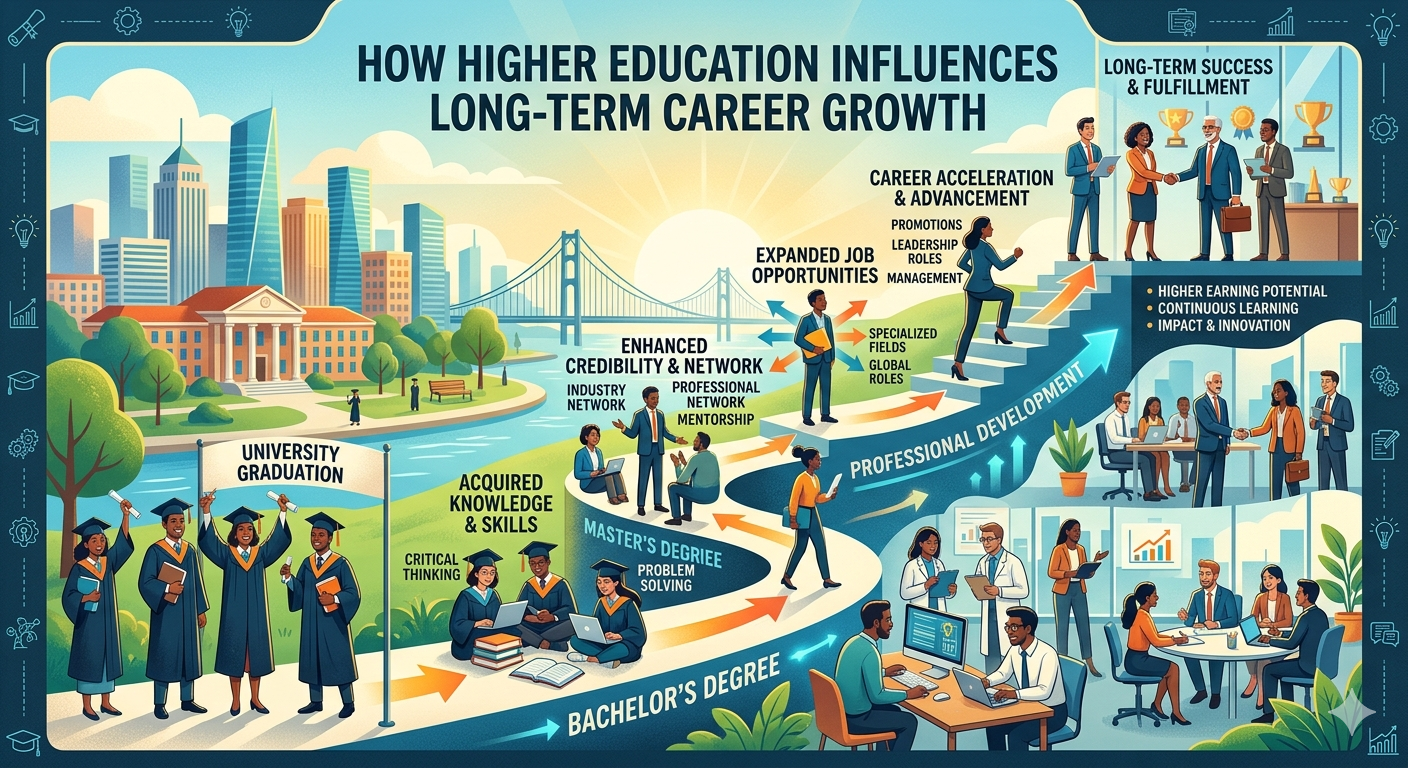
Higher education influences long-term career growth by helping individuals develop specialized knowledge, transferable skills, professional networks, and greater access to career opportunities. While career success depends on multiple factors, higher education often creates a stronger foundation for advancement, leadership roles, adaptability, and lifelong learning.
Based on extensive experience advising students on academic pathways and international education opportunities, Study sphere advisors has observed that graduates who align their education with career objectives tend to make more informed professional decisions throughout their working lives. This article explains how higher education contributes to long-term career development, what factors matter most, and what students should evaluate before making educational choices.
How Higher Education Shapes Career Development
Higher education extends beyond obtaining a degree. It builds capabilities that employers value throughout an individual’s career.
Graduates often gain:
- Advanced problem-solving abilities
- Research and analytical skills
- Communication and presentation skills
- Project management experience
- Industry-specific technical knowledge
- Professional networking opportunities
These competencies remain relevant even as industries evolve and job requirements change.
Key Career Benefits Associated With Higher Education
Career growth is influenced by several interconnected factors. Higher education contributes to many of them simultaneously.
| Career Growth Factor | Contribution of Higher Education | Long-Term Impact |
|---|---|---|
| Knowledge Development | Builds subject expertise | Improved professional competence |
| Skill Development | Enhances communication, analysis, and leadership | Greater workplace effectiveness |
| Professional Network | Connects students with peers, faculty, and industry professionals | Expanded career opportunities |
| Adaptability | Encourages continuous learning | Better response to industry changes |
| Career Mobility | Opens pathways to specialized roles | Increased advancement potential |
| Global Exposure | Provides international perspectives | Stronger competitiveness in global markets |
According to the OECD’s Education at a Glance reports, individuals with tertiary education generally experience higher employment rates than those with lower educational attainment. This demonstrates the continuing value of advanced education in modern labor markets.
Skills That Continue Creating Value Throughout a Career
Critical Thinking and Decision-Making
Many professions require employees to analyze information, evaluate alternatives, and make informed decisions. Academic environments consistently challenge students to apply these skills through research projects, case studies, and problem-solving exercises.
Communication and Collaboration
Employers frequently identify communication as one of the most important workplace competencies. Group assignments, presentations, and academic discussions help students strengthen these abilities before entering professional environments.
Independent Learning
Industries continue to evolve due to technology, automation, and changing market demands. Professionals who develop strong learning habits during higher education often adapt more effectively throughout their careers.
Bonus Tip: Students should actively participate in research projects, workshops, and student organizations. These experiences often provide stronger career-development benefits than classroom learning alone.
The Relationship Between Education and Career Advancement
Career progression often requires more than technical expertise. Leadership, strategic thinking, and industry knowledge become increasingly important as responsibilities grow.
| Career Stage | Common Professional Requirements | How Higher Education Supports Growth |
|---|---|---|
| Entry Level | Technical knowledge and basic workplace skills | Academic preparation and practical projects |
| Mid-Level | Team collaboration and project management | Applied learning and specialized study |
| Senior Level | Leadership and strategic decision-making | Advanced analytical and management skills |
| Executive Level | Industry expertise and organizational leadership | Broader business and critical-thinking capabilities |
Research published by the World Economic Forum highlights that analytical thinking, resilience, leadership, and lifelong learning remain among the most valuable skills in future labor markets.
Bonus Tip: Review industry reports and workforce forecasts regularly to identify emerging opportunities before graduation.
Understanding the Broader Impact on Employability
Higher education does not guarantee career success. However, it can improve employability by demonstrating commitment, discipline, and subject expertise.
Employers frequently evaluate candidates based on:
- Academic qualifications
- Relevant experience
- Professional certifications
- Communication abilities
- Problem-solving capabilities
- Adaptability to workplace change
Successful professionals combine educational achievements with practical experience and continuous development.
Educational Pathways Supported by Study sphere advisors
Educational planning often requires selecting the most suitable pathway based on career goals. Study sphere advisors supports students through several relevant services:
- Study Visa
Assists students pursuing academic programs in international institutions that align with long-term career objectives. - Student Visa
Supports documentation and application processes required for overseas education opportunities. - Work Visa
Helps individuals explore international employment pathways that complement educational qualifications. - Business Visa
Facilitates travel for professional development, networking, and business-related educational opportunities.
Factors to Evaluate Before Choosing an Educational Path
Selecting the right educational route requires careful consideration of future goals rather than short-term trends.
Important Factors to Assess
| Decision Factor | Why It Matters |
|---|---|
| Career Objectives | Aligns education with long-term ambitions |
| Industry Demand | Helps identify sustainable career opportunities |
| Skill Requirements | Ensures qualifications match employer expectations |
| Learning Style | Improves educational performance and engagement |
| Geographic Preferences | Influences employment opportunities and networking |
| Future Flexibility | Supports career transitions if interests change |
Bonus Tip: Research job descriptions within your target industry before selecting a degree program. This often reveals the skills employers actually prioritize.
Questions Students Commonly Ask Before Choosing Higher Education
How important is degree relevance?
Degree relevance matters when entering specialized professions. However, transferable skills often remain valuable across multiple industries.
Should students focus on employability or personal interest?
The strongest outcomes typically occur when educational interests align with market demand and long-term career goals.
Is international education beneficial for career growth?
International education can provide global exposure, cultural awareness, and broader professional networks that may support future career opportunities.
Do employers value practical experience as much as education?
Many employers seek a combination of education and practical experience. Internships, projects, and industry engagement often strengthen employability.
Additional Questions About Long-Term Career Success
How often should professionals update their skills?
Continuous learning should occur throughout a career. Many industries require regular skill development to remain competitive.
Can career growth continue without further education?
Yes. Professional development, certifications, mentorship, and workplace experience can support advancement alongside formal education.
Does networking influence long-term career outcomes?
Professional relationships frequently create opportunities for mentorship, collaboration, and career advancement.
What role does adaptability play in career growth?
Adaptability helps professionals respond effectively to technological, economic, and industry changes.
Are leadership skills developed through higher education?
Many academic programs encourage teamwork, communication, and project management experiences that contribute to leadership development.
Key Takeaways for Long-Term Success
Higher education contributes to long-term career growth by developing expertise, transferable skills, professional networks, and adaptability. Its value extends beyond initial employment opportunities and often influences career progression, leadership potential, and lifelong learning capacity.
Students should evaluate educational options based on career objectives, industry requirements, and future opportunities. A thoughtful decision today can create lasting benefits throughout an entire professional journey.
Leave a Reply