
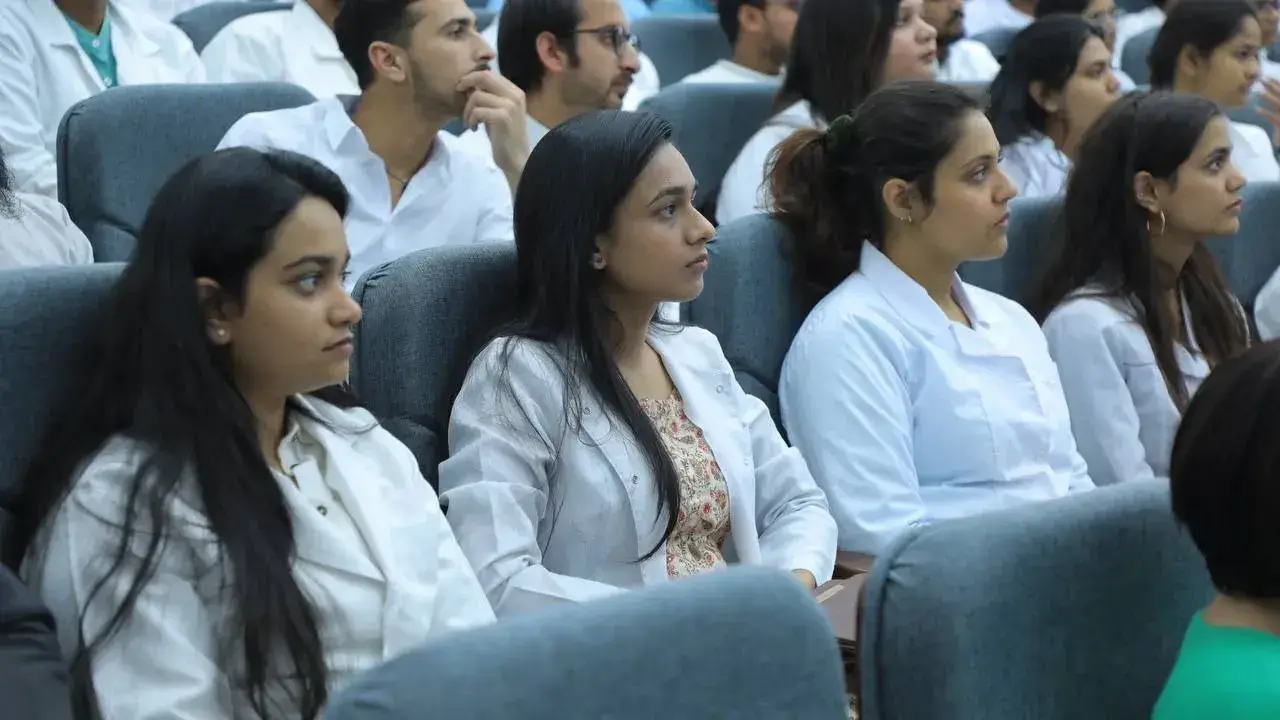
North China University of Science & Technology (NCUST) is gaining traction among MBBS aspirants from Uzbekistan due to its balanced clinical exposure, structured English-medium curriculum, and consistent academic governance. The institution aligns with international medical education standards while maintaining a predictable learning environment—an essential factor for students planning global licensing pathways.
Study sphere advisors observes a clear shift in student preferences toward universities that offer stable hospital affiliations, practical training, and streamlined admission processes. NCUST fits these criteria by combining academic rigor with accessible clinical infrastructure, which directly addresses the priorities of Central Asian applicants.
Academic Structure That Supports Global Medical Goals
NCUST follows a curriculum model that integrates theoretical sciences with early-stage clinical exposure. This reduces the gap between classroom learning and hospital-based practice.
Key Academic Features and Structure
| Academic Component | Description | Practical Impact for Uzbek Students |
|---|---|---|
| Medium of Instruction | English-medium MBBS program | Eliminates language barriers during education |
| Curriculum Design | Integrated basic + clinical sciences | Improves retention and clinical application |
| Clinical Exposure | Affiliated teaching hospitals | Builds early patient interaction skills |
| Assessment System | Semester-based evaluations | Encourages continuous performance tracking |
| Internship Structure | Final-year clinical rotations | Prepares for licensing exams and practice |
This structured approach reflects global standards seen in medical systems across Asia and Europe. According to World Federation for Medical Education (WFME), integrated clinical training significantly improves competency outcomes in international graduates.
Clinical Training Environment and Hospital Access
NCUST maintains multiple affiliated hospitals that support hands-on learning. Clinical exposure begins earlier compared to traditional models where patient interaction is delayed.
Practical Training Advantages
- Exposure to diverse patient cases in high-volume hospitals
- Supervised clinical rotations under experienced faculty
- Structured ward-based learning instead of observation-only models
Bonus Tip: Students from Uzbekistan should prioritize universities where clinical exposure starts before the final years. This reduces adaptation challenges when preparing for licensing exams such as NEXT, PLAB, or USMLE.
China’s healthcare system handles one of the largest patient volumes globally. According to the National Health Commission of China, tertiary hospitals manage millions of outpatient visits annually, creating a strong clinical learning environment.
Why Uzbek Students Prefer NCUST Over Other Options
Students evaluate multiple countries such as Russia, Kazakhstan, and Kyrgyzstan before selecting China. NCUST stands out due to consistency in academic delivery and institutional infrastructure.
Comparative Overview of Popular MBBS Destinations
| Factor | NCUST China | Russia | Kazakhstan |
|---|---|---|---|
| Language Medium | Fully English | Mixed (English + Local) | Mostly English |
| Clinical Exposure | Early and structured | Often delayed | Moderate |
| Global Recognition | Widely recognized | Recognized | Regionally recognized |
| Infrastructure | Advanced hospital network | Varies by university | Moderate |
| Student Adaptation | High due to system structure | Moderate | Easier culturally |
This comparison highlights that NCUST offers a more structured and globally aligned pathway, especially for students targeting international practice.
Admission Stability and Visa Processing Efficiency
Admission predictability is a critical factor for Uzbek applicants. NCUST follows a consistent intake system with clearly defined eligibility criteria.
Key Admission and Processing Factors
| Parameter | Details |
|---|---|
| Eligibility | Science background with qualifying grades |
| Documentation | Academic records, passport, medical fitness |
| Visa Type | Student visa (X1 category) |
| Processing Timeline | Structured and predictable cycles |
| Intake Periods | Primarily September intake |
Study sphere advisors highlights that streamlined documentation reduces delays in visa approvals, especially when compared to regions with inconsistent admission cycles.
Bonus Tip: Early document verification minimizes rejection risks. Uzbek students should prepare notarized translations of academic certificates in advance.
Living Environment and Regional Adaptation Factors
Chinese cities hosting NCUST offer a controlled and student-friendly environment. For Uzbek students, climate and lifestyle adaptation remain manageable with preparation.
Regional Adaptation Insights
- Climate varies with cold winters; proper winter clothing is essential
- Availability of halal food options in major student areas
- Public transport systems are efficient and affordable
- Campus accommodations are structured for international students
According to UNESCO mobility data, China remains among the top destinations for international students due to its infrastructure and academic consistency.
Important Decision Factors Before Choosing NCUST
Selecting a medical university requires evaluating long-term academic and professional goals rather than short-term convenience.
Key Considerations Before Finalizing Admission
- Verify global recognition and eligibility for licensing exams
- Assess hospital affiliations and real clinical exposure
- Evaluate language adaptability for both academic and daily life
- Understand visa compliance and residency regulations
- Review curriculum alignment with home-country licensing requirements
Ignoring these factors often leads to challenges during post-graduation licensing or migration.
Services Offered by Study sphere advisors
Study sphere advisors provides structured support for students navigating international medical admissions:
- Student Visa Processing
Ensures accurate documentation and compliance with embassy requirements. - Study Visa Consultation
Provides clarity on eligibility, documentation, and admission timelines. - Business Visa Assistance
Supports individuals requiring short-term academic or institutional visits. - Work Visa Guidance
Assists graduates planning post-study employment pathways abroad.
Common Questions Students Ask Before Applying
Is NCUST suitable for international licensing exams
Yes. The curriculum structure supports preparation for exams like USMLE and PLAB due to its clinical integration.
How early does clinical exposure begin
Clinical interaction begins in mid-program stages, earlier than many traditional systems.
Is language a barrier during MBBS
Academic instruction is in English, but basic Mandarin improves hospital communication.
Are hospital affiliations strong
Yes. NCUST is connected to high-volume teaching hospitals, which enhances practical learning.
Answers to Long Term Student Concerns
How can students improve clinical competence during MBBS
Active participation in ward rounds and case discussions builds real-world medical skills.
What challenges arise after graduation
Licensing exam preparation and adapting to different healthcare systems require planning.
How important is internship quality
Internship determines readiness for independent practice and impacts licensing outcomes.
Can students transition to other countries after MBBS
Yes, provided they meet licensing requirements and pass relevant examinations.
What role does language play after graduation
Local language skills help during internships and improve patient communication.
Conclusion
NCUST is gaining popularity among MBBS students from Uzbekistan due to its structured academics, early clinical exposure, and stable admission processes. These factors directly align with the needs of students aiming for global medical careers.
A careful evaluation of curriculum quality, hospital training, and long-term licensing pathways ensures better outcomes. Students should prioritize institutions that provide consistent academic delivery and practical exposure.
Leave a Reply