
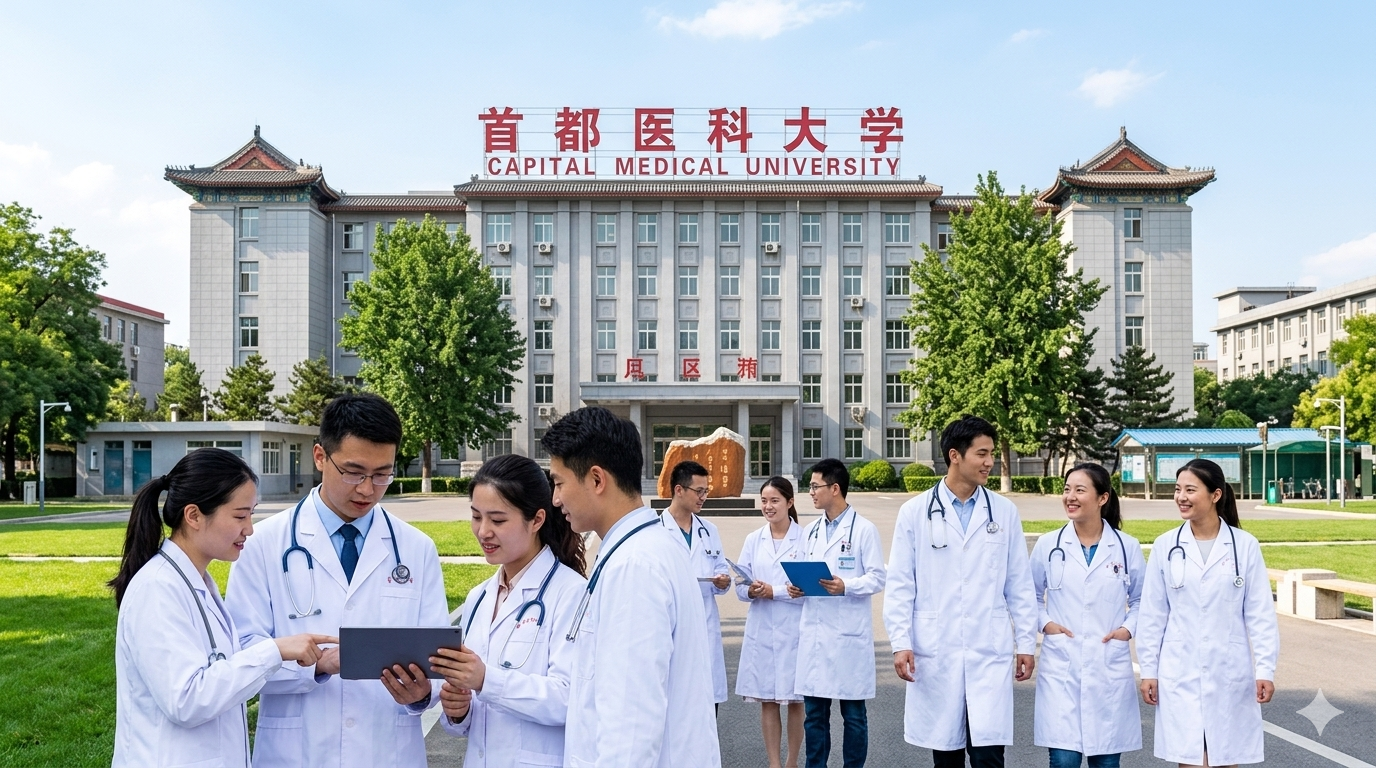
Capital Medical University (CMU) stands among China’s most respected medical institutions, recognized for its strong academic standards, extensive clinical training network, and commitment to developing healthcare professionals capable of serving diverse healthcare systems worldwide. Established in Beijing, CMU combines medical education, scientific research, and hospital-based clinical exposure within a structured learning environment that prepares students for modern healthcare challenges.
Based on years of experience guiding students through international medical education pathways, Study Sphere Advisors has observed that institutions with strong hospital affiliations, internationally recognized programs, and research-driven curricula consistently produce graduates who adapt effectively to evolving healthcare environments. This article examines CMU’s academic structure, clinical strengths, recognition, and key considerations for prospective medical students.
Understanding Capital Medical University’s Academic Position
Capital Medical University was founded in 1960 and has developed into one of China’s leading public medical universities. Its academic model emphasizes a balance between classroom learning, laboratory training, clinical exposure, and medical research.
Several factors contribute to the university’s reputation:
- Government-supported public institution
- English-medium MBBS program for international students
- Strong clinical training infrastructure
- Multiple teaching hospitals
- International recognition across various medical councils
Key Institutional Facts and Academic Features
| Academic Feature | Details |
|---|---|
| Establishment Year | 1960 |
| Location | Beijing, China |
| Institution Type | Public Medical University |
| Medium of Instruction | English (MBBS Program) |
| Program Duration | 5 Years + Internship |
| Teaching Hospitals | 14 Affiliated Hospitals |
| International Student Presence | Students from 40+ countries |
| Focus Areas | Medical Education, Clinical Practice, Research |
| Global Recognition | WHO-listed and recognized by multiple medical authorities |
According to the Academic Ranking of World Universities (ARWU), Clinical Medicine remains one of China’s strongest internationally recognized medical disciplines, contributing significantly to the country’s growing influence in medical education and healthcare research.
Why Clinical Training Makes a Significant Difference
One defining characteristic of leading medical universities is access to real-world clinical environments. Medical knowledge alone is insufficient without practical patient interaction and supervised clinical experience.
Exposure to Diverse Patient Cases
Students benefit from training within affiliated hospitals that manage a wide range of medical specialties. This exposure strengthens:
- Clinical reasoning
- Patient communication
- Diagnostic skills
- Treatment planning
- Emergency response awareness
Integration of Theory and Practice
Medical concepts learned during lectures become more meaningful when applied in clinical settings. Structured hospital rotations allow students to observe healthcare delivery from multiple perspectives.
Bonus Tip: Students should begin developing clinical communication skills early. Effective doctor-patient interaction often becomes as important as academic performance during clinical years.
How CMU Compares with Typical International Medical Universities
| Evaluation Area | Capital Medical University | Typical International Medical Institution |
|---|---|---|
| Hospital Network | Extensive affiliated hospital system | Varies significantly |
| Research Opportunities | Strong research integration | Moderate to high |
| International Student Diversity | High | Moderate |
| Urban Healthcare Exposure | Beijing healthcare system | Depends on location |
| Clinical Training Capacity | Large-scale patient exposure | Variable |
| Global Recognition | Broad international recognition | Institution dependent |
Research published by the World Health Organization highlights that healthcare systems with stronger clinical training environments generally produce medical graduates with better preparedness for practical healthcare delivery.
Medical Education Trends Shaping Future Healthcare Professionals
Modern healthcare education extends beyond traditional medical knowledge.
Technology Integration
Future physicians increasingly interact with:
- Digital health records
- Artificial intelligence tools
- Telemedicine systems
- Data-driven diagnostics
Evidence-Based Medicine
Medical decisions increasingly rely on validated scientific evidence rather than solely on conventional practices.
Global Healthcare Awareness
International medical students often gain broader perspectives regarding:
- Public health challenges
- Disease prevention strategies
- Healthcare policy
- Cross-cultural patient care
According to UNESCO’s global education reports, international educational exposure contributes significantly to adaptability and intercultural competency among healthcare professionals.
Factors Students Should Evaluate Before Choosing a Medical University
Selecting a medical university requires evaluating long-term career implications rather than focusing only on admission opportunities.
Important Evaluation Criteria
| Decision Factor | Why It Matters |
|---|---|
| Accreditation Status | Determines recognition pathways |
| Clinical Training Access | Impacts practical competence |
| Hospital Affiliations | Influences patient exposure |
| Research Opportunities | Supports academic development |
| Language of Instruction | Affects learning effectiveness |
| Graduate Outcomes | Indicates educational quality |
| International Recognition | Supports future licensing opportunities |
Bonus Tip: Review licensing requirements in the country where future medical practice is planned before selecting any international medical program.
Educational Pathways Supported by Study Sphere Advisors
Study Sphere Advisors assists students in navigating international education opportunities through structured guidance services.
Relevant Student Support Services
- Student Visa Assistance
Guidance regarding documentation, application procedures, and compliance requirements. - Study Visa Consultation
Support in understanding admission-linked visa pathways for international education. - Business Visa Services
Assistance for educational delegations, academic collaborations, and institutional visits. - Work Visa Guidance
Information regarding international mobility opportunities after completing educational programs.
Questions Students Commonly Ask Before Applying
Is clinical exposure more important than university rankings?
Both matter, but practical clinical experience often plays a greater role in developing medical competence.
Does studying in a major city provide advantages?
Large metropolitan healthcare systems typically offer exposure to diverse patient populations and advanced medical facilities.
Should research opportunities influence university selection?
Students interested in specialization, postgraduate education, or academic medicine should strongly consider research access.
How important are hospital affiliations?
Hospital affiliations directly affect the quality and breadth of clinical training opportunities available during medical education.
Answers Students Often Need During Their Medical Education Journey
How can students maximize learning during clinical rotations?
Actively participate in patient discussions, maintain detailed case notes, and seek feedback from supervising physicians.
What skills matter beyond medical knowledge?
Communication, teamwork, professionalism, critical thinking, and adaptability significantly influence healthcare performance.
How does international medical education support career growth?
International exposure helps students develop broader healthcare perspectives and multicultural communication skills.
Why is research participation valuable for medical students?
Research develops analytical thinking, scientific literacy, and evidence-based decision-making abilities.
How should students prepare before beginning medical studies abroad?
Strengthen science fundamentals, improve communication skills, understand cultural differences, and familiarize themselves with healthcare terminology.
Final Thoughts
Capital Medical University has established itself as a respected medical institution through strong academic foundations, extensive hospital affiliations, international recognition, and practical clinical training opportunities. Its combination of classroom instruction, research engagement, and patient-centered learning reflects the qualities expected of modern medical education.
Students evaluating international medical universities should focus on accreditation, clinical exposure, hospital networks, and long-term professional goals. Careful assessment of these factors supports informed educational decisions and contributes to future success in healthcare careers.
Leave a Reply