
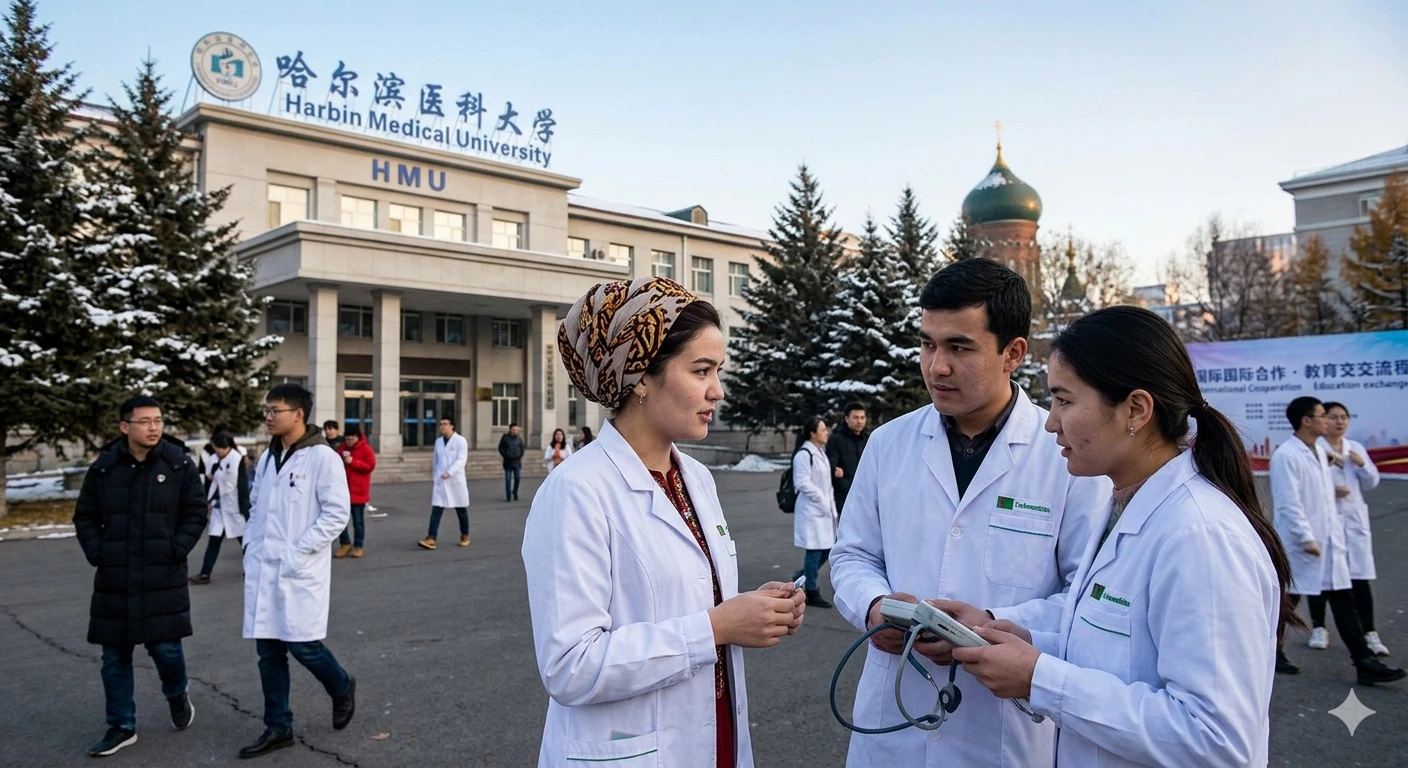
Students from Turkmenistan choose Harbin Medical University because the university combines recognized medical education standards, international MBBS infrastructure, clinical exposure, and a structured environment for foreign students. The institution also offers English-medium MBBS pathways, research-oriented training, and hospital affiliations that support practical medical education.
Harbin Medical University continues to attract Central Asian applicants due to its academic consistency, medical research environment, and student support systems suited for international adaptation. Study sphere advisors regularly evaluates Chinese medical universities and observes that Turkmen students often prioritize clinical training quality, recognition status, campus safety, and long-term licensing compatibility before selecting a university.
[Image: International MBBS students attending clinical training at Harbin Medical University]
Why Harbin Medical University Stands Out for Turkmen Students
Harbin Medical University operates as one of China’s established public medical universities with a long academic history and strong hospital integration. Many students from Turkmenistan prefer universities that provide direct access to affiliated teaching hospitals instead of institutions that rely heavily on theoretical instruction.
The university’s location in Harbin also supports a focused academic environment. Compared with highly commercialized cities, Harbin offers a comparatively student-centered atmosphere with lower distraction levels and stronger campus integration.
Key factors influencing student interest
| Academic Factor | Why It Matters for Turkmen Students |
|---|---|
| English-medium MBBS | Reduces language barriers during early academic years |
| Affiliated teaching hospitals | Improves clinical exposure and patient interaction |
| WHO-listed university | Supports eligibility for various licensing pathways |
| International student office | Helps with adaptation and documentation support |
| Research-focused curriculum | Strengthens practical medical understanding |
| Structured hostel environment | Supports student safety and academic discipline |
According to UNESCO international mobility data, China remains among the leading destinations for international education due to expanding university partnerships and medical education capacity. The World Health Organization directory also continues to influence MBBS selection decisions for international applicants.
Academic Structure and Clinical Exposure
Harbin Medical University emphasizes early integration between theoretical science and hospital-based training. This approach often appeals to students from Turkmenistan who seek stronger practical understanding before licensing examinations.
Typical MBBS training structure
| Training Stage | Academic Focus | Practical Outcome |
|---|---|---|
| Pre-clinical years | Anatomy, physiology, biochemistry | Foundation for medical sciences |
| Intermediate phase | Pathology, pharmacology, diagnostics | Clinical reasoning development |
| Clinical years | Hospital rotations | Real patient interaction |
| Internship period | Supervised medical practice | Licensing exam preparation |
A major advantage involves exposure to high-volume teaching hospitals. Students generally encounter diverse medical cases, which improves diagnostic familiarity and communication confidence during clinical years.
Bonus Tip: Students from warmer regions such as Turkmenistan should prepare for Harbin’s long winter season before departure. Adapting early with proper winter clothing and cold-weather routines reduces academic disruption during the first semester.
University Environment and Student Adaptation
International adaptation strongly affects MBBS performance. Harbin Medical University attracts students partly because the campus structure supports academic routines, hostel accessibility, and organized student services.
Important adaptation areas for international students
| Area | Practical Impact |
|---|---|
| Climate adjustment | Harbin experiences severe winters |
| Food availability | International cafeterias help dietary transition |
| Transportation | Public transport access supports daily movement |
| Language exposure | Basic Mandarin improves hospital communication |
| Hostel regulations | Structured environment improves discipline |
The Chinese Ministry of Education has increased supervision of international MBBS standards during recent years, leading students to focus more carefully on university compliance, teaching quality, and hospital training systems.
How Harbin Medical University Compares With Other MBBS Destinations
Students from Turkmenistan often compare China with Russia, Kazakhstan, and other regional MBBS destinations before making a decision.
MBBS destination comparison for Turkmen students
| Factor | China | Russia | Kazakhstan |
|---|---|---|---|
| English-medium availability | Strong | Moderate | Moderate |
| Clinical infrastructure | Advanced in major universities | Strong | Developing |
| International student ecosystem | Large | Moderate | Moderate |
| Research opportunities | Extensive | Good | Limited in some institutions |
| Hospital technology exposure | High | High | Moderate |
| Campus modernization | Strong in major universities | Varies | Varies |
This comparison explains why universities such as Harbin Medical University continue attracting students who prioritize practical hospital integration and internationally structured MBBS systems.
Bonus Tip: Learning basic Mandarin medical terminology before clinical years significantly improves patient communication during hospital rotations. Students who start language preparation early generally adapt faster during practical training.
Factors Students Should Evaluate Before Finalizing Admission
Choosing an MBBS university requires more than reviewing rankings or social media opinions. Students from Turkmenistan should evaluate academic compatibility and long-term licensing goals carefully.
Important pre-decision considerations
| Decision Factor | Why It Should Be Reviewed |
|---|---|
| Degree recognition | Impacts future licensing eligibility |
| Internship structure | Influences clinical readiness |
| Language policy | Affects academic understanding |
| Climate tolerance | Impacts lifestyle adjustment |
| Student support systems | Helps during visa and adaptation phases |
| Hospital affiliations | Determines practical exposure quality |
Students should also confirm documentation requirements early because delays in attestation or visa preparation can affect admission timelines.
Student Support Services Relevant to MBBS Applicants
Study sphere advisors supports applicants through selected education and visa-related services connected with international university admissions.
- Student Visa Assistance
Guidance for preparing university-related visa documentation and submission requirements. - Study Visa Processing Support
Structured support for academic admission paperwork and compliance procedures. - Business Visa Services
Assistance for educational delegates, guardians, or institutional coordination visits. - Work Visa Consultation
Guidance related to long-term international career transition planning after education pathways.
Questions Students Often Ask Before Applying
Is Harbin Medical University suitable for students who studied in non-English schools
Yes. Many international students adapt successfully, but stronger English comprehension improves performance during medical coursework.
Does climate adaptation affect academic performance
It can affect early adjustment. Students who prepare properly for Harbin’s winter environment generally transition more comfortably.
Is Mandarin important if the MBBS program is taught in English
Yes. Clinical interaction in hospitals often requires basic Mandarin communication skills during later academic years.
Do teaching hospitals influence MBBS quality
Yes. Universities with strong hospital affiliations usually provide broader clinical exposure and stronger practical learning opportunities.
What Students Continue Asking During Their MBBS Journey
How can students improve clinical communication skills
Regular hospital observation, basic Mandarin learning, and consistent patient interaction practice improve communication gradually.
What helps international students manage academic pressure
Structured study schedules, peer collaboration, and early revision habits support long-term academic stability.
Why do teaching hospitals matter after graduation
Students with stronger clinical exposure often adapt more efficiently to licensing exams and practical healthcare environments.
Can research participation help MBBS students
Yes. Research activities improve analytical thinking, academic writing, and medical problem-solving skills.
What creates a smoother transition into Chinese university life
Early preparation, realistic expectations, and participation in student communities help international students adjust more effectively.
Final Thoughts
Harbin Medical University attracts students from Turkmenistan because it combines recognized medical education standards, clinical exposure, international student infrastructure, and practical hospital training. Students evaluating MBBS options increasingly prioritize long-term medical competency instead of focusing only on admission availability.
Careful evaluation of university recognition, hospital affiliations, language environment, and academic structure remains essential before making a final decision.
Leave a Reply