
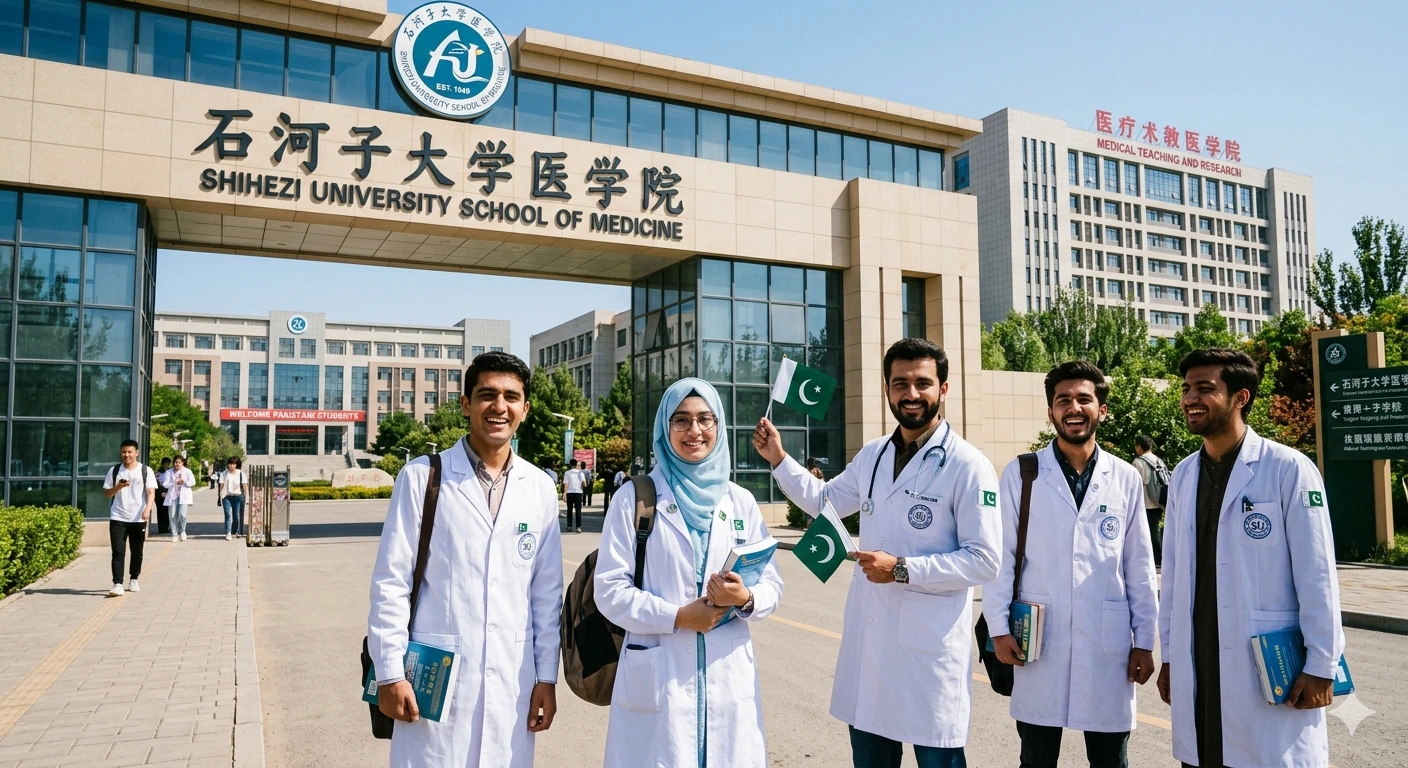
Shihezi University is gaining attention among Pakistani MBBS applicants because it combines English-medium medical education, international recognition, structured clinical exposure, and a student environment that aligns well with the needs of South Asian students. Pakistani students evaluating MBBS programs in China now focus more on licensing eligibility, hospital training quality, language adaptation, and graduate outcomes rather than only university rankings. Shihezi University addresses many of these practical concerns through its MOE-listed status, affiliated hospital network, and internationally recognized medical program.
Medical education consultants and visa advisors working with Pakistani applicants increasingly observe that students prefer universities with stable academic systems, WHO recognition, practical hospital exposure, and support for international students. Shihezi University stands out because it offers a six-year English-taught MBBS structure, exposure to multiple affiliated hospitals, and an environment where halal food availability and Muslim-friendly facilities reduce adjustment pressure for Pakistani students.
Why Pakistani Students Are Considering Shihezi University
Students from Pakistan often compare Chinese medical universities based on licensing recognition, clinical practice opportunities, and ease of adaptation. Shihezi University performs strongly across these areas.
Key Academic and Institutional Factors
| Academic Feature | Details |
|---|---|
| University Type | Government-owned public university |
| Established | 1949 |
| Province | Xinjiang, China |
| MBBS Language | Fully English-taught |
| Program Duration | 6 Years including internship |
| Recognition | WHO, PMDC, WFME, FAIMER, NMC India, BMDC |
| Clinical Exposure | 30 affiliated hospitals |
| Teaching Model | Medical syllabus starts from the first academic year |
| International Student Presence | Students from Pakistan, India, Bangladesh, Nigeria, Kazakhstan, and other countries |
The university’s inclusion in China’s MOE-listed medical universities remains one of the strongest deciding factors for Pakistani students. PMDC recognition and international listing directly affect licensing eligibility after graduation.
Strong Clinical Exposure Improves Practical Training
Clinical exposure significantly affects medical competency. Shihezi University operates with 30 affiliated hospitals, including several AAA-grade hospitals. This structure gives students broader hospital-based learning opportunities during clinical years.
Students entering Chinese MBBS programs often underestimate the importance of patient interaction volume. Universities connected to larger hospital systems generally provide better diagnostic observation, departmental rotations, and internship readiness.
Bonus Tip: Pakistani students planning to attempt FMGE, NLE, PLAB, or USMLE should prioritize universities with strong hospital integration rather than focusing only on campus infrastructure.
How Shihezi University Compares With Other Common MBBS Choices in China
Pakistani applicants usually compare universities based on teaching language, licensing acceptance, international student support, and adaptation difficulty.
| Evaluation Area | Shihezi University | Many Mid-Tier Chinese Universities |
|---|---|---|
| English-Taught MBBS | Fully English medium | Mixed English and Chinese instruction |
| PMDC Recognition | Recognized | Varies |
| Hospital Network | 30 affiliated hospitals | Limited hospital partnerships |
| International Student History | More than 16 graduated batches | Often newer international programs |
| Muslim-Friendly Environment | Strong availability | Depends on region |
| First-Year Medical Curriculum | Starts immediately | Delayed in some programs |
| Licensing Preparation Potential | Strong due to clinical exposure | Inconsistent |
The Muslim-friendly environment in Xinjiang also influences student decisions. Availability of halal food and culturally familiar living conditions can reduce early adaptation stress for Pakistani students.
Practical Factors That Matter Before Choosing an MBBS University
Choosing an MBBS destination requires evaluating long-term academic and licensing outcomes rather than short-term convenience.
Areas Students Should Evaluate Carefully
| Decision Factor | Why It Matters |
|---|---|
| PMDC Recognition | Determines eligibility pathways in Pakistan |
| Clinical Training Quality | Affects internship readiness |
| English Teaching Consistency | Reduces academic misunderstanding |
| Graduate Licensing Outcomes | Indicates academic preparation quality |
| International Student Support | Helps during adaptation and visa processing |
| Local Living Conditions | Impacts long-term comfort and stability |
| Internship Structure | Influences practical confidence |
Regional and Climate Considerations
Xinjiang experiences colder winters compared to many Pakistani cities. Students unfamiliar with snow conditions should prepare for seasonal adaptation during the first academic year. Centrally heated hostels help reduce adjustment difficulties during winter months.
Bonus Tip: Students traveling from warmer regions of Pakistan should arrive with proper winter clothing instead of depending entirely on local shopping after arrival.
International Recognition and Licensing Relevance
Recognition remains one of the most critical factors for Pakistani MBBS applicants. According to the World Federation for Medical Education (WFME), internationally recognized accreditation standards increasingly influence global medical licensing pathways. WHO-listed universities also remain important for graduates pursuing examinations abroad.
Shihezi University graduates remain eligible to pursue pathways connected with:
| Licensing Pathway | Region |
|---|---|
| PMDC/NLE | Pakistan |
| USMLE | United States |
| PLAB/GMC | United Kingdom |
| AMC | Australia |
| ECFMG | International Certification |
Data published by the Educational Commission for Foreign Medical Graduates (ECFMG) continues to show growing international mobility among medical graduates, increasing the importance of globally recognized institutions.
Services That Help Students Navigate MBBS Admission Abroad
Study sphere advisors supports students through structured educational guidance related to overseas admissions and visa procedures.
- Study Visa Assistance
Guidance on documentation preparation, admission compliance, and embassy-related procedures for international education pathways. - Student Visa Processing
Support for visa file organization, document verification, and procedural preparation for students applying abroad. - Business Visa Support
Assistance for individuals attending educational conferences, institutional visits, or international academic collaborations. - Work Visa Guidance
Information-based support regarding documentation and eligibility for international professional pathways after graduation.
Questions Students Often Ask Before Applying
Does language become a challenge during clinical years
Most Chinese MBBS universities require students to gradually learn basic Chinese communication for hospital interaction. Early language preparation improves patient communication during clinical rotations.
Is adapting to Xinjiang difficult for Pakistani students
Many Pakistani students adjust comfortably because halal food and Muslim-friendly facilities are commonly available in the region.
Does hospital exposure begin early
The medical curriculum starts from the first academic year, helping students build stronger theoretical foundations before advanced clinical training.
Bonus Tip: Students should verify hospital rotation structure directly from official university documents before finalizing admission decisions.
Important Answers Students Usually Need Later
Can graduates apply for licensing exams outside Pakistan
Yes. Graduates from recognized universities may become eligible for examinations such as USMLE, PLAB, AMC, and similar pathways depending on destination-country regulations.
Is English used throughout the MBBS program
The MBBS program is taught in English, although students usually learn basic Chinese communication for clinical interaction.
Are international students already studying there
Yes. Students from Pakistan, India, Bangladesh, Nigeria, Kazakhstan, and several other countries currently study at the university.
Does the internship count within the degree duration
Yes. The six-year MBBS structure includes internship training.
Why do students focus heavily on affiliated hospitals
Hospital exposure affects diagnostic learning, patient communication, and real-world clinical preparation during medical education.
Final Thoughts on Choosing the Right MBBS Environment
Shihezi University is emerging as a practical MBBS option for Pakistani students because it aligns academic recognition with structured clinical exposure and a manageable student environment. Recognition status, hospital access, English-medium instruction, and graduate licensing potential all contribute to its growing reputation among international medical applicants.
Students should evaluate recognition status, internship quality, language requirements, and long-term licensing goals before selecting any overseas MBBS university. A careful comparison based on academic outcomes usually leads to better long-term decisions than choosing only on popularity or location.
Connect With Study sphere advisors
Students researching MBBS opportunities in China often require accurate guidance on university recognition, admission documentation, and visa preparation. Study sphere advisors provides educational guidance related to study visa procedures, student visa documentation, and international admission preparation.
Leave a Reply