
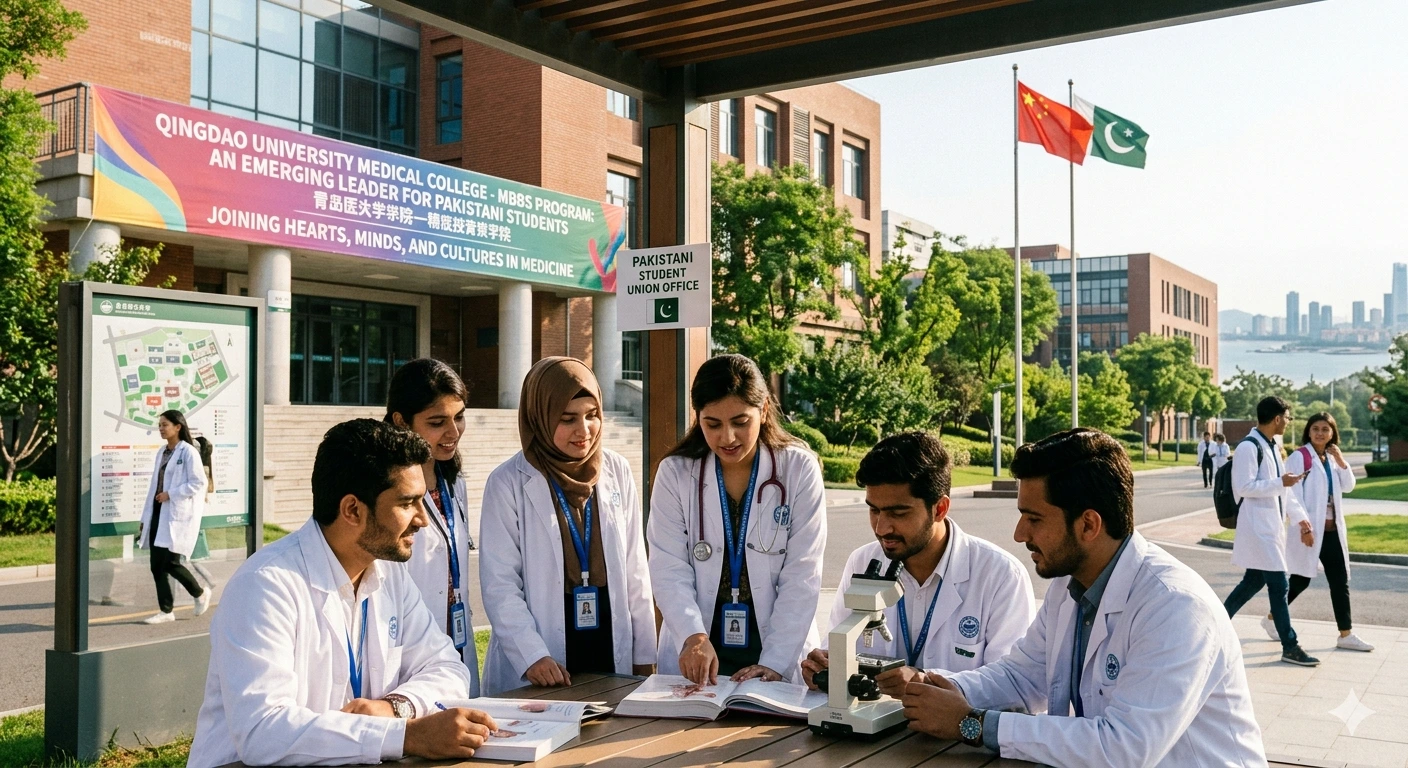
Qingdao University is emerging as a leading MBBS choice for Pakistani students because it combines English-medium medical education, international recognition, established clinical training opportunities, and a diverse international student environment. For students evaluating medical universities in China, the institution offers a structured pathway that aligns with the academic and licensing expectations commonly considered by Pakistani applicants.
Based on information available for the September 2026 intake, Qingdao University offers a six-year MBBS program that includes internship training, is recognized by major international bodies, and provides access to multiple affiliated hospitals for clinical exposure. This article examines the academic structure, recognition status, clinical opportunities, eligibility requirements, and decision-making factors that make the university a notable option for medical studies abroad. The insights presented reflect practical evaluation criteria frequently used when assessing international medical education pathways.
Understanding What Makes Qingdao University Attractive for MBBS Students
Founded in 1909 and located in the coastal city of Qingdao, Qingdao University has developed into one of the recognized medical education institutions in Shandong Province. The university introduced its English-medium MBBS program in 2006, making it accessible to international students seeking medical education without immediate language barriers.
According to the university intake information, students from countries including India, Nepal, and Thailand are already enrolled in the program, creating a multicultural academic environment that can ease adaptation for Pakistani students.
Key Academic Highlights
| Academic Feature | Details |
|---|---|
| University Established | 1909 |
| MBBS Language | English |
| Program Duration | 5 Years Academic Study + 1 Year Internship |
| MBBS Program Launch | 2006 |
| International Student Presence | Students from multiple countries |
| Affiliated Hospitals | Seven Teaching Hospitals |
| Location | Qingdao, Shandong Province, China |
Recognition and Accreditation Matter
One of the most important factors when selecting an overseas medical university is recognition status. Medical graduates often need to pursue licensing examinations, postgraduate education, or professional registration after graduation.
The September 2026 intake document indicates the university holds recognition from several important organizations.
| Recognition and Listing Status | Importance for Students |
|---|---|
| WHO Recognition | Supports international medical qualification recognition pathways |
| PMC Approved | Relevant for Pakistani medical graduates |
| MOE Listed | Indicates authorization under China’s Ministry of Education framework |
| ECFMG Certifications Mentioned | Supports eligibility considerations for certain international pathways |
Medical students should always verify current licensing requirements directly with relevant regulatory authorities because recognition policies can change over time.
Clinical Training Opportunities Strengthen Medical Education
Classroom learning alone does not produce competent physicians. Clinical exposure remains a critical component of medical education.
Qingdao University reports having seven affiliated hospitals available for teaching and clinical training. This structure allows students to observe patient care environments and gain practical medical experience throughout their studies.
Why Hospital Affiliations Matter
- Exposure to real patient cases
- Understanding hospital workflows
- Development of clinical communication skills
- Experience with multidisciplinary healthcare teams
- Preparation for internship responsibilities
Bonus Tip: When comparing medical universities, evaluate both the number and quality of affiliated hospitals rather than focusing solely on university rankings.
Eligibility Requirements for Pakistani Applicants
Admission requirements help students determine whether they meet the academic standards expected by the institution.
Entry Requirements for September 2026 Intake
| Requirement | Eligibility Criteria |
|---|---|
| Age | Above 18 and below 25 years |
| Academic Performance | Minimum 70% marks in all subjects |
| Education Level | SSC and HSSC Transcripts Required |
| Language of Study | English |
| Additional Documentation | Passport, Medical Form, Police Clearance Certificate, Photos, Application Form |
Students should prepare documentation early because international admissions often involve verification and processing timelines.
Bonus Tip: Ensure all academic documents are attested and translated where necessary before beginning the application process.
Comparing Factors Students Commonly Evaluate Before Choosing an MBBS University
| Evaluation Factor | Why It Matters |
|---|---|
| Accreditation Status | Influences future licensing opportunities |
| Language of Instruction | Affects academic performance and adaptation |
| Hospital Network | Impacts clinical exposure quality |
| International Student Community | Supports smoother cultural adjustment |
| City Environment | Influences student lifestyle and safety |
| Internship Structure | Helps develop practical medical competence |
| Academic Entry Standards | Reflects program competitiveness |
Important Factors to Evaluate Before Finalizing Your Decision
Selecting a medical university should involve more than reviewing brochures or rankings.
Academic Compatibility
Students should assess whether the curriculum aligns with their long-term career goals and licensing requirements.
Language Adaptation
Although the MBBS program is taught in English, daily life in China often involves interaction in Mandarin. Basic language preparation can improve the overall student experience.
Clinical Exposure Quality
Investigate how clinical rotations are structured and how frequently international students participate in patient-facing learning opportunities.
Regional Environment
Qingdao’s coastal climate differs significantly from many Pakistani cities. Students should prepare for seasonal weather changes and cultural adjustments.
Bonus Tip: Connect with current international students before making a final decision. First-hand feedback often reveals practical insights unavailable in official materials.
How Study Sphere Advisors Supports International Education Planning
Study Sphere Advisors provides guidance for students exploring overseas education pathways through selected visa and admission-related services.
Relevant Services
- Student Visa Assistance
Support with documentation preparation and visa application processes for international study programs. - Study Visa Guidance
Assistance in understanding admission requirements and educational pathways. - Business Visa Services
Guidance for individuals requiring travel authorization for educational partnerships or institutional visits. - Work Visa Consultation
Information regarding international work authorization pathways where applicable.
Questions Students Often Ask Before Applying
Is an English-medium MBBS program sufficient for clinical learning?
English-medium instruction supports academic studies, but learning basic Mandarin can improve communication during hospital rotations.
How important are affiliated hospitals?
Hospital affiliations significantly influence clinical exposure and practical medical training quality.
Should recognition status be verified independently?
Yes. Students should always verify current recognition and licensing eligibility through official regulatory authorities.
Does location affect student experience?
Yes. Climate, transportation, safety, and international student communities can influence overall academic and personal adjustment.
Answers to Long-Term Questions Students Commonly Have
How can students prepare for medical licensing examinations after graduation?
Develop consistent study habits throughout medical school and stay informed about examination requirements in the intended country of practice.
What skills matter most beyond academic grades?
Clinical communication, critical thinking, teamwork, and patient interaction skills are essential for medical careers.
How important is research participation during MBBS?
Research experience can strengthen postgraduate applications and improve evidence-based medical understanding.
Can international medical graduates pursue specialization later?
Many graduates pursue postgraduate specialization pathways, subject to the regulations of their target country.
Does multicultural exposure benefit future doctors?
Yes. Exposure to diverse patient populations and international peers helps develop broader clinical perspectives.
Key Takeaways for Future Medical Students
Qingdao University’s English-medium MBBS program, international recognition, established hospital affiliations, and structured six-year curriculum contribute to its growing popularity among Pakistani students. The university offers several characteristics that students typically prioritize when evaluating overseas medical education options.
Before making a final decision, assess accreditation status, clinical training opportunities, licensing pathways, academic requirements, and personal career goals. A well-informed choice is more valuable than selecting a university based solely on popularity or rankings.
Leave a Reply